
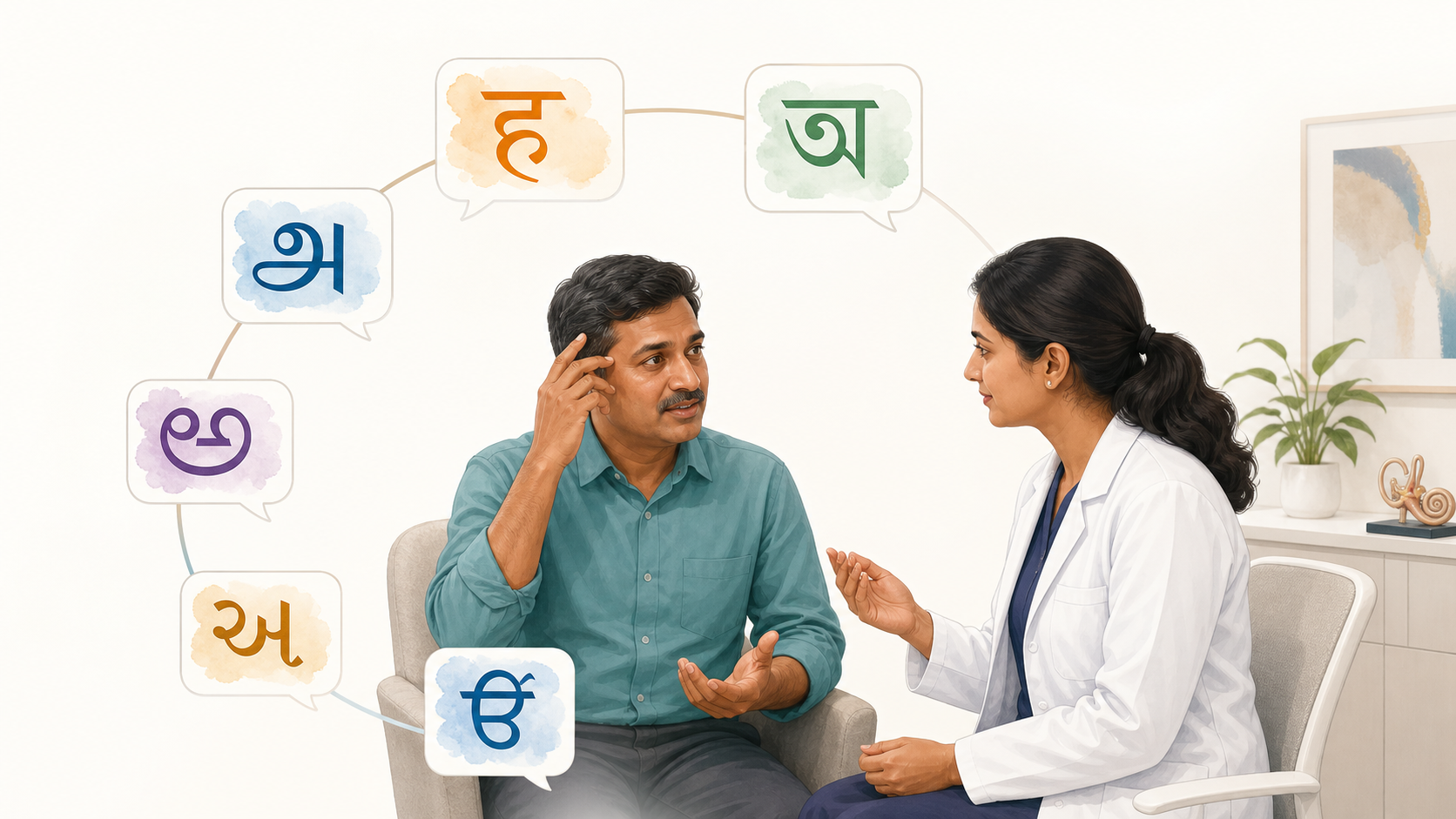
Words translated as “chakkar” can describe spinning, faintness, unsteadiness or a general dizzy feeling. Use the language guides below to find familiar terms and explain what you feel. A translated word alone cannot identify the cause.
If you only need the English translation, use the dedicated chakkar meaning in English guide. On this page, the focus is language navigation: how common Indian-language symptom words are written, how they are transliterated and which fuller guide to read next.

Chakkar meaning Indian languages: quick reference
The entries below preserve the patient words already used on this site. They are navigation aids, not one-to-one medical diagnoses. “Dizziness” is a broad symptom; “vertigo” is the false sensation of movement or spinning; “lightheadedness” is a faint-like feeling; and “imbalance” means difficulty staying steady.
| Language | Common patient words | Transliteration | Closest broad meaning | Full DRP guide |
|---|---|---|---|---|
| Hindi | चक्कर, सिर घूमना | chakkar, sir ghoomna | dizziness or vertigo | Hindi vertigo meaning guide |
| Bengali | মাথা ঘোরা | matha ghora | dizziness or vertigo | Bengali vertigo resources |
| Telugu | తల తిరగడం | tala tiragadam | head spinning or dizziness | Telugu vertigo resources |
| Tamil | தலைசுற்றல், தலை சுத்துது | thalai suthal, thalai suthuthu | dizziness or vertigo | Tamil vertigo resources |
| Marathi | चक्कर येणे, डोकं फिरणं | chakkar yene, dokam phirna | dizziness or head spinning | Marathi chakkar glossary |
| Gujarati | ચક્કર આવવું, માથું ફરવું | chakkar aavvu, mathu farvu | dizziness or vertigo | Gujarati guide |
| Punjabi | ਚੱਕਰ ਆਉਣਾ, ਸਿਰ ਘੁੰਮਣਾ | chakkar auna, sir ghumna | dizziness or head spinning | Punjabi guide |
| Urdu | چکر آنا، سر گھومنا | chakkar aana, sar ghoomna | dizziness or vertigo | Urdu guide |
| Kannada | ತಲೆ ಸುತ್ತು, ತಲೆ ತಿರುಗುವುದು | tale suttu, tale tiruguvudu | dizziness or vertigo | Kannada guide |
| Malayalam | തലകറക്കം, തല ചുറ്റൽ | thalakarkkam, thala chuttal | dizziness or vertigo | Malayalam vertigo resources |
| Odia | ମୁଣ୍ଡ ବୁଲିବା | munda buliba | dizziness or head spinning | Odia guide |
| Assamese | মূৰ ঘূৰা | mur ghura | dizziness or vertigo | Use this hub until a dedicated reviewed guide is assigned |
| Nepali | चक्कर आउनु, रिंगटा लाग्नु | chakkar aaunu, ringata lagnu | dizziness or vertigo | Nepali guide |
| Bhojpuri | चक्कर आवे, माथा घूमे | chakkar awe, matha ghume | dizziness or head spinning | Bhojpuri BPPV guide |
How to choose the right language guide
When looking up chakkar meaning in Indian languages, choose the guide in the language you understand most comfortably. Then describe the experience in your own words. The useful details are whether the room spins, you feel faint, you become unsteady, or you have a mixture of sensations. A direct translation is helpful for communication, but the pattern is more important than the label.
For example, a few seconds of spinning after rolling in bed is a different pattern from continuous vertigo lasting many hours. A faint-like feeling after standing is different again. The clinician also needs to know about hearing change, tinnitus, headache, vomiting, double vision, weakness, falls and any new difficulty walking.
Current language-specific guides
Use this chakkar meaning in Indian languages index to move to the strongest existing language page rather than searching through overlapping translation articles.
- Hindi: वर्टिगो और चक्कर का मतलब \n
- Bengali vertigo resources \n
- Telugu vertigo resources \n
- Tamil vertigo resources \n
- Malayalam vertigo resources
- Marathi: चक्कर येणे
- Gujarati: ચક્કરનો અર્થ
- Punjabi: ਚੱਕਰ ਆਉਣਾ
- Urdu: چکر آنا
- Kannada: ತಲೆ ಸುತ್ತು
- Odia: ମୁଣ୍ଡ ବୁଲିବା
- Nepali: रिंगटा लाग्नु
- Bhojpuri: चक्कर आवे
This chakkar meaning in Indian languages hub links to the current Bengali, Telugu, Tamil and Malayalam resource hubs. The Assamese row remains a compact reference until a dedicated page has enough search demand and completes native-language review. This avoids creating thin or mechanically translated pages merely because an exact phrase exists.
What to tell a doctor in any language
A chakkar meaning in Indian languages lookup is most useful when it helps you describe the episode precisely. Record the following details before a consultation.
- Feeling: spinning, faint-like, floating or unsteady.
- Timing: seconds, minutes, hours or continuous.
- Trigger: rolling in bed, looking up, standing, walking or no clear trigger.
- Associated symptoms: hearing loss, tinnitus, headache, vomiting, double vision, weakness, numbness, chest symptoms or fainting.
- Safety: whether you can sit, stand and walk without support.
Brief spinning triggered by head position may lead to a clinician-performed Dix–Hallpike assessment for posterior-canal BPPV. Continuous severe dizziness needs a different examination pathway. A general doctor-choice guide for dizziness can help when you are unsure where to start.
When language lookup should not delay urgent care
Seek emergency assessment for new facial droop, arm or leg weakness, slurred speech, double vision, collapse, chest pain, a sudden severe headache, inability to walk, severe symptoms after a head injury, or sudden hearing loss with acute vertigo. Do not wait to find the perfect translated word before seeking help.
Frequently asked questions
Does chakkar have the same meaning in every Indian language?
No. Related everyday words may cover spinning, general dizziness, faintness or imbalance. The language table helps with communication, but the symptom pattern is needed to understand the likely clinical category.
Which page should explain chakkar in English?
The dedicated Chakkar Meaning in English page is the site’s English-translation authority. This page is the navigation hub for Indian-language terms and guides.
Should every language term get a separate page?
No. A separate page is useful only when search demand supports it and a native-language reviewer confirms the script, phrasing and medical meaning. Otherwise, this hub is the safer canonical destination.
What information matters more than the translated word?
For every chakkar meaning in Indian languages query, the feeling, duration, trigger, hearing symptoms, headache, vomiting, neurological warning signs and ability to walk matter more than the word alone.
References
- Society for Academic Emergency Medicine: GRACE-3 acute dizziness and vertigo guideline.
- American Academy of Otolaryngology–Head and Neck Surgery: BPPV clinical practice guideline.
Medical disclaimer: This page is for general patient education and language navigation. It cannot diagnose the cause of dizziness or replace an individual clinical examination.
Read next — from Dr. Porwal's vertigo library