
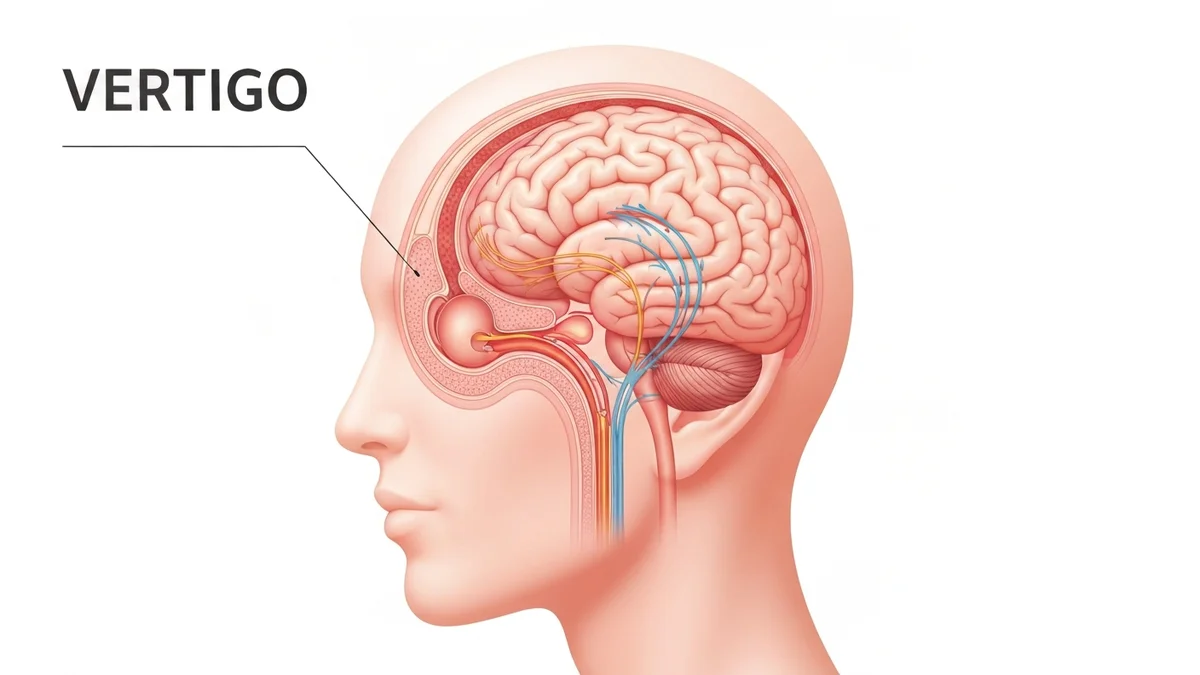
Vertigo Doctor in Unnao is a practical search when patients need help for spinning vertigo, BPPV, chakkar, dizziness, nausea with head movement, and balance problems. Patients from Unnao can first discuss symptoms online and then plan an in-person visit to Prime ENT Center, Hardoi if positional testing, a maneuver, or vestibular testing is needed.

Vertigo Doctor in Unnao: when specialist review helps
Who this page is for
This page is for Unnao residents who have repeated spinning, dizziness while turning in bed, imbalance while walking, vomiting with head movement, or persistent uncertainty after routine treatment. It is also useful if you were told that your MRI is normal but the dizziness keeps returning.
Many vertigo cases are treatable, but the correct diagnosis matters. BPPV, vestibular neuritis, Meniere’s disease, vestibular migraine, PPPD, and central causes behave differently. The treatment plan should not be the same for every dizzy patient.
Common causes of vertigo
- BPPV: brief spinning triggered by turning in bed, looking up, or bending down. Read more about BPPV.
- Vestibular neuritis: sudden severe vertigo that can last for days, often after a viral illness.
- Meniere’s disease: vertigo with hearing fluctuation, tinnitus, or ear fullness.
- Vestibular migraine: dizziness linked with migraine tendency, light sensitivity, motion sensitivity, or headache.
- PPPD: persistent dizziness that worsens in crowds, traffic, shops, or visually busy places.
How evaluation works
The first step is a careful history: how long each episode lasts, what triggers it, whether hearing is affected, whether headache is present, and whether the dizziness is positional or continuous. If BPPV is suspected, positional testing such as the Dix-Hallpike test may be needed.
If symptoms are unclear, recurrent, or mixed, vestibular testing such as VNG testing can help map the balance system and guide treatment. Some patients need vestibular rehabilitation after the acute illness settles.
When travel to Hardoi is worth planning
An in-person visit is worth planning if the dizziness is recurrent, disabling, positional, or not improving despite previous treatment. Patients who may need a canal-specific maneuver, VNG, hearing assessment, or supervised vestibular rehabilitation planning benefit more from a structured visit than from repeated medicine changes.
Bring previous prescriptions, MRI or CT reports, audiometry reports, and a short symptom timeline. If possible, note whether turning to the right or left side in bed triggers symptoms more strongly.
Red flags
Go to emergency care instead of waiting for a routine appointment if dizziness comes with weakness, facial drooping, double vision, slurred speech, fainting, new severe headache, chest pain, or inability to stand or walk. These symptoms can point to a brain or circulation problem and need urgent assessment.
How to book
Call: 7393062200
WhatsApp: https://wa.me/917393062200
Website: drprateekporwal.com
Tell the clinic that you are from Unnao, describe your main symptom, and mention whether you want online review or an in-person vertigo appointment.
Author: Dr. Prateek Porwal, DNB ENT, CAMVD (ENT), Prime ENT Center, Hardoi.
Medical disclaimer: This page is for education and appointment guidance only. It does not replace emergency care or an in-person examination when red flag symptoms are present.
About Unnao — and What I See in Patients from There
Unnao is a busy industrial town nestled between Lucknow and Kanpur, on the historic Grand Trunk Road. It has been a centre for leather and textile manufacture for more than a century, and is home to the revered Chandrika Devi temple on the banks of the Gomti, drawing thousands of devotees during Navratri. The Bhrigu Rishi sthal nearby gives the town its mythological roots — local lore connects Unnao to the sage Bhrigu, after whom the town is sometimes called Unwante.
The food culture borrows heavily from Awadhi Lucknow next door — galouti and kakori kebabs, biryani, rumali roti, and seasonal sweets like sohan halwa. The climate is hot and dry from April to June (touching 46°C), monsoon-soaked from July to September, and very foggy in December and January. Industrial dust and the dense winter smog over the Kanpur–Unnao belt are real triggers for allergic rhinitis and sinus congestion in my Unnao patients — both of which can spill over into eustachian tube blockage and a feeling of imbalance, especially when getting up from bed.
Travelling from Unnao to Prime ENT Center, Hardoi
Hardoi is about 110 km north of Unnao, and the most efficient route runs through Lucknow:
- By train: Unnao Junction → Lucknow Charbagh (45 minutes) → Hardoi (1 hour 15 minutes). Plenty of daily options including Lucknow-Bareilly Express, Pushpak, and local passengers.
- By road: NH-27 to Lucknow, then state highway via Sandila. Drive time: 2.5–3 hours. Many patients prefer driving via the Lucknow ring road to skip city traffic.
- By bus: Lucknow’s Alambagh bus terminal runs hourly buses to Hardoi.
If commuting is difficult, my online video consultation service is available across India — useful for first opinions, follow-ups after a maneuver, or for elderly patients who shouldn’t travel during an active vertigo spell.
Read next — from Dr. Porwal's vertigo library