
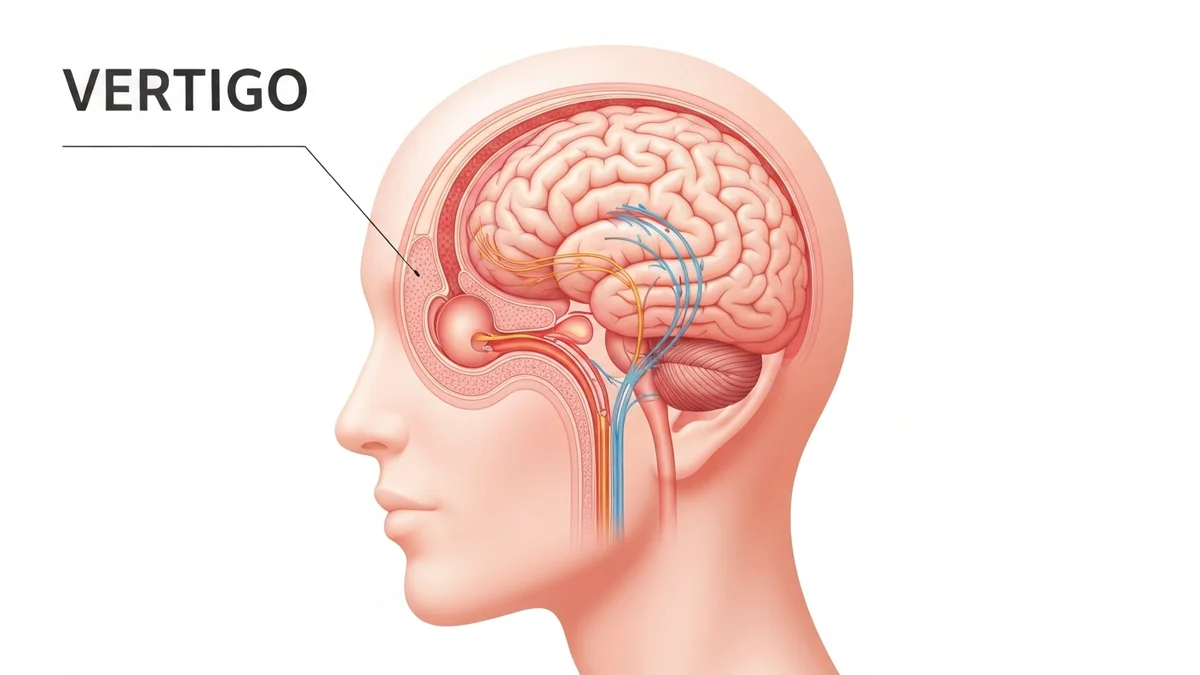
Quick answer: Many people can work while recovering from vertigo, but there is no single safe answer for every person or job. The decision depends on the cause, whether attacks are sudden, walking and vision stability, medicine effects, and the actual tasks and hazards at work. Desk work and driving a bus, climbing a ladder or operating machinery do not carry the same risk.
Evidence reviewed: 30 August 2026. The original publication date is preserved; this is a substantive evidence update.
Get urgent help before planning work
Seek emergency assessment for new dizziness with facial droop, one-sided weakness or numbness, slurred speech, new double vision, a severe unexplained headache, collapse, a seizure-like event, inability to stand or walk safely, persistent vomiting, chest symptoms, or a major fall. Sudden hearing loss needs urgent medical assessment. A new severe episode should not be assumed to be BPPV, migraine, anxiety or “just vertigo” without appropriate evaluation.
When vertigo can make a task unsafe
Assess the task, not only the job title. Workplace fall guidance identifies ladders, unprotected edges, contaminated floors and cluttered walkways as important hazards. Vertigo, imbalance or blurred vision can add risk when a task already demands stable balance, rapid visual tracking or continuous alertness.
| Work situation | Questions to consider | Possible temporary control |
|---|---|---|
| Desk, reading or screen work | Do scrolling, patterned backgrounds, head turns or prolonged concentration worsen symptoms? | Shorter screen blocks, scheduled pauses, reduced visual clutter, a stable chair and gradual exposure. |
| Walking, carrying or crowded areas | Is gait steady? Are attacks sudden? Is there a recent fall? | Clear routes, hand support where available, lighter loads, slower transitions and accompanied work when needed. |
| Driving or riding for work | Could an attack, visual disturbance, faintness or medicine effect impair control? | Do not drive while impaired; obtain diagnosis-specific advice and follow the law that applies where you live. |
| Machinery, cutting tools or hot surfaces | Would a few seconds of spinning, poor focus or delayed reaction cause serious injury? | Temporary alternative duty until symptoms and medicine effects are adequately controlled. |
| Heights, roofs, scaffolds or ladders | Is balance completely reliable during head movement and looking up or down? | Avoid the height task while symptomatic; use employer-approved fall controls and occupational-safety review. |
| Lone, night or remote work | Could help be delayed after a fall, faint or severe attack? | A check-in plan, paired duty or a different shift where feasible. |
These are examples, not universal restrictions or legal rules. A worker, treating clinician, employer and occupational-health or safety team may need to agree on controls for the real workplace.
What a work-focused assessment should cover
- the timing, duration and triggers of attacks, including whether warning is reliable;
- falls, near-falls, gait, vision, hearing, neurological symptoms, migraine features and faintness;
- the exact duties: driving, heights, machinery, patient handling, heat, noise, visual motion and lone work;
- current medicines, recent dose changes, sleep and any drowsiness or slowed reaction;
- whether a specific diagnosis has been established and whether treatment has started; and
- what the person can do safely now, rather than only whether symptoms are present.
Testing is selective. Classic BPPV is usually identified with positional examination and treated with the appropriate canalith-repositioning manoeuvre. The AAO-HNSF guideline recommends against routine imaging or vestibular testing when the presentation meets BPPV criteria and there are no additional inconsistent signs. VNG, hearing tests, imaging, cardiac assessment or other investigations may be appropriate when the history or examination indicates them.
Temporary changes and medical notes
A short, specific plan is usually more useful than a vague statement that someone is “fit” or “unfit.” Depending on the findings and available duties, a clinician may describe functional limits such as no commercial driving while attacks remain unpredictable, no ladder work while balance is impaired, seated duty, shorter shifts, scheduled breaks or a staged increase in hours.
A medical note does not itself guarantee leave, a particular accommodation or a job outcome. Employment rules, disability definitions, employer policy, occupational-health advice and local law differ. The safest wording connects the temporary limitation to a documented function or hazard and gives a review point instead of promising a fixed recovery date.
Return-to-work planning by diagnosis
BPPV
Confirmed BPPV is treated with an appropriate repositioning manoeuvre. Some people improve quickly, while others have residual unsteadiness or recurrent positional symptoms. Return to a hazardous task depends on symptom resolution and safe performance, not simply the number of days since treatment.
Peripheral vestibular hypofunction
Supervised vestibular rehabilitation is supported for unilateral and bilateral peripheral vestibular hypofunction. Exercises should be individualized and progressed safely. The rehabilitation guideline supports functional recovery but does not provide a universal work-clearance timetable.
PPPD or visual-motion sensitivity
PPPD is diagnosed only when the full Bárány criteria are met. Graded vestibular and visually provocative activity, psychologically informed care and treatment of coexisting migraine or vestibular disease may help. Pushing through severe symptoms at heights, while driving or around machinery is not a safe exposure exercise.
Vestibular migraine, Ménière disease or unpredictable attacks
When episodes are sudden or awareness of an attack is limited, the main concern is the consequence of an episode during a safety-critical task. Diagnosis-specific treatment and a period of stable function may be needed before resuming that task. No single waiting period applies to all conditions or jurisdictions.
Medicines, driving and machinery
Some prescription and non-prescription medicines can cause sleepiness, dizziness, blurred vision, faintness, reduced concentration or uncoordinated movement. Check the medicine label and ask the prescriber or pharmacist how a new medicine or dose change may affect work. Do not drive or operate machinery when symptoms or medicine effects impair safe control.
Driving notification and licence rules vary by country and vehicle class. A United Kingdom rule, for example, should not be presented as Indian or universal law. Confirm the current rule with the relevant licensing authority where you live and with occupational health when driving is part of the job.
August 2026 research update
No August 2026 primary study was identified that directly measured return to work, sick leave, workplace accommodation or job safety for people with general vertigo. That evidence gap means a fixed leave duration or universal return date would be unsupported.
Hiraoka and colleagues reported an August 2026 study of individualized vestibular rehabilitation in eight older adults with dizziness. After three months, dizziness-handicap, balance-confidence and some gait measures improved, while Timed Up and Go did not show a significant change. The sample was very small and there was no control group or employment outcome, so it supports only a cautious statement about possible functional improvement—not a promise of work readiness.
A practical graded-return checklist
- The diagnosis and important alternatives have been considered.
- No emergency warning sign or sudden hearing loss is being missed.
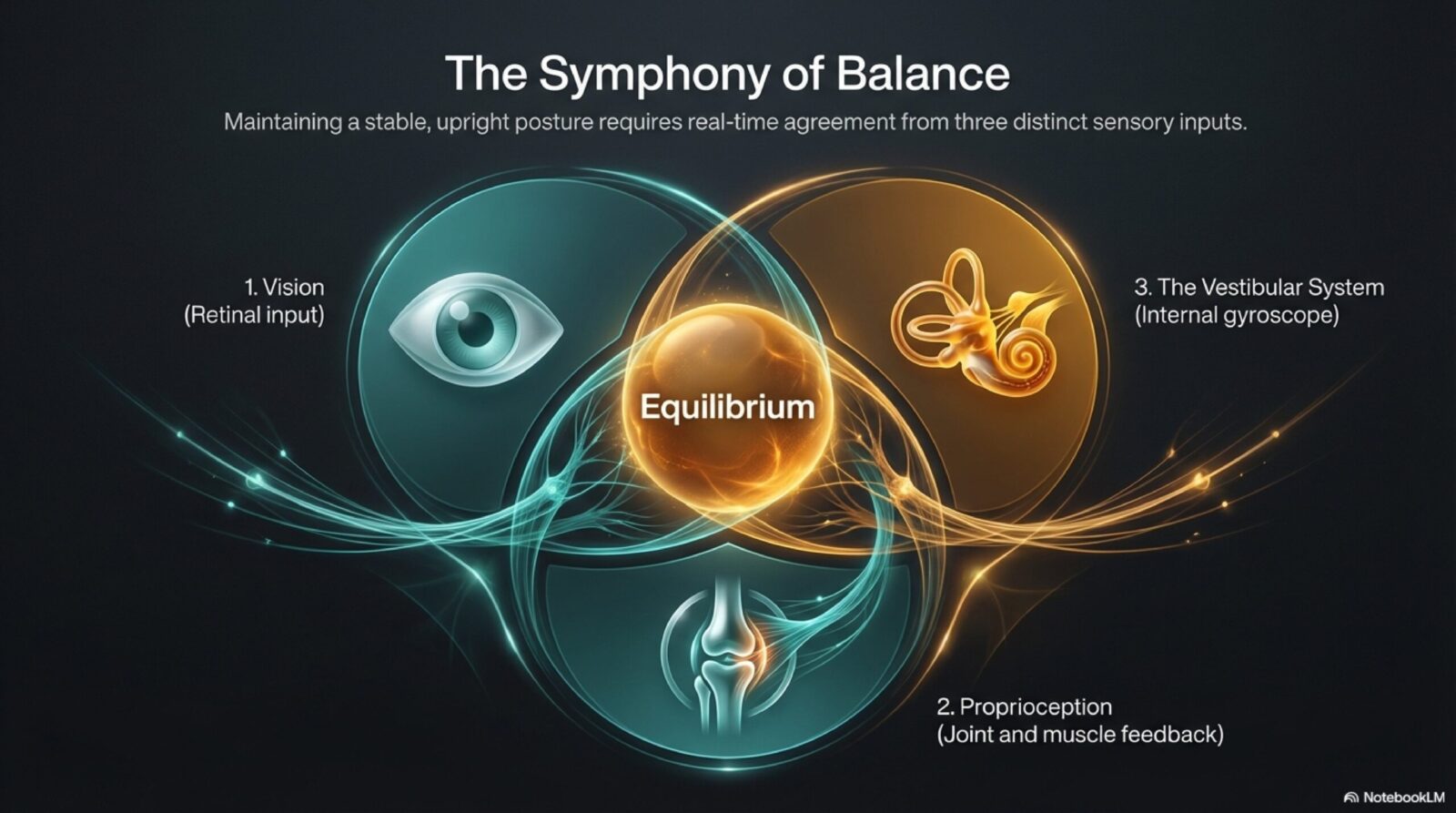
- Walking, head movement and visual tasks needed for the job can be performed safely.
- Attacks are absent, predictable or sufficiently controlled for the task risk.
- Medicine effects have been checked.
- Temporary controls, transport and an emergency/check-in plan are clear.
- There is a review date and a method for increasing duties without skipping safety checks.
Frequently asked questions
Should everyone with vertigo take leave?
No. Some people can continue low-risk duties with adjustments; others need temporary leave or alternative work. The cause, current function and hazards decide the plan.
How long should I stay off work?
There is no evidence-based duration for “vertigo” as a single symptom. A review date based on diagnosis, function and job risk is safer than a fixed number of days.
Can I work on a computer?
Often yes, but scrolling and visually complex screens may worsen symptoms. Short blocks, pauses, reduced visual clutter and gradual progression may help when medically appropriate.
Can I drive to work?
Do not drive while an attack, visual disturbance, faintness, impaired concentration or a sedating medicine makes control unsafe. Follow the licensing rules for your location and vehicle class.
Does a doctor decide my employment rights?
A clinician can document diagnosis and functional limitations. The employer, occupational-health process and applicable law determine specific leave or accommodation decisions.
Related guides
For non-emergency assessment, use the contact page or call/WhatsApp 7393062200. Appointment availability must be confirmed directly.
References
- NIOSH. Falls in the Workplace. Agency guidance.
- FDA. Some Medicines and Driving Don’t Mix. Agency guidance.
- NICE. Suspected neurological conditions: recognition and referral (NG127). Guideline.
- Bhattacharyya N, et al. Clinical Practice Guideline: Benign Paroxysmal Positional Vertigo (Update). 2017. Original guideline.
- Hall CD, et al. Vestibular Rehabilitation for Peripheral Vestibular Hypofunction: Updated Clinical Practice Guideline. 2022. Original guideline.
- Staab JP, et al. Diagnostic criteria for persistent postural-perceptual dizziness (PPPD). 2017. Original consensus.
- Hiraoka et al. Individualized vestibular rehabilitation study in eight older adults with dizziness. August 2026. Original journal article.
Medical and workplace disclaimer: This article provides general education, not an individual fitness-for-work certificate, employment-law advice or a driving clearance. Urgent symptoms need emergency assessment. Work restrictions, leave, accommodations and return dates must be individualized with the treating clinician, employer or occupational-health team and the rules that apply where you live.