
Quick answer: If vertigo or dizziness starts before a journey, do not start driving. If it begins while you are driving, keep control of the vehicle, reduce speed smoothly, signal, move to a safe stopping place and stop. Do not continue to your destination or drive yourself for medical care while your symptoms could affect control of the vehicle.
Emergency warning: Call emergency services and do not drive yourself if dizziness occurs with weakness, facial droop, difficulty speaking, double vision, fainting, chest pain, a severe new headache, new confusion, sudden hearing loss, or inability to stand or walk safely.
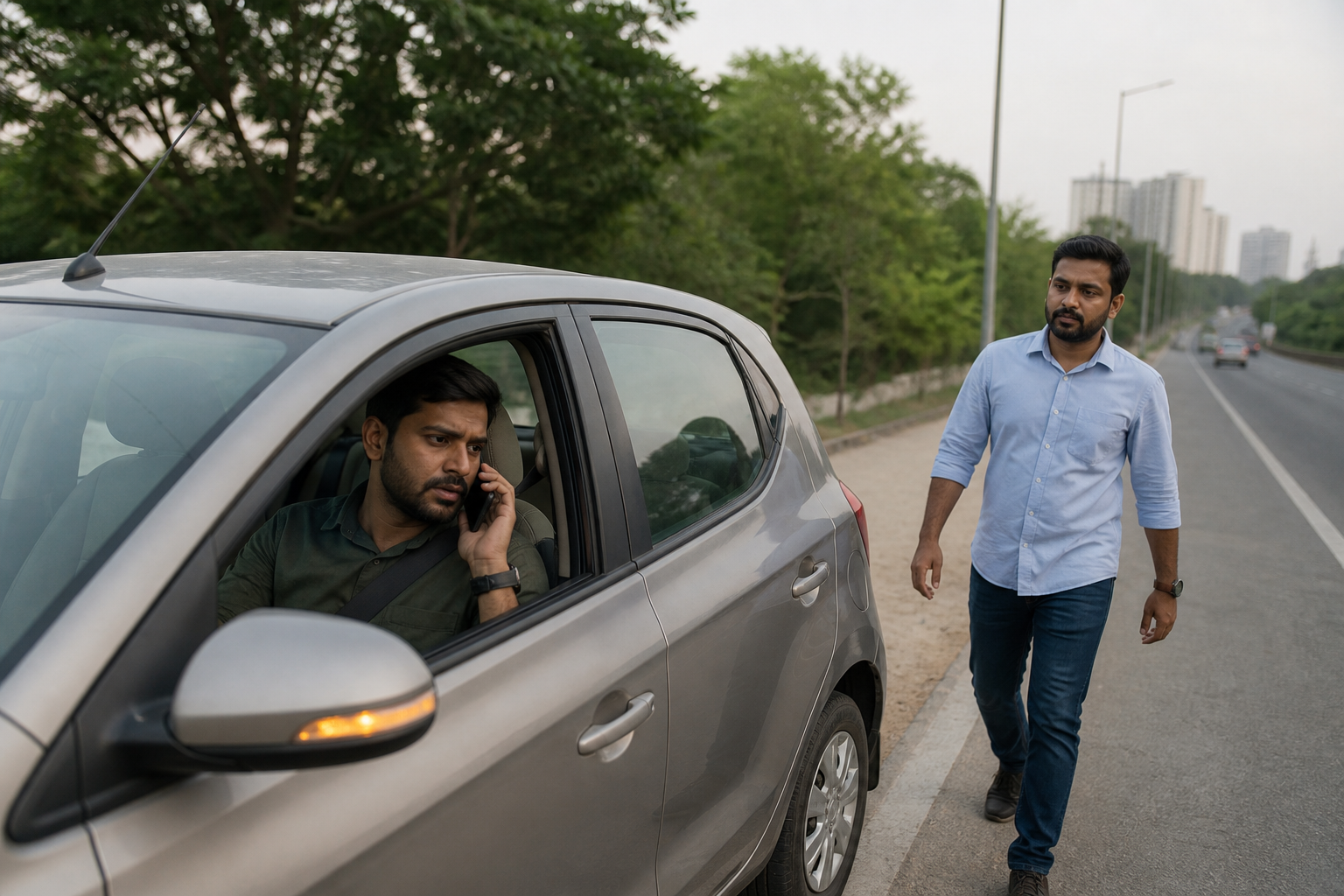
Vertigo and driving: what to do before starting
Do not begin a journey if you currently feel spinning, lightheadedness, visual movement, poor balance, faintness, confusion, unusual sleepiness, severe nausea, or difficulty turning your head and checking traffic. Give the keys to another person, postpone the journey, or arrange a taxi or other transport.
Do not test yourself by driving a short distance. A symptom that feels manageable while sitting can become unsafe when traffic, head movement, glare, visual motion and rapid decisions are added. Medicines, alcohol and lack of sleep can further slow reactions.
If dizziness starts while driving
- Keep your eyes open and maintain control. Hold the steering wheel steadily and avoid sudden head movements.
- Reduce speed smoothly. Do not brake abruptly unless an immediate hazard makes it necessary.
- Signal and move out of moving traffic. Use the nearest safe stopping area. Do not stop in a live lane if you can safely reach a better place.
- Secure the vehicle. Park, apply the parking brake, switch off the engine and use hazard lights when appropriate.
- Ask for help. Call a family member, colleague, roadside service, taxi or emergency service according to the severity of the symptoms.
If you cannot move the vehicle safely, slow down, warn other road users as safely as possible and call emergency assistance. Do not close your eyes, lean out of the vehicle, or try to continue because home or work is nearby.
What to do after stopping
Stay seated until the immediate spinning or faint feeling settles enough for you to move safely. If you need to leave the vehicle, ask for support and watch for traffic. Do not walk beside a busy road if your balance is poor.
Do not resume the journey yourself during the same active episode. Arrange another driver or alternative transport. If symptoms are new, severe, recurrent, unexplained or accompanied by warning signs, seek medical assessment. The vertigo red-flag guide explains which associated symptoms need faster evaluation.
When emergency care is safer
Call emergency services, such as 112 or the locally available ambulance service, when dizziness is accompanied by:
- new weakness, numbness, facial droop or difficulty speaking;
- double vision, new confusion, collapse or loss of awareness;
- chest pain, severe breathlessness or a racing or irregular heartbeat with faintness;
- a sudden severe headache or a new inability to stand or walk;
- repeated vomiting with worsening symptoms; or
- sudden hearing loss, especially in one ear.
These features cannot be safely assessed by a roadside webpage. Do not ask the symptomatic person to drive to a clinic or hospital.
Motorcycles, scooters and work vehicles
A two-wheeler requires continuous balance and rapid visual scanning. If symptoms begin, reduce speed without sudden steering, move away from traffic and stop as soon as it is safe. Do not attempt to “push through” a brief spinning episode.
Drivers carrying passengers, using heavy vehicles, working on high-speed routes or operating machinery should alert their employer or dispatcher after stopping. Immediate passenger and road safety comes before completing the route.
Common mistakes during an attack
- Continuing because the destination is close.
- Stopping suddenly in a moving lane when a safer stopping area is reachable.
- Closing the eyes or making rapid head movements to “check” the dizziness.
- Taking an unfamiliar vertigo tablet and immediately continuing to drive.
- Driving oneself to hospital despite faintness, visual disturbance or poor control.
- Assuming every short episode is harmless BPPV without an assessment.
What to record once you are safe
Note when the episode began, whether it felt like spinning or faintness, how long it lasted, whether it started after turning the head, and whether there was hearing change, tinnitus, headache, double vision, weakness, chest discomfort, palpitations, vomiting or loss of awareness. Record any medicine taken that day.
This short description helps distinguish inner-ear vertigo from migraine, blood-pressure problems, medicine effects, fainting pathways and neurological emergencies. The vertigo diagnosis guide explains how the history determines which examination or test may be useful.
Next step after the attack
This page covers only the immediate response before or during a dizzy episode. For recovery and future driving decisions, read the separate guide about driving after vertigo.
Frequently asked questions
Should I drive if the dizziness is mild?
No. Mild symptoms can worsen with traffic, head movement and visual motion. If dizziness could affect control, do not start or continue the journey.
What if vertigo starts on a highway?
Maintain control, reduce speed smoothly, signal and move to the nearest safe stopping area. If you cannot stop safely or have emergency warning signs, call emergency or roadside assistance.
Can I take a vertigo medicine and continue driving?
Do not rely on medicine to make an active episode safe for driving. Some medicines can cause sleepiness or slower reactions. Follow individual medical advice and arrange another driver.
Should someone with dizziness drive to hospital?
No if symptoms may affect vehicle control. Use another driver, ambulance or other appropriate transport according to severity.
Where can I read about driving after recovery?
Use the linked companion guide for future driving decisions after the immediate episode has ended.
References
Medical Disclaimer: This article is for educational purposes only and does not constitute medical advice, diagnosis or prescribing guidance. Consult Dr. Prateek Porwal at Prime ENT Center, Hardoi for personalised treatment.