
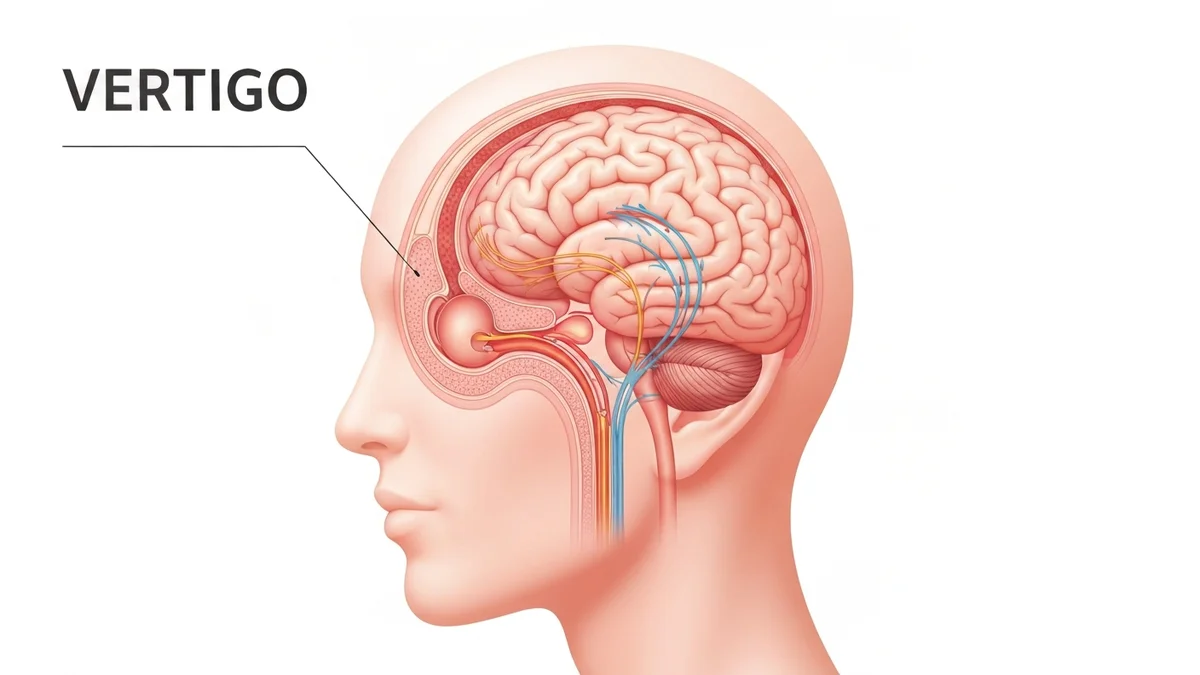
PPPD treatment matters because patients searching for PPPD treatment usually want clear guidance on symptoms, tests or treatment, and the warning signs that change urgency.

PPPD treatment: what patients should know
Persistent Postural-Perceptual Dizziness, or PPPD, is one of the most misunderstood causes of chronic dizziness. Many patients are told that their tests are normal and are left feeling as though nothing is wrong, even though they remain visibly unstable, visually sensitive, and uncomfortable in busy environments. The problem is not imaginary, but the treatment usually has to be structured and gradual rather than based on a single tablet.
This article explains what helps in PPPD treatment, why vestibular rehabilitation, medication, and behavioural strategies are often combined, and what realistic recovery usually looks like. It also covers common mistakes that delay improvement, including repeated reassurance without a plan or over-reliance on short-term sedating medicines.
Today I want to explain exactly how PPPD is treated and why combination therapy is most effective.
Related Reading
- Vestibular Rehabilitation Therapy (VRT)
- Vestibular Migraine: 4-Step Treatment Guide (2026)
- History of Vertigo
- Vestibular Rehabilitation Therapy: Evidence-Based Clinical Protocol
- Vestibular Rehabilitation After Neuritis: Specific Exercises for Full Recovery
Why Single Treatments Fail
PPPD has multiple components:
- Vestibular processing problem: The brain is malfunctioning in how it processes balance signals
- Neurochemical component: Central nervous system neurotransmitter imbalance
- Cognitive component: Maladaptive thought patterns and catastrophizing
A single treatment addresses only one component. Vestibular rehabilitation alone might help 50%. SSRIs alone might help 40%. CBT alone might help 30%. But combination therapy addresses all components and has much higher success rates (70-80%).
Treatment Pillar 1: Vestibular Rehabilitation Therapy (VRT)
VRT is the cornerstone of PPPD treatment. It’s based on the principle of habituation—repeated exposure to dizziness-provoking stimuli allows the brain to “habituate” and recognize these stimuli as harmless.
How it works:
Your brain learns through experience. If you repeatedly encounter a stimulus and nothing bad happens, your brain eventually stops responding as if the stimulus is dangerous. VRT uses this learning mechanism.
In PPPD, the brain is hyperreactive to vestibular and visual stimuli. VRT systematically desensitizes the brain by repeated, controlled exposure.
Typical VRT exercises for PPPD include:
Visual Motion Desensitization:
– Watching scrolling text or patterns
– Eye tracking exercises while moving head
– Video watching while moving
– Exposure to moving visual environments
These exercises are done at home, usually on video, starting easy and progressing to more challenging levels.
Head Movements with Visual Tracking:
– Head shakes while focusing on a target
– Gaze stabilization exercises
– Head movements of increasing speed and complexity
Balance Challenges:
– Standing exercises (on one leg, on unstable surface)
– Walking exercises (in open spaces, with head turns)
– Obstacle course walking
– Dynamic balance activities
These challenge the balance system and train the brain to stabilize.
Exposure to Real-World Triggers:
This is important—exercises progress to actual environmental triggers:
– Gradually increasing time in busy visual environments (supermarkets, malls)
– Watching busier videos
– Exposure to crowds
– Graded exposure to avoided situations
A physical therapist trained in vestibular rehabilitation designs the program, progressing in difficulty as tolerance improves.
Related: Vestibular Rehabilitation Therapy Guide
Duration and frequency:
VRT typically requires:
– 1-2 physical therapy sessions per week for 8-12 weeks (longer for severe cases)
– Daily home exercises (15-30 minutes)
– Continued self-directed exposure for months after formal therapy ends
VRT requires commitment. It’s not passive. The patient must actively do the exercises and deliberately expose themselves to discomfort.
Expected improvement from VRT alone:
About 50-60% of PPPD patients get significant improvement (>50% symptom reduction) from VRT alone when done consistently. Some get complete remission. Others need additional medication.
Why I recommend VRT as primary treatment:
VRT addresses the root cause (vestibular processing dysfunction) rather than just masking symptoms. It produces lasting change, not just temporary relief. Long-term maintenance is usually better.
Treatment Pillar 2: SSRIs/SNRIs (Antidepressants)
When I prescribe SSRIs for PPPD, I explain: “These aren’t because you’re depressed or because this is psychological. These medications modulate neurotransmitters that affect how your vestibular system processes information.”
This reframing helps patients accept medication as a legitimate medical treatment, not psychiatric treatment.
Mechanism in PPPD:
SSRIs/SNRIs increase serotonin and/or norepinephrine in the central nervous system. These neurotransmitters influence vestibular processing pathways in the brainstem and cerebellum. Higher levels reduce the hyperreactivity of the vestibular system.
Common medications used:
SSRI medicines such as sertraline:
– sometimes used by doctors when PPPD symptoms remain disabling
– chosen and adjusted according to age, other medicines, anxiety/depression overlap, side-effect risk, and follow-up response
– usually take 4-6 weeks to show benefit
– should not be started, stopped, or changed without medical supervision
SNRI medicines such as venlafaxine:
– may be considered in selected patients when symptoms, migraine overlap, anxiety, or prior medicine response support it
– require doctor-led dose adjustment and monitoring
– usually take 4-6 weeks to show benefit
– may not be suitable for every patient, especially without blood pressure and interaction review
Older antidepressant medicines such as clomipramine:
– are sometimes considered only in selected cases
– can have more side effects and interaction issues than newer options
– need specialist supervision and should not be used as a self-treatment for dizziness
Important points about SSRI use in PPPD:
Timeline:
Expect 4-6 weeks before noticing benefit. The medication doesn’t work instantly. Improvement is gradual.
Duration:
Most PPPD patients need SSRIs for 6-12 months of consistent use. Some need longer. Once symptoms improve significantly, gradual tapering might be attempted.
Combination with VRT:
SSRIs work best combined with VRT. The medication reduces symptoms enough that the patient can tolerate VRT exercises. VRT provides the long-term cure. Neither alone is as effective as both together.
Side effects:
– Initial: nausea, headache, insomnia (usually temporary)
– Common: sexual dysfunction, weight gain, emotional blunting
– Usually well-tolerated
Side effects often improve after 2-4 weeks of initial adjustment.
Medications to AVOID in PPPD:
– Benzodiazepines (Alprazolam, a vestibular suppressant): These mask symptoms in short term but make PPPD worse long-term
– Antihistamines : Vestibular suppressants that prevent habituation
– Anticholinergics: Can worsen dizziness
These feel like they help acutely but create dependency and prevent the brain from habituating to triggers.
Expected improvement from SSRI alone:
About 40-50% of patients get significant improvement from SSRIs when used without VRT. But long-term remission is better when combined with VRT.
Treatment Pillar 3: Cognitive Behavioral Therapy (CBT)
CBT helps patients recognize and change maladaptive thought patterns that amplify symptoms and create avoidance.
Common maladaptive thoughts in PPPD:
– “If I feel dizzy, I might faint” (false—PPPD doesn’t cause fainting)
– “This dizziness means I have a brain tumor” (false—imaging is normal)
– “I can’t handle being in crowds anymore” (can be handled with practice)
– “My dizziness will never get better” (false—it responds to treatment)
– “I need to avoid all triggers” (avoidance makes things worse)
CBT techniques:
– Identifying automatic negative thoughts
– Testing whether thoughts are actually true
– Developing more realistic thoughts
– Behavioral experiments (deliberately doing feared activities and discovering nothing bad happens)
– Graded exposure with cognitive work
Challenge in India:
CBT is not widely available outside major cities. Cost and availability vary by city and therapist. Few psychologists are trained in CBT specifically for dizziness, so ask about experience before starting.
Alternative: Psychoeducation:
If formal CBT isn’t available, thorough patient education about PPPD can provide similar benefit. When patients understand:
– The condition is real but not dangerous
– Symptoms will improve with treatment
– Avoidance makes things worse
– Exposure is therapeutic
This understanding alone reduces catastrophizing and improves motivation for treatment.
Expected improvement from CBT/psychoeducation:
About 30-40% improvement from cognitive work alone. Most effective when combined with VRT and SSRIs.
Practical Treatment Plan
For a typical PPPD patient, my approach is:
Week 1-2:
– Thorough evaluation and diagnosis
– Detailed patient education about PPPD
– Explain all treatment options
– Referral to vestibular rehabilitation physical therapist
– Discuss whether an SSRI/SNRI is appropriate; if used, it should be started and adjusted only by the treating doctor
Week 3-6:
– Begin vestibular rehabilitation (1-2 sessions/week)
– Daily home VRT exercises
– Medicine follow-up to check tolerance, side effects, interactions, and whether adjustment is needed
– Watch for SSRI side effects, adjust as needed
– Monitor SSRI tolerance
Week 7-12:
– Continue VRT (now showing benefit from SSRI allowing better participation)
– Progress VRT exercises as tolerance improves
– Reassess at 6-8 weeks—if significant improvement, continue current plan
– If minimal improvement, review diagnosis, VRT adherence, triggers, and whether the medicine plan needs doctor-led adjustment
Week 12+:
– Most patients showing 50-70% improvement by this point
– Gradually phase out VRT sessions as home exercises continue
– Continue home exercises long-term
– Continue SSRI for 6-12 months
After 12 months:
– Reassess if patient is ready to taper SSRI
– Some patients continue SSRI long-term
– Continue home VRT exercises indefinitely as maintenance
Realistic Expectations
– Recovery takes months, not weeks
– Combination therapy (VRT + SSRI + cognitive work) is needed for best results
– 70-80% of patients get significant improvement
– 30-40% achieve near-complete remission
– Even improved patients may have occasional symptoms during stress
– Maintenance exercises are usually needed long-term
– Cost accumulates over months of treatment
– Success requires patient motivation and compliance
FAQ: PPPD Treatment
Medical Disclaimer: This article is for educational purposes only. It does not constitute medical advice or prescribing guidance. All medications mentioned should only be taken under the direct supervision of a qualified physician. Specific doses, durations, and drug choices depend on your individual clinical condition and must be determined by your treating doctor. If you experience severe symptoms, please seek immediate medical attention.
References
- Staab JP, et al. Diagnostic criteria for persistent postural-perceptual dizziness (PPPD). Journal of Vestibular Research. 2017;27(4):191–208.
- Edelman S, Mahoney AEJ, Cremer PD. Cognitive behavior therapy for chronic subjective dizziness. American Journal of Otolaryngology. 2012;33(4):395–401.
- Hillier SL, McDonnell M. Vestibular rehabilitation for unilateral peripheral vestibular dysfunction. Cochrane Database of Systematic Reviews. 2011;(2):CD005397.
Read next — from Dr. Porwal's vertigo library