
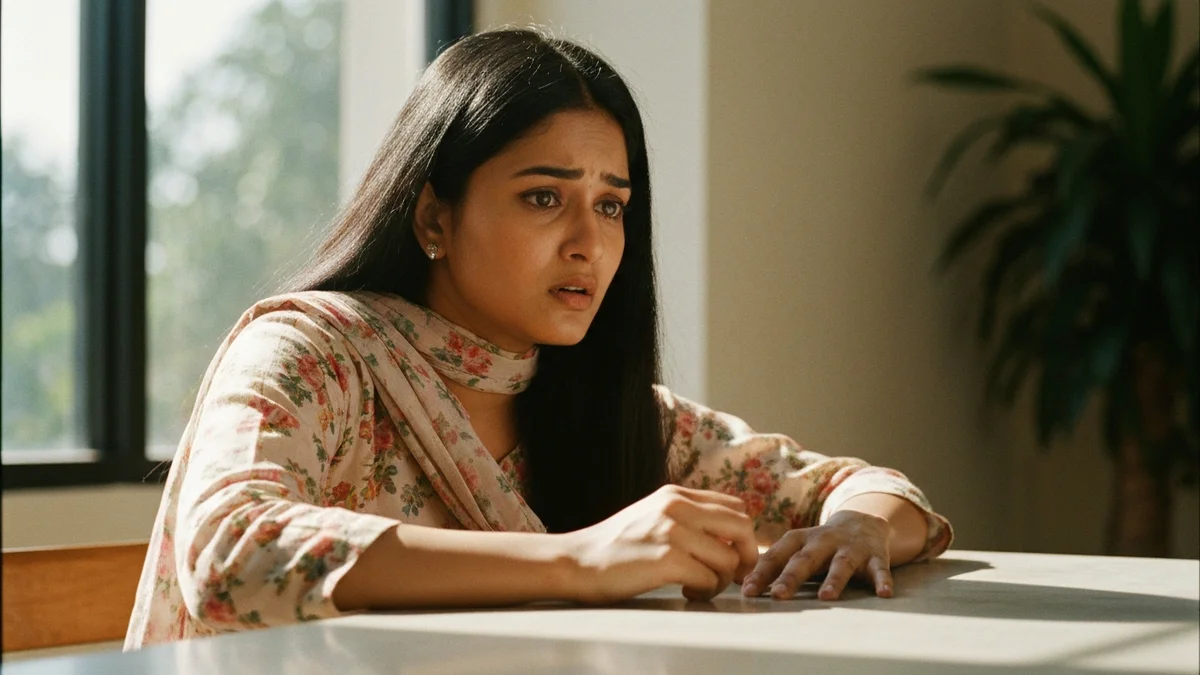
The Most Confusing Type of BPPV
Multi-canal BPPV means more than one semicircular canal is involved. It can confuse the diagnosis because Dix-Hallpike and supine-roll findings may not point neatly to one canal, and treatment often needs a sequence of maneuvers rather than a single quick correction.
Table of Contents
- The Most Confusing Type of BPPV
- How to Diagnose Multi-Canal BPPV
- Why Do Multiple Canals Get Involved?
- Diagnosis Challenges
- Treatment Order Matters
- Bilateral BPPV: The Ultimate Complexity
- My Clinical Approach to Multi-Canal BPPV
- Why Recurrence Is Higher with Multi-Canal BPPV
- Common Pitfalls in Multi-Canal BPPV
- FAQ
Then there’s multi-canal BPPV. Two or more canals affected simultaneously. And suddenly, everything becomes complicated.
In my practice in Hardoi, when I see a patient with BPPV that doesn’t quite fit the typical pattern, doesn’t improve as expected, or seems to change as I’m treating it, I think: multi-canal.
Multi-canal BPPV is less common than single-canal BPPV and can be missed when the examination does not assess the positional patterns suggested by the history and observed nystagmus.
How to Diagnose Multi-Canal BPPV
Here’s the key: you have to test all three canals. Not just one.
Testing posterior canal: Standard Dix-Hallpike test. Patient sits, head turned 45 degrees, lie back with head hanging off the bed. If positive, you see upbeating-torsional nystagmus.
Testing horizontal canal: The supine roll test is used to look for direction-changing horizontal nystagmus. Depending on the variant, the eye movements may be geotropic or apogeotropic and must be interpreted with the symptom pattern and side-to-side response.
Testing anterior canal: A head-hanging test may provoke downbeat-torsional nystagmus, but downbeat positional nystagmus can also occur with central disorders or another canal variant. Pure, persistent or atypical downbeat nystagmus—especially with neurological symptoms—needs careful assessment before it is labelled anterior-canal BPPV.
Testing should be guided by the history and examination. When more than one canal pattern is suspected, the relevant positional planes should be assessed rather than assuming that one test answers every case.
Diagnosis rests on the history and canal-specific positional nystagmus seen during tests such as the Dix-Hallpike and supine roll. Video goggles or VNG may help document complex or atypical eye movements, but they cannot count displaced otoconia and are not routinely required when the clinical pattern is already clear.
Why Do Multiple Canals Get Involved?
Head trauma: More than one canal or both ears may be involved after a head injury, so the examination should not assume a single-canal pattern.
Periods of immobility or a preceding vestibular illness: BPPV can occur after prolonged bed rest or another vestibular disorder, but the mechanism and canal pattern still need clinical assessment.
Bone health: Low vitamin D or osteoporosis may be associated with recurrent BPPV in some patients. This does not prove the cause in an individual case or justify supplements without assessment.
Sometimes no cause is found: Multi-canal BPPV may occur without an identifiable precipitating event.
After head trauma, more than one canal or both ears can be involved. The diagnosis should rely on the history and observed positional nystagmus rather than on the location of impact alone.
Diagnosis Challenges
Multi-canal BPPV is tricky diagnostically because the presentation can be confusing.
Some patients report Vertigo only with head movement in certain directions. Others report it constantly. Some have severe nausea; others minimal nausea. Some describe spinning; others describe a “floating” sensation.
The Dix-Hallpike might be positive and strong. But then the horizontal canal test is positive too. Now what? Multiple treatments needed. Multiple techniques.
Careful testing of all relevant positional planes is important when multi-canal BPPV is suspected. VNG can document eye movements in selected cases, but the findings still need clinical interpretation and do not replace a complete positional examination.
Treatment Order Matters
When more than one canal or ear appears involved, treatment order is individualized. A clinician may begin with the canal producing the clearest nystagmus or the greatest symptoms, then retest before deciding the next step.
The maneuver must match the affected canal and variant—for example, a barbecue roll or Gufoni-type maneuver may be used for selected horizontal-canal patterns, while posterior-canal BPPV is commonly treated with an Epley or Semont maneuver. Visit spacing and the number of sessions vary with the findings, mobility, tolerance and response; there is no universal calendar for every multi-canal case.
Bilateral BPPV: The Ultimate Complexity
Even more complex: when BOTH ears are affected. Bilateral posterior canal BPPV, or bilateral horizontal canal, or bilateral + multi-canal.
This usually happens post-traumatic (head injury affects whole head), occasionally with severe infections or systemic conditions affecting calcium metabolism.
Bilateral involvement is assessed from side-specific positional nystagmus and the full examination. Video goggles or VNG may help record the eye movements in complex cases, but the recording alone does not automatically establish the affected ears or canals.
Treatment is individualized according to the canal, side, strength of the positional response, mobility and fall risk. One side or canal may be treated first and then reassessed, but the order and interval should follow the examination rather than a fixed right-first or 2–3-day rule.
My Clinical Approach to Multi-Canal BPPV
Step 1: Complete vestibular testing. Dix-Hallpike, horizontal canal test, anterior canal test. Don’t skip any.
Step 2: Document complex findings when needed. Video goggles or VNG can help record atypical or overlapping eye movements, but interpretation remains clinical.
Step 3: Discuss an individualized plan. Explain which canal patterns are suspected, which finding will be treated first and why recovery may require reassessment rather than a fixed number of visits.
Step 4: Treat and retest. Use a maneuver matched to the canal and variant, then reassess the positional nystagmus and symptoms before the next treatment decision.
Step 5: Address residual problems. Vestibular rehabilitation may help selected patients with persistent imbalance, motion sensitivity, mobility limitations or fall risk after repositioning treatment.
Step 6: Reassess. Recovery time varies. Follow-up within about one month is commonly recommended, and persistent or atypical symptoms should prompt evaluation for unresolved BPPV or another cause.
Why Recurrence Is Higher with Multi-Canal BPPV
Multi-canal BPPV may be associated with factors such as head trauma or bone-health problems, and some patients require more treatment sessions than those with a single-canal pattern. Recurrence risk and its cause vary between individuals.
For recurrent BPPV, a clinician may assess vitamin D status and bone health when appropriate. Evidence for supplementation is most relevant when deficiency is confirmed; vitamin D or calcium should be used only when clinically indicated after considering the patient’s medical history and contraindications.
Common Pitfalls in Multi-Canal BPPV
Pitfall 1: Stopping after the first positive finding. One positive positional test may not explain every symptom or eye-movement pattern in a suspected multi-canal case.
Solution: Assess the other clinically relevant positional planes and retest after treatment when symptoms or findings persist.
Pitfall 2: Using a fixed sequence. Treating several suspected canals without checking which finding is clearest can make the response harder to interpret.
Solution: Prioritize the most symptomatic or diagnostically clear canal, use a canal-specific maneuver, and retest before proceeding.
Pitfall 3: Treating recordings as the diagnosis. VNG can document eye movements but does not replace history, positional testing and clinical interpretation.
Solution: Use additional recording or investigation when findings are complex, atypical or inconsistent—not as a mandatory test for every case.
Pitfall 4: Applying a universal recovery timetable. Multi-canal cases may need more than one session, but response and visit spacing vary.
Solution: Reassess the positional findings and investigate persistent symptoms rather than promising a fixed 4–6-week course.
FAQ
Q: How do I know if I have multi-canal BPPV?
A: A clinician compares the history with canal-specific positional nystagmus. Additional positional tests or video recording may be useful when the findings suggest more than one canal, but VNG is not mandatory for every patient.
Q: Is multi-canal BPPV more serious?
A: BPPV is a benign inner-ear disorder, but multi-canal involvement can be harder to diagnose and attacks can increase fall risk. Atypical or persistent findings, new neurological symptoms or sudden hearing loss need prompt assessment for another cause.
Q: Can I treat multi-canal BPPV at home?
A: Home maneuvers should not be chosen by guesswork when more than one canal or side may be involved. A clinician should first confirm the pattern and explain whether any specific home maneuver is appropriate and safe for you.
Q: How long does treatment take for multi-canal BPPV?
A: There is no single timetable. Some patients improve after a small number of sessions; others need repeated canal-specific treatment and reassessment. Persistent symptoms should be reviewed for unresolved BPPV or another diagnosis.
Q: If I have bilateral multi-canal BPPV, does that mean it’s worse?
A: Involvement of both ears can make diagnosis and treatment planning more complex. The order, number of sessions and expected recovery depend on the canal patterns, mobility, fall risk and response to treatment.
Bottom Line
Multi-canal BPPV is manageable, but it requires a methodical assessment and canal-specific treatment plan.
If positional vertigo has not improved as expected, ask for reassessment of the history, positional nystagmus and possible alternative or coexisting causes. Video recording or other testing may be added when the clinical findings justify it.
At Prime ENT Center in Hardoi, complex BPPV is assessed step by step with positional testing, VNG support when needed, and a treatment plan matched to the canal pattern.
This article is for educational purposes only. For diagnosis or treatment of BPPV, please consult Dr. Prateek Porwal or your nearest ENT specialist.
Related BPPV Guides
- Dix-Hallpike test for BPPV diagnosis
- Supine roll test for horizontal canal BPPV
- Posterior canal BPPV guide
- Horizontal canal BPPV guide
- BBQ roll maneuver
- Foster half-somersault maneuver
Reference: Vestibular Rehabilitation — McDonnell et al, 2015
Medical disclaimer: This page is for education only. Symptoms need individualized evaluation. Emergency warning signs should be handled in an emergency unit first.
Read next — from Dr. Porwal's vertigo library