
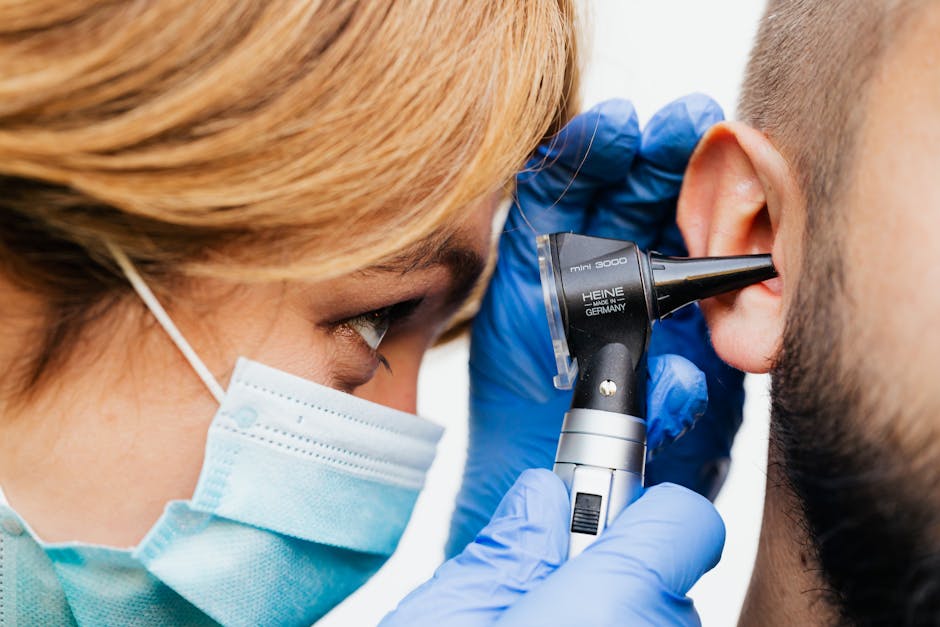
Quick answer: Caffeine is not an established direct cause of benign paroxysmal positional vertigo (BPPV). BPPV happens when calcium-carbonate particles (otoconia) become displaced from the utricle and enter a semicircular canal. Ageing, head injury and some inner-ear or surgical conditions are recognised associations, but many people have no single identifiable trigger.
Evidence reviewed/updated: 30 August 2026.
What causes BPPV?
BPPV is a mechanical inner-ear disorder. Otoconia normally sit in the utricle and help the brain sense gravity and linear movement. In BPPV, displaced particles enter a semicircular canal. A change in head position then moves the particles and produces a brief, characteristic burst of vertigo and nystagmus.
The posterior canal is affected most often, but horizontal- and anterior-canal BPPV also occur. The affected side and canal matter because the diagnostic positional test and repositioning manoeuvre must match the pattern.
Recognised associations and risk factors
An association does not prove that one factor directly dislodged the otoconia in an individual patient. The following are reported more often in people with BPPV:
- Age: BPPV becomes more common in later life, possibly because the otolith organs and their supporting structures change with age.
- Head trauma: BPPV may develop after concussion, a fall, whiplash or another head injury. Reported rates vary with the population and severity of injury, so there is no universal percentage.
- Migraine: observational studies find an association between migraine and BPPV, but the mechanism and direction of causation are not settled.
- Osteoporosis and low vitamin D: these have been associated with BPPV and recurrence in observational research. This does not mean that every person with BPPV is deficient.
- Other inner-ear disorders: BPPV may coexist with Ménière disease or follow an acute peripheral vestibular disorder. Recurrent or changing attacks require reassessment rather than assuming every episode is BPPV.
- Ear procedures and surgery: BPPV has been reported after procedures such as stapes surgery and cochlear implantation, but these reports do not establish one mechanism for every case.
- Dental procedures: a large case-control study found an association between recent dental work and BPPV. The absolute risk was not established, and this does not prove that ordinary dental positioning causes BPPV in every patient.
- Reduced activity or prolonged recumbency: observational work has reported an association, but it cannot prove that bed rest itself causes BPPV.
When no cause is found
Many cases are described as idiopathic, meaning that no single trigger is identified after assessment. This is common and does not make the symptoms imaginary. Idiopathic BPPV is still diagnosed from its positional pattern and characteristic eye movements, and it can usually be treated with a canal-specific repositioning manoeuvre.
Does caffeine cause BPPV?
No good evidence shows that coffee, tea or another caffeinated drink directly dislodges otoconia or causes BPPV. A small study of 93 patients with vestibular disorders found no significant difference in caffeinated-beverage intake between diagnostic groups; it was not designed to prove that caffeine is harmless for every symptom.
Caffeine may still affect sleep, palpitations, anxiety, migraine or a person’s perception of dizziness. If symptoms repeatedly follow caffeine, a short diary and an individual reduction trial may be reasonable. Avoid treating caffeine avoidance as a substitute for confirming whether the dizziness is actually BPPV.
What does not directly cause BPPV?
- Rolling in bed or looking up: these movements commonly trigger symptoms from existing BPPV; they do not by themselves prove what originally displaced the particles.
- Earwax: wax lies in the external ear canal, whereas BPPV arises in the inner ear.
- Flying and routine pressure changes: these are not established direct causes of BPPV.
- Stress, allergies or high blood pressure: each may be relevant to other dizziness syndromes, but none is an established direct cause of BPPV.
- Contagion: BPPV cannot be caught from another person.
How BPPV is diagnosed
Classic BPPV causes brief episodes of spinning brought on by a change in head position, such as rolling in bed, lying back or looking up. A clinician uses the symptom timing, neurological and ear examination, and canal-specific positional testing. The Dix–Hallpike test is used mainly for posterior-canal BPPV; the supine roll test helps assess horizontal-canal BPPV.
The AAO-HNS guideline recommends against routine imaging when a patient meets diagnostic criteria for BPPV and has no additional signs that are inconsistent with it. Imaging or other tests may be appropriate when the pattern is atypical, neurological signs are present, hearing changes occur or another diagnosis is suspected.
When urgent assessment is safer
Seek urgent medical assessment for new dizziness or vertigo with:
- facial droop, weakness, numbness, slurred speech or confusion;
- new double vision, severe headache, collapse or fainting;
- inability to sit, stand or walk safely;
- new sudden hearing loss;
- continuous severe vertigo rather than brief positional attacks;
- repeated vomiting, dehydration, a seizure or a serious fall; or
- a first or very different attack that does not fit a previously confirmed BPPV pattern.
These features do not automatically mean stroke or another central disorder, but they should not be managed with an internet manoeuvre. The clinician decides whether neurological assessment, hearing testing or imaging is needed.
Treatment and recurrence
BPPV is usually treated mechanically with a repositioning manoeuvre selected for the affected side and canal. Medication may reduce nausea in selected patients but does not reposition the particles and should not replace diagnosis and treatment. Persistent symptoms after a manoeuvre may reflect unresolved BPPV, a different canal, residual dizziness or another diagnosis.
Recurrence is possible, but estimates vary by study and follow-up. In one prospective cohort of 548 patients followed for five years, 121 (22.1%) had a recurrence. This number should not be used as a personal prediction because age, associated conditions, diagnostic methods and follow-up differ between populations.
Vitamin D: who may benefit from testing or supplementation?
Vitamin D is not a universal BPPV treatment. In a multicentre randomised trial, patients with frequent attacks and vitamin D below 20 ng/mL received vitamin D plus calcium or usual care. The intervention reduced the annual recurrence rate, but it was targeted to documented deficiency and included calcium as part of the protocol.
Do not copy a dose from an article. Vitamin D testing, the need for calcium, the dose, treatment duration and monitoring should be decided with a clinician, particularly when there is kidney disease, a history of stones, high calcium, pregnancy or other treatment.
August 2026 evidence update
- Lateral-canal treatment study: a clinical series of 146 people with geotropic lateral-canal BPPV reported next-day or day-after resolution in 69% after one new 135-degree manoeuvre and 80% after a second. This was a single-author series about treatment, not a trial of caffeine or BPPV causes, so it does not change the causation advice on this page. Shigeno, original DOI; PubMed 42119172.
- Residual dizziness study: an observational study associated motion-sickness susceptibility, greater dizziness-related disability and higher anxiety scores with residual dizziness after successful repositioning. It cannot show that anxiety or stress causes BPPV, and it does not support a universal treatment. Lin et al., original DOI; PubMed 42077109.
Frequently asked questions
Can sleeping on one side cause BPPV?
A sleeping position can provoke symptoms from existing BPPV, but it is not an established direct cause. Long-term sleeping restrictions are not routinely required after repositioning.
Can dental work trigger BPPV?
BPPV has been associated with recent dental procedures, but it appears uncommon and the observational evidence does not prove that positioning or vibration was the cause in an individual. New positional vertigo after a procedure should be examined and confirmed.
Can migraine and BPPV occur together?
Yes. Migraine is associated with BPPV, and one person can have both. Migraine-related vertigo is not treated with an Epley manoeuvre unless positional testing also confirms BPPV.
Should I perform an Epley manoeuvre every time I feel dizzy?
No. The Epley manoeuvre treats a specific posterior-canal BPPV pattern. Repeating it for non-BPPV dizziness, the wrong side or the wrong canal may not help and may delay assessment of another cause.
Assessment at Prime ENT Center, Hardoi
Assessment focuses on the timing and triggers, eye movements, positional tests, hearing symptoms, gait and neurological signs. The treatment is selected only after identifying whether the pattern is BPPV and which canal is involved. New neurological symptoms, inability to walk or sudden hearing loss should not wait for a routine appointment.
Appointments: 7393062200 (Call/WhatsApp)
Related guides
References
- Bhattacharyya N, et al. Clinical Practice Guideline: Benign Paroxysmal Positional Vertigo (Update). Otolaryngol Head Neck Surg. 2017;156(3_suppl):S1–S47. doi:10.1177/0194599816689667; PubMed.
- Altın B, Aksoy S. Assessment of Coffee and Caffeine Consumption in Patients with Vestibular Disorders. J Int Adv Otol. 2022. doi:10.5152/iao.2022.21303; PubMed.
- Andersson H, et al. The Risk of Benign Paroxysmal Positional Vertigo After Head Trauma. Laryngoscope. 2022. doi:10.1002/lary.29851; PubMed.
- Huang Y-C, et al. Benign Paroxysmal Positional Vertigo after Dental Procedures. PLoS One. 2016. doi:10.1371/journal.pone.0153092; PubMed.
- Chen J, et al. Risk Factors for Benign Paroxysmal Positional Vertigo Recurrence: A Systematic Review and Meta-Analysis. Front Neurol. 2020. doi:10.3389/fneur.2020.00506; PubMed.
- Kong TH, et al. Recurrence Rate and Risk Factors of Recurrence in BPPV: a five-year prospective cohort. Ear Hear. 2022. doi:10.1097/AUD.0000000000001093; PubMed.
- Jeong S-H, et al. Prevention of Benign Paroxysmal Positional Vertigo with Vitamin D Supplementation: A Randomized Trial. Neurology. 2020. doi:10.1212/WNL.0000000000010343; PubMed.
- Shigeno K. A new positional maneuver for geotropic lateral-canal BPPV. Auris Nasus Larynx. August 2026. doi:10.1016/j.anl.2026.04.013; PubMed.
- Lin et al. Factors associated with residual dizziness after successful repositioning. Acta Otolaryngol. August 2026. doi:10.1080/00016489.2026.2656280; PubMed.
Medical disclaimer: This article provides general education and is not a diagnosis, prescription or treatment guarantee. New neurological symptoms, inability to walk safely, sudden hearing loss or continuous severe vertigo require urgent medical assessment.