
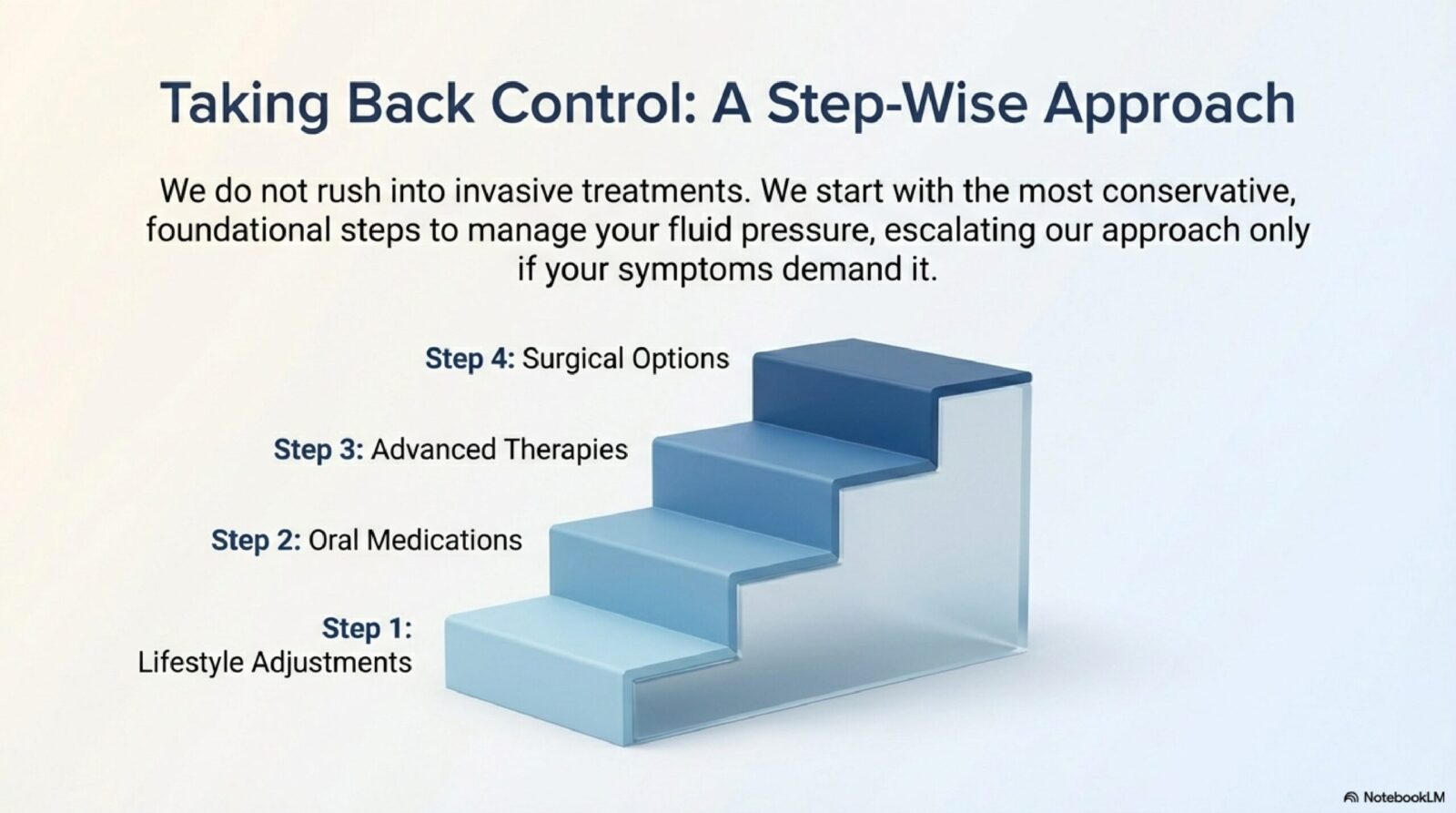
For most people with Ménière's disease, surgery is not needed — vertigo attacks are usually managed first with lifestyle changes, diet, and medicines. Surgery or procedures are considered mainly when disabling vertigo continues despite proper medical treatment. The options range from minor in-office injections to major surgery, and the right choice depends heavily on how much hearing remains in the affected ear, because some procedures protect hearing while others sacrifice it to stop the vertigo. This page explains the options, how invasive each is, and their effect on hearing — but the decision is individual and should be made with an ENT specialist. To discuss your case, book a consultation.
First, the non-surgical steps (why they come first)
Before surgery, most patients try: a low-salt diet, cutting back on caffeine and alcohol, managing stress and sleep, medicines your doctor may prescribe (see our betahistine for vertigo page for general information), and vestibular rehabilitation for balance. Many people improve enough that surgery never becomes necessary.
When surgery or procedures are considered
Surgery is generally considered when frequent, disabling vertigo persists despite several months of proper medical management and lifestyle changes, and the attacks seriously affect daily life, work, or safety. Your specialist will weigh how often attacks occur, how much hearing remains, and your overall health.
Minimally invasive options
- Intratympanic steroid injection: a steroid (e.g. dexamethasone) is placed into the middle ear in the clinic. It is hearing-preserving and low-risk, though it may need repeating.
- Intratympanic gentamicin ("chemical labyrinthectomy"): an antibiotic that reduces the balance signals from the affected ear to control vertigo. It is very effective for vertigo but carries some risk to hearing, so it's used carefully.
- Meniett device: a portable device that delivers gentle low-pressure pulses to the inner ear; non-destructive, though evidence for benefit is mixed.
Hearing-preserving surgery
- Endolymphatic sac surgery (decompression or shunt): aims to reduce inner-ear fluid pressure while preserving hearing. It is one of the least destructive surgical options; its effectiveness is debated and varies between patients.
- Vestibular nerve section (neurectomy): cuts the balance nerve to stop vertigo signals while usually preserving hearing. It is highly effective for vertigo but is a more major (neurosurgical) procedure with the risks that involves.
Hearing-sacrificing surgery
- Labyrinthectomy: removes the balance organ of the affected ear. It is very effective at stopping vertigo but removes hearing on that side, so it is reserved for ears that already have poor, non-useful hearing.
Choosing an option: vertigo control vs hearing
The central trade-off is stopping vertigo versus protecting hearing. If useful hearing remains, hearing-preserving options are prioritised. If hearing is already largely lost in that ear, more definitive procedures become reasonable. Because Ménière's usually affects one ear, protecting the better-hearing ear is a key consideration. This is a personalised decision made with your ENT surgeon.
Recovery and what to expect
Recovery varies widely by procedure — from same-day for an in-office injection to a longer recovery with balance retraining after major surgery. Some imbalance is common at first as the brain adapts, and vestibular rehabilitation often helps. Your surgeon will explain the specific risks, benefits, and recovery for whichever option fits you.
Consult Dr. Prateek Porwal
If Ménière's vertigo is not controlled despite treatment, a specialist assessment can clarify whether a procedure is worth considering and which one suits your hearing and lifestyle. Dr. Prateek Porwal, ENT and vertigo specialist at Prime ENT Center, can evaluate your case and discuss the right next step.
👉 Book an appointment or contact us on WhatsApp.
FAQ
Is surgery necessary for Ménière's disease?
Usually not — most people are managed with diet, lifestyle, and medicines. Surgery is a last resort for disabling vertigo that continues despite proper treatment.
Which Ménière's surgery is best?
There's no single best option; it depends on how disabling the vertigo is and how much hearing remains. Hearing-preserving options are prioritised when useful hearing is present.
Will surgery affect my hearing?
Some procedures preserve hearing (steroid injections, endolymphatic sac surgery, nerve section); others can reduce or remove it (gentamicin carries some risk; labyrinthectomy removes hearing on that side).
Does surgery cure Ménière's disease?
Procedures aim to control the vertigo, not to "cure" the disease; hearing and tinnitus may still need separate management.
References
Medical disclaimer: This page is for patient education only and does not replace examination, diagnosis, emergency care, or a personalized treatment plan from a qualified doctor.