
Dr Prateek Porwal at NESCON 2022, AIIMS Delhi, was an important academic milestone in my ENT and vertigo journey. The conference gave me an opportunity to discuss vertigo, balance evaluation and clinical learning with senior ENT colleagues from across India.
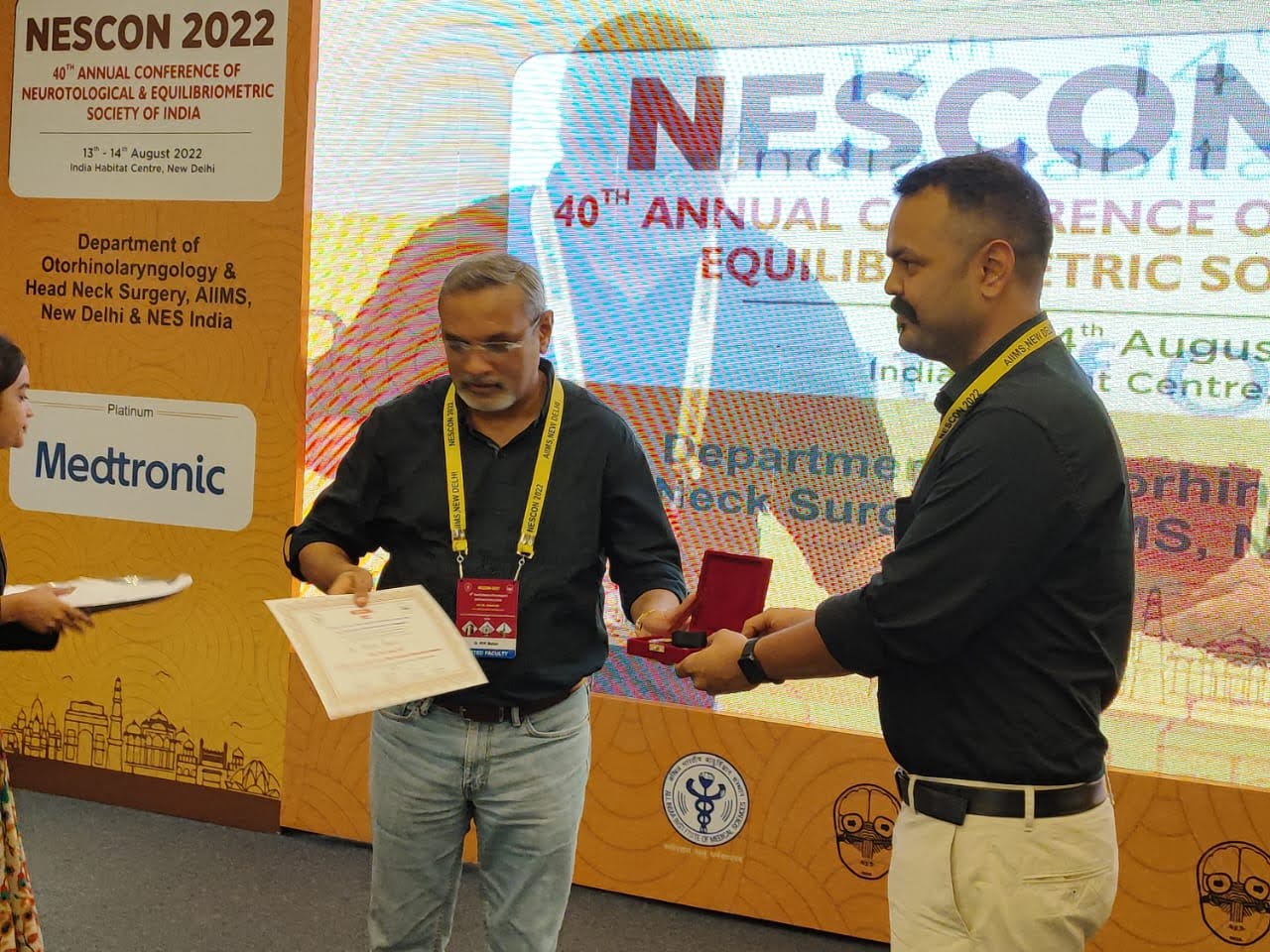
This page is not a treatment instruction page. It is a record of the academic work behind the clinic. For patients, the practical meaning is simple: dizziness and vertigo care should not be based only on guesswork or repeated tablets. It should be based on careful history, eye-movement examination, hearing and balance clues, and the right test when needed.
Patient takeaway
When a doctor presents vertigo work at a national ENT conference, the aim is not only a certificate or prize. The real value is better clinical thinking: which patients have BPPV, which have vestibular migraine, which need VNG testing, and which symptoms should not be dismissed as routine chakkar.
Dr Prateek Porwal at NESCON 2022: What This Event Means
NESCON 2022 at AIIMS Delhi brought ENT specialists together for academic discussion, clinical presentations and exchange of ideas. For a vertigo-focused ENT practice, this type of event matters because balance disorders often sit between ear, brain, eye movement, migraine, anxiety physiology and general medical causes.
Patients often use one word, such as chakkar, dizziness, giddiness, spinning, lightheadedness, imbalance or faint feeling. The diagnosis changes when we ask the right questions: Is the room spinning? Does it happen on turning in bed? Is there hearing loss or tinnitus? Is there headache or visual sensitivity? Is there blackout, chest pain or weakness? This is the type of pattern-based thinking that academic ENT discussions help sharpen.
Connection With Vertigo and BPPV Care
In daily practice, many patients with brief spinning on lying down, turning in bed or looking up may have BPPV. BPPV is common, treatable and often misunderstood. A proper positional test and the correct canal-specific maneuver matter more than random long-term dizziness medicines.
Some patients need a deeper workup. If dizziness is repeated, unclear, associated with eye-movement findings, or not matching typical BPPV, a structured vertigo diagnosis guide and sometimes VNG testing can help. If headache, light sensitivity, motion sensitivity or repeated attacks are part of the story, vestibular migraine may also be considered.
The Bangalore Maneuver Link
My academic and clinical interest includes BPPV treatment pathways, including discussion around the Bangalore Maneuver. Patients should not try every maneuver randomly from the internet. The safer route is to identify the likely canal and side first, then choose the correct maneuver.
This is especially important when symptoms are atypical, very severe, recurrent, associated with neck restriction, or mixed with faint feeling. In such cases, the first job is not to label everything as vertigo, but to separate vestibular symptoms from blood pressure, cardiac, neurological, medicine-related and anxiety-breathing patterns.
In short, Dr Prateek Porwal at NESCON 2022 reflects an ongoing commitment to evidence-based vertigo care rather than one-off treatment.
Why Academic Conferences Like NESCON 2022 Matter for Patients
Dr Prateek Porwal at NESCON 2022, AIIMS Delhi, spent two days reviewing case discussions on positional vertigo, vestibular migraine and central causes of dizziness with ENT and neuro-otology specialists from across the country. These sessions are less about certificates and more about comparing real clinical patterns: which BPPV cases responded to a single maneuver, which needed repeat canalith repositioning, and which turned out to be vestibular migraine wearing a BPPV mask.
For a patient sitting in a clinic in Hardoi or nearby districts, this academic background translates into a simple benefit: a diagnosis process that is not guesswork. Instead of starting every dizzy patient on the same tablet, the approach shaped at conferences like NESCON is to test eye movements, check positional triggers, and only then decide whether the problem is inner ear, brain, migraine-related or something else entirely.
Looking back, Dr Prateek Porwal at NESCON 2022 was not just an award or a certificate moment — it was a reminder that good vertigo care depends on continually testing clinical assumptions against a wider community of ENT specialists.
What I Took Back to My Clinic After NESCON 2022
Three things stood out from NESCON 2022 that directly changed day-to-day practice: first, being more disciplined about documenting nystagmus direction before choosing a BPPV maneuver; second, asking about visual triggers and screen sensitivity more consistently when vestibular migraine is suspected; and third, being more willing to refer for VNG or audiometry testing early rather than waiting through months of trial-and-error medication.
How This Shapes Patient Consultations Today
Every consultation at Prime ENT Center now carries a small trace of that NESCON 2022 experience. When a patient describes chakkar or dizziness, the questions asked are shaped by comparing notes with other specialists: how long does the spinning last, does head position change it, is there any hearing loss, and has anything similar happened before.
That is the real, lasting outcome of Dr Prateek Porwal at NESCON 2022 — not the framed certificate on the wall, but a sharper, more structured way of separating BPPV, vestibular migraine, vestibular neuritis and other causes of vertigo before deciding on treatment.
When Patients Should Seek Review
Book a vertigo or ENT review if spinning attacks repeat, walking confidence drops, nausea keeps coming back, hearing changes, tinnitus appears, or dizziness starts affecting work, driving, sleep or daily life. Bring old prescriptions, hearing tests, VNG reports, scans if any, and a short symptom diary.
Seek urgent medical care if dizziness comes with weakness on one side, slurred speech, double vision, new severe headache, fainting, chest pain, sudden hearing loss, inability to stand, or a new neurological symptom. Academic conference learning is useful, but emergency warning signs still need immediate care.
Useful Starting Pages
- Vertigo main guide
- BPPV guide
- Vertigo red flag check
- VNG testing for vertigo
- Bangalore Maneuver for BPPV
- Contact Prime ENT Center
Frequently Asked Questions
What was NESCON 2022 at AIIMS Delhi?
NESCON 2022 was a national ENT academic conference where ENT doctors shared clinical work, case learning and research updates.
Why does a conference post matter for patients?
It shows that clinical practice is connected with academic learning, peer discussion and updated thinking in vertigo and balance disorders.
Does this page replace medical advice?
No. This is a doctor-credibility and event page. Patients with dizziness, BPPV, vestibular migraine or balance symptoms need an individual clinical assessment.
Where can patients read the related clinical guides?
Patients can start with the vertigo diagnosis guide, BPPV guide, vestibular migraine guide, VNG testing guide and Bangalore Maneuver page.
References and Related Reading
- Clinical practice guideline update: Benign Paroxysmal Positional Vertigo
- NIDCD balance disorders overview
This page documents an academic conference participation and gives general patient education. It is not a substitute for a clinical diagnosis or emergency care.
Read next — from Dr. Porwal's vertigo library