
Dr Prateek Porwal NESCON 2023 marks Dr. Prateek Porwal’s participation in the NESCON 2023 conference at Jaipur, India, where ENT, neuro-otology and vestibular specialists discussed practical problems seen in dizziness, vertigo and balance clinics.
What this conference page records
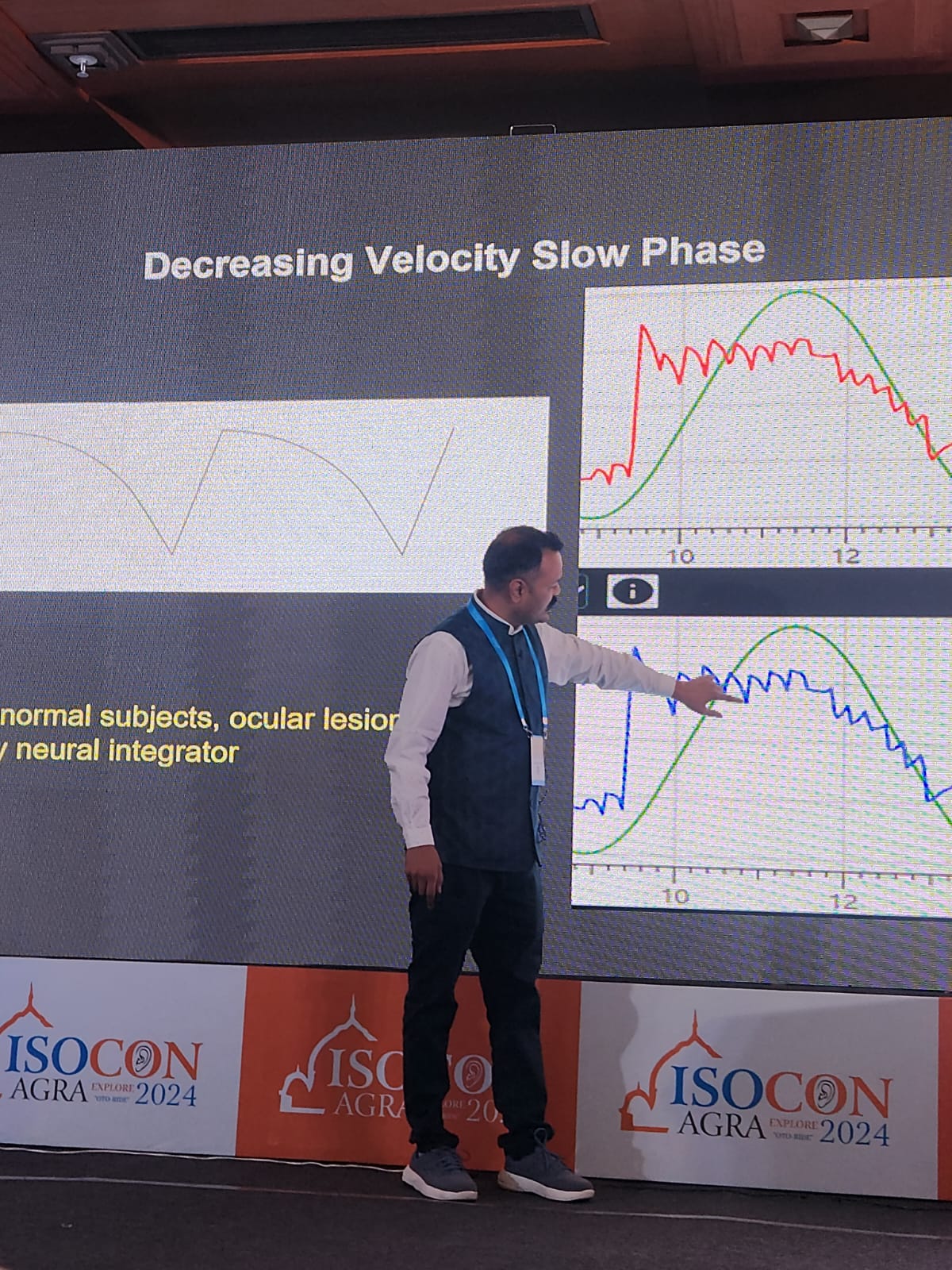
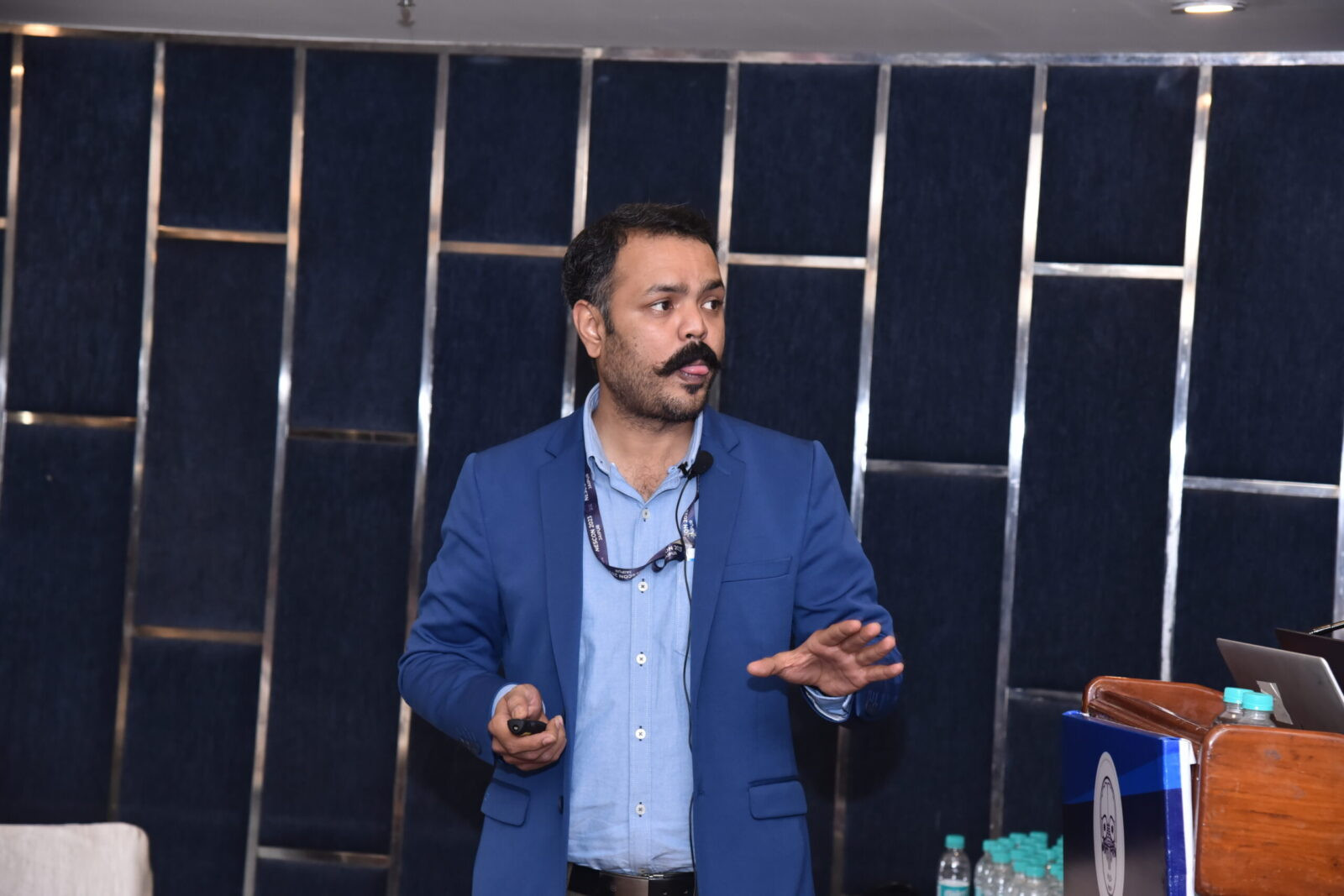
This page is a photo and learning record from NESCON 2023. Dr. Prateek Porwal presented on the role of the high-frequency head shake test for vertigo patients, shared experience with anterior canal BPPV, and participated in professional discussion around pediatric vestibular disorders. The page is not meant to replace a medical consultation; it documents continuing academic work that supports careful clinical decision-making.
Why conference learning matters for vertigo patients
Vertigo care often depends on small details: the direction of eye movements, the exact trigger for dizziness, hearing symptoms, headache history, imbalance pattern, and whether a problem looks like BPPV, vestibular neuritis, migraine, Meniere’s disease or a central warning sign. Conferences such as NESCON give clinicians a place to compare these practical patterns, review test interpretation and discuss where bedside examination should be combined with vestibular testing.
For patients, the benefit is indirect but important. A doctor who keeps learning from case discussions and specialty meetings is better prepared to explain why one patient needs a canalith repositioning maneuver, another needs vestibular rehabilitation, and another needs urgent neurological evaluation. This is especially relevant in dizziness, where the same word, “chakkar,” may describe spinning, faintness, imbalance, fear-related dizziness or motion sensitivity.
Topics connected with the NESCON 2023 participation
The high-frequency head shake test is one of several bedside and clinic tools that may help a trained clinician understand vestibular asymmetry. It is interpreted along with history, eye movement findings, positional tests and, when needed, formal vestibular tests such as VNG or vHIT. The discussion on anterior canal BPPV is also clinically relevant because uncommon BPPV variants can be missed when dizziness is treated as a single generic symptom.
Pediatric vestibular disorders need even more caution. Children may describe dizziness differently from adults, and parents may notice imbalance, nausea, school difficulty, motion sensitivity or repeated falls rather than a classic spinning sensation. Conference discussion helps clinicians stay alert to these differences without overclaiming a diagnosis from one symptom alone.
Helpful related pages
If you are reading this because you or a family member has dizziness, start with the practical patient pages on what vertigo means, VNG testing for vertigo, video head impulse testing, and vestibular rehabilitation results. For sudden severe dizziness, new weakness, double vision, trouble speaking, fainting, chest pain or a new severe headache, emergency care is safer than reading online.
What patients should take from this page
This page is not a treatment protocol, but it explains why continuing ENT and vestibular education matters for patients with dizziness. A good vertigo consultation usually separates spinning vertigo from faintness, imbalance, motion sensitivity, panic-linked dizziness, hearing-related attacks, migraine patterns and neurological warning signs. Conference learning supports that careful separation instead of treating every patient with the same generic vertigo medicine.
Clinic topics connected to NESCON learning
Several practical clinic questions connect with the NESCON 2023 discussion: when a positional test suggests BPPV, when VNG or vHIT may clarify vestibular function, when a child with imbalance needs a different history from an adult, and when red-flag symptoms should move the patient away from routine outpatient management. These topics support safer decisions for patients who arrive with repeated dizziness, falls, ear symptoms, headache or unclear imbalance.
For practical clinic use, this record also helps patients understand why Dr. Porwal may ask detailed questions before deciding on treatment. The same complaint of dizziness can need a positional maneuver, vestibular rehabilitation, hearing evaluation, migraine assessment, breathing-pattern review, or urgent referral depending on the history and examination.
External reference
For a patient-friendly background on balance symptoms and why vestibular problems need careful assessment, see the NIDCD balance disorders overview. It is included as a general education reference, not as a substitute for individualized ENT or neurological evaluation.
NESCON 2023 photo record
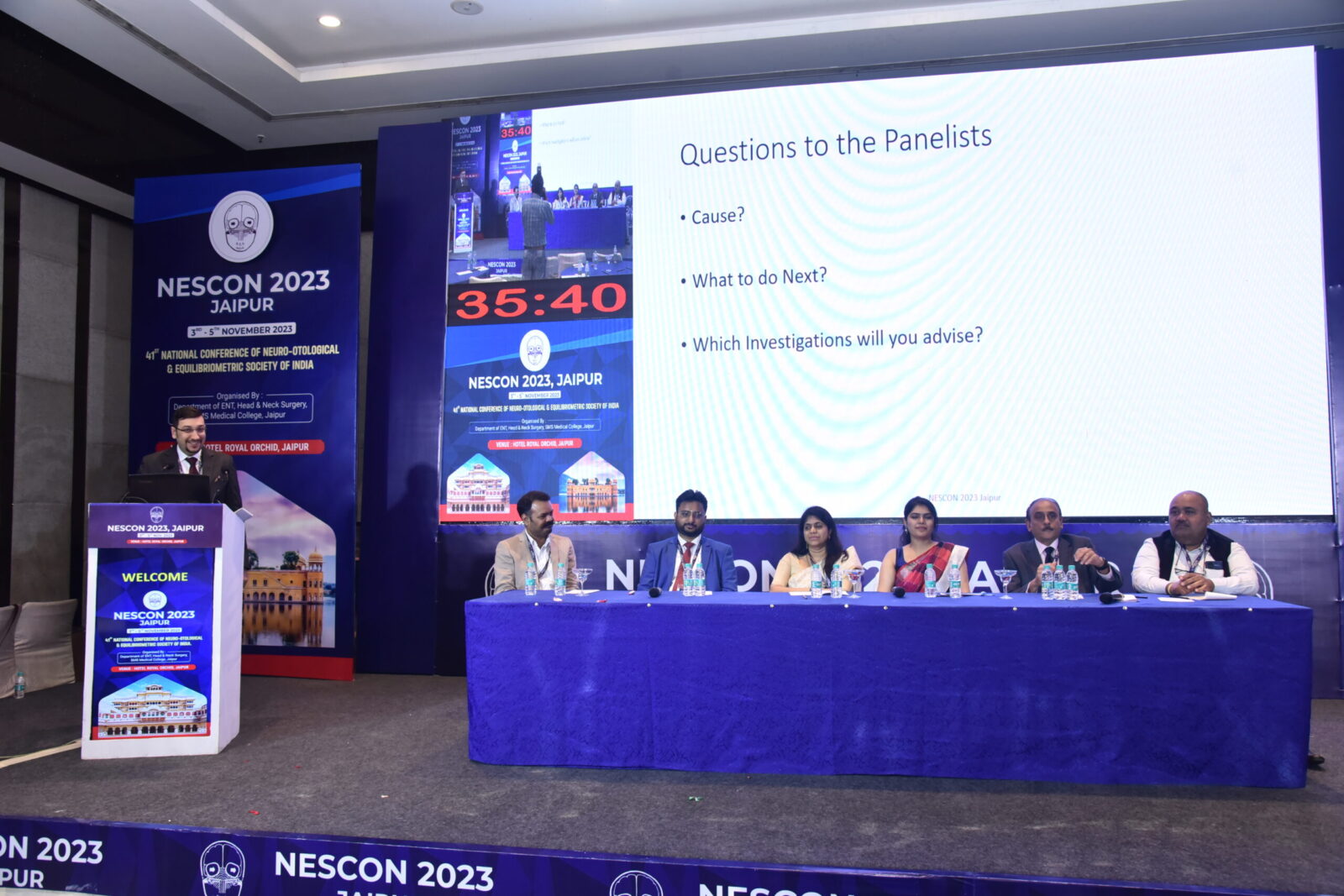
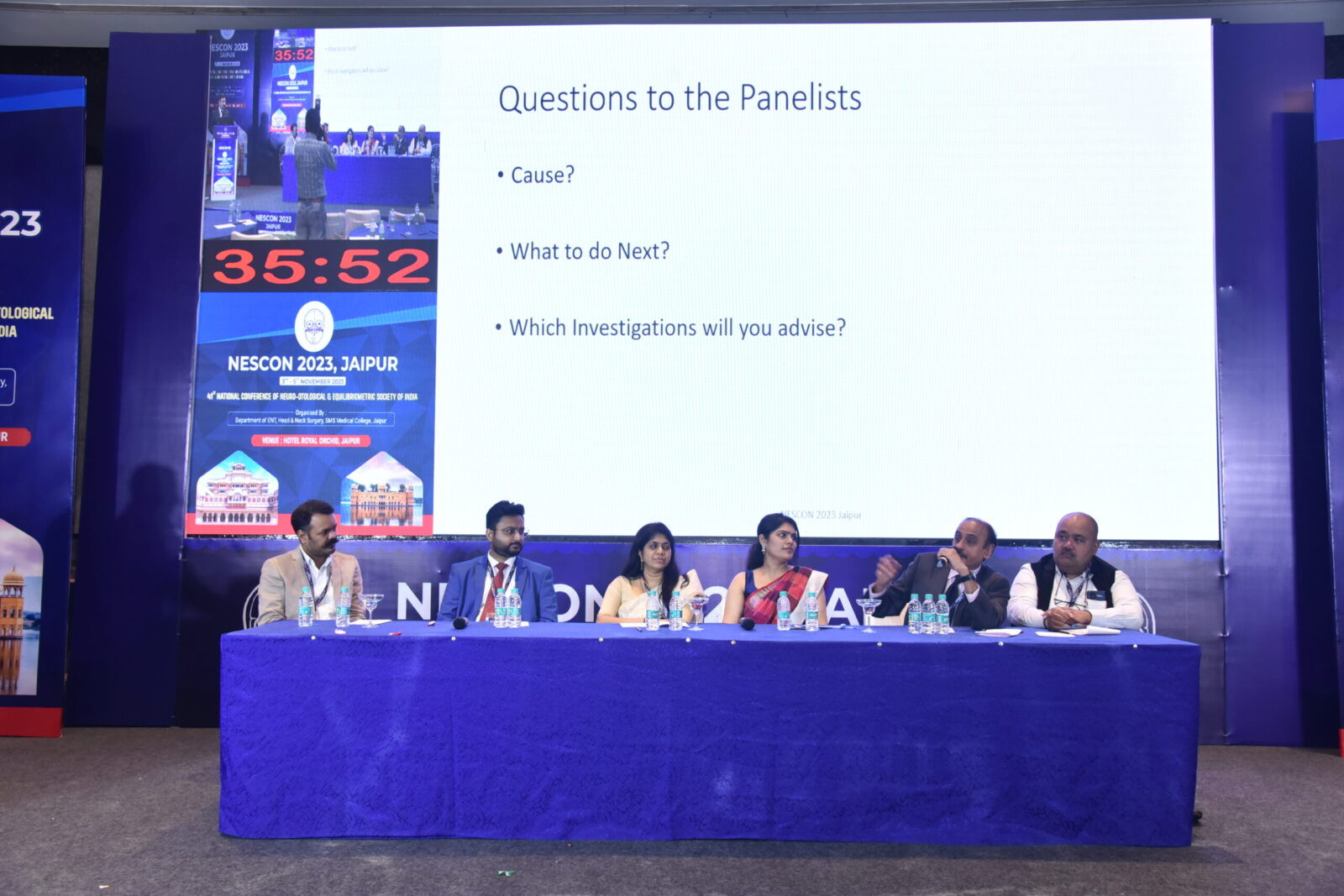
The images below are retained as a visual record of Dr. Prateek Porwal at NESCON 2023, Jaipur, including presentation and panel moments from the conference.
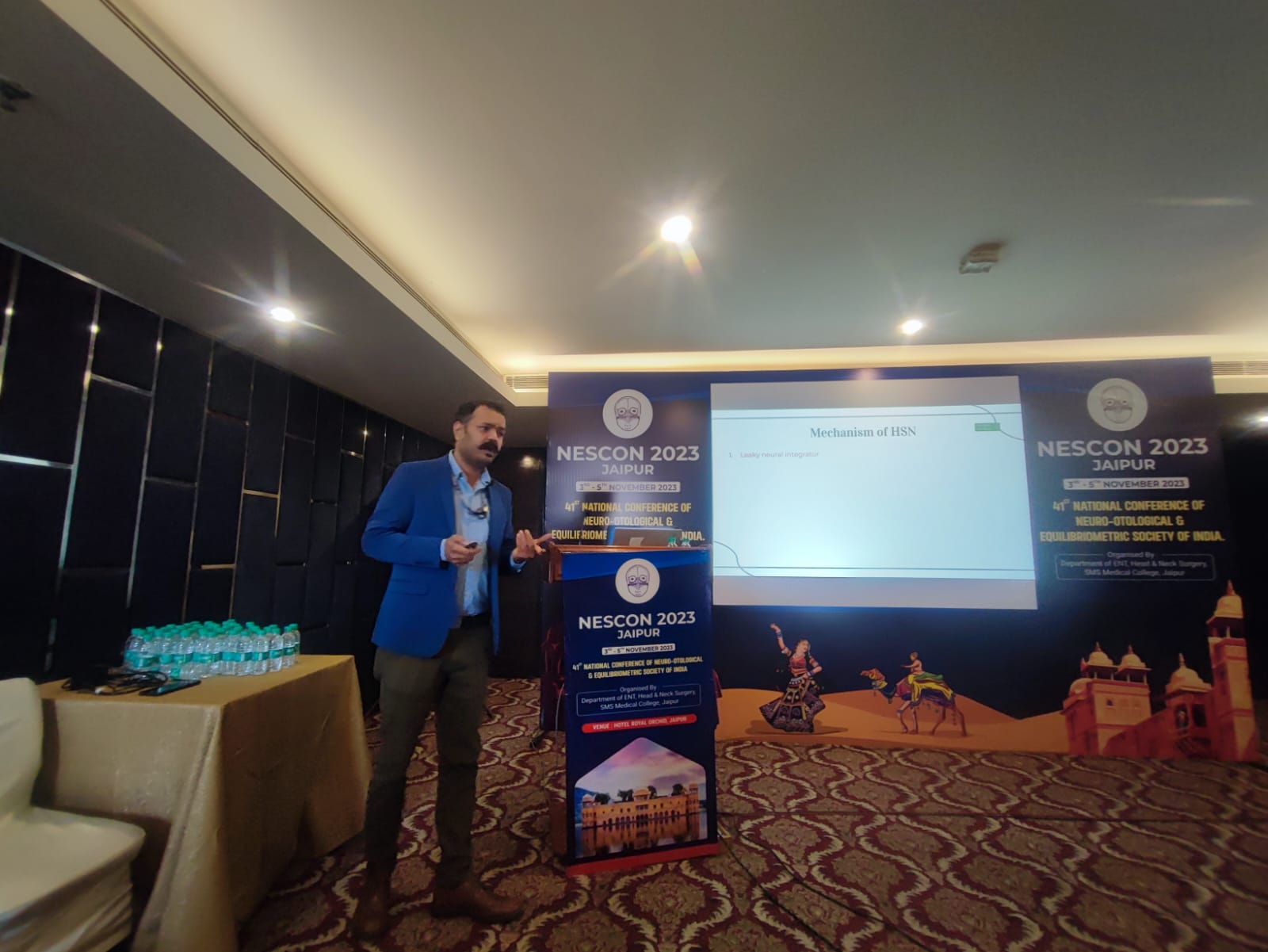
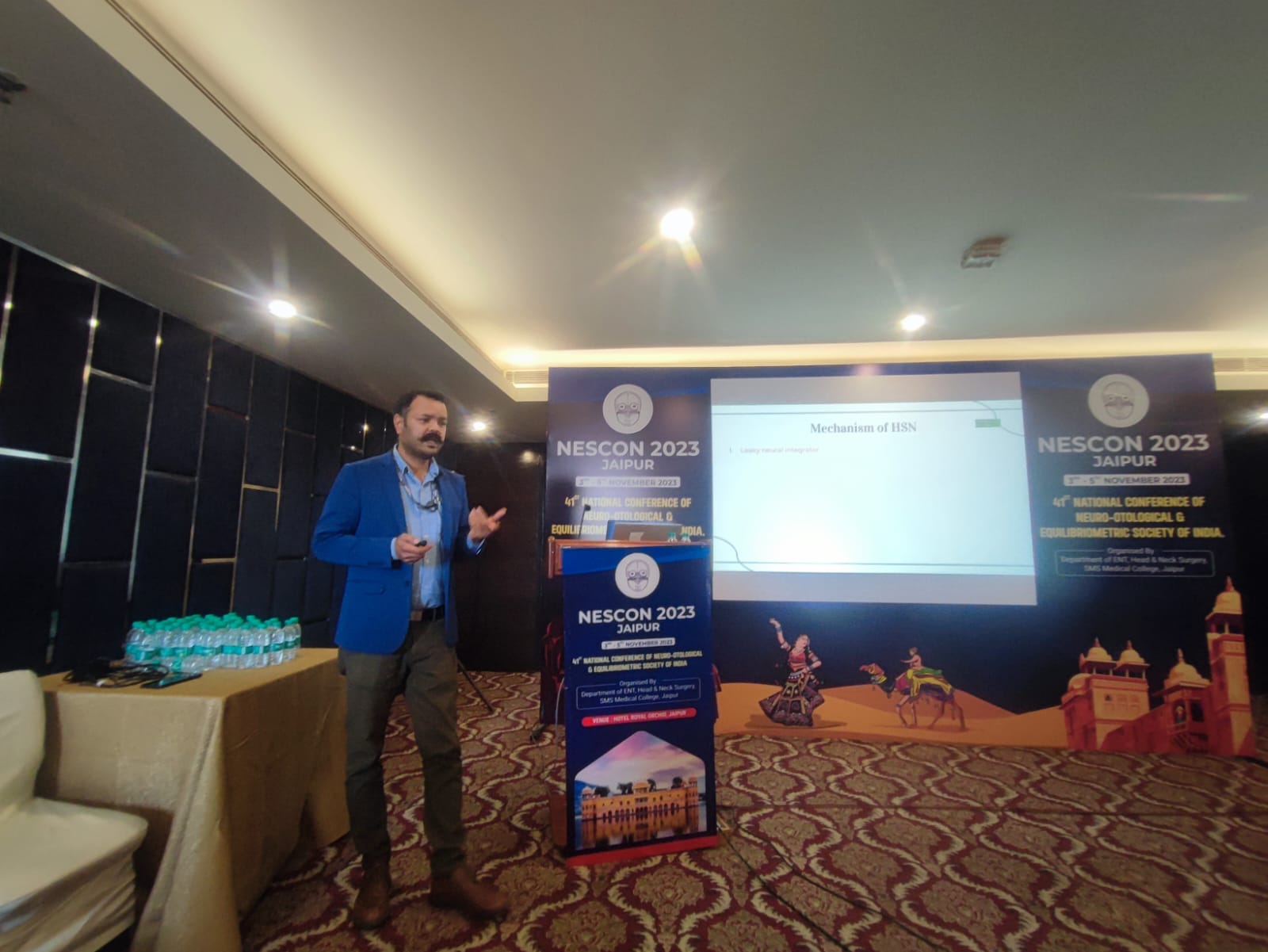
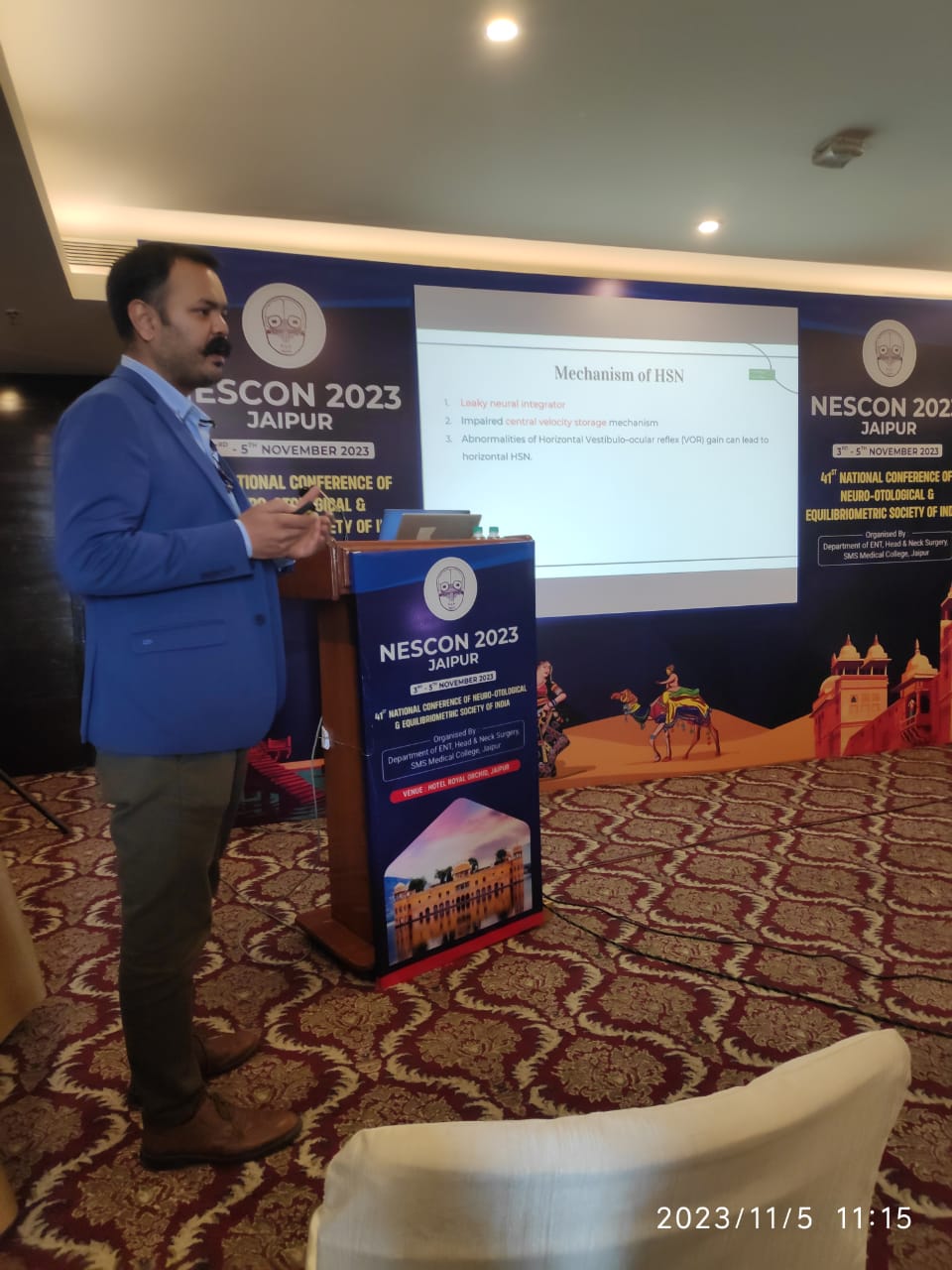
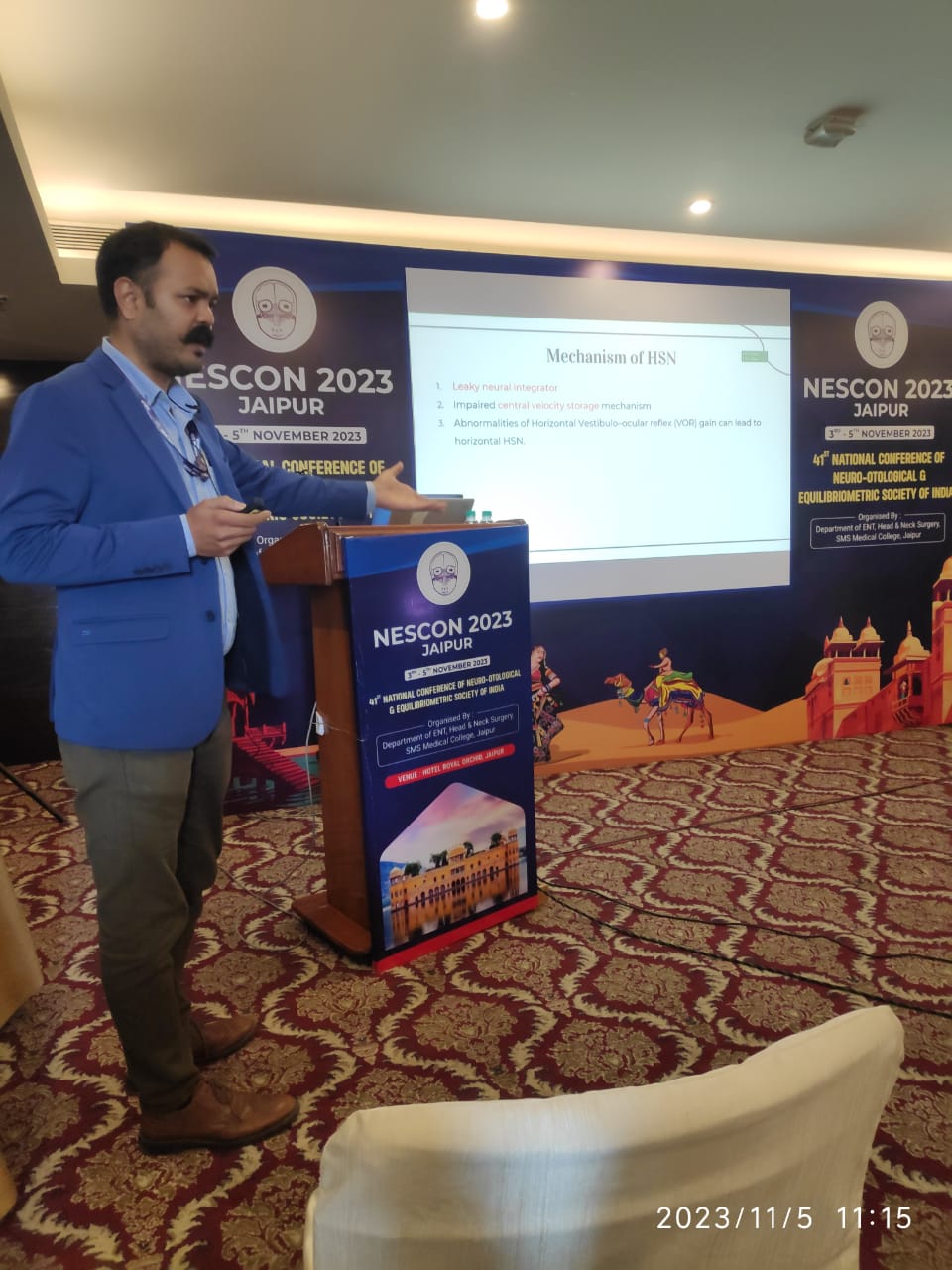
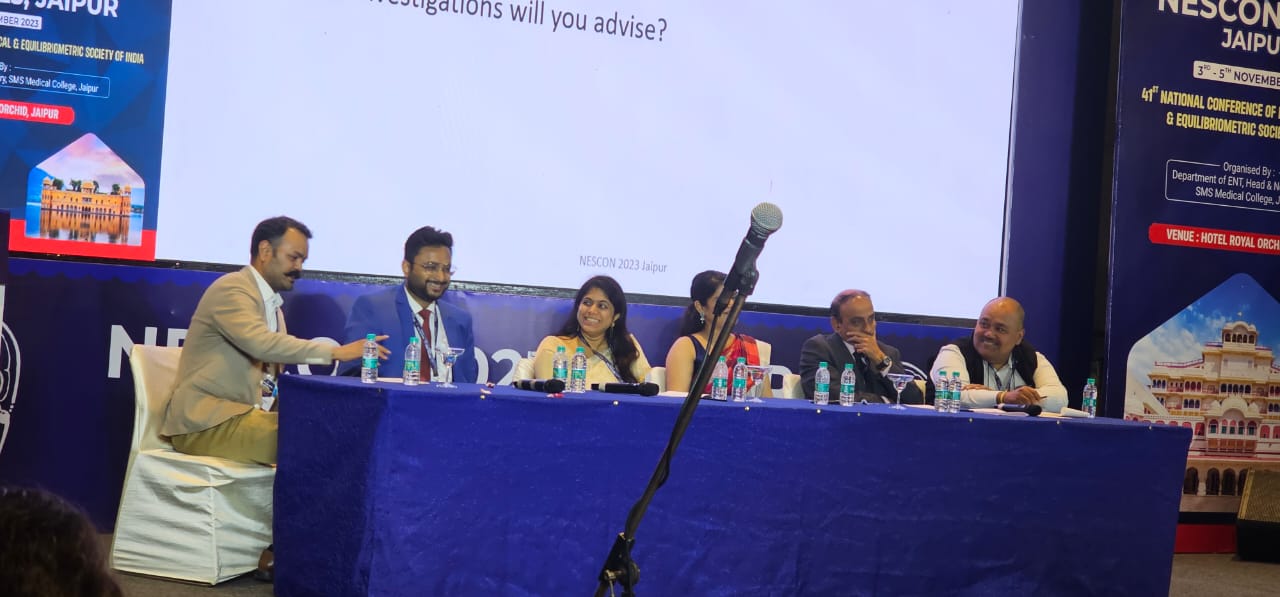
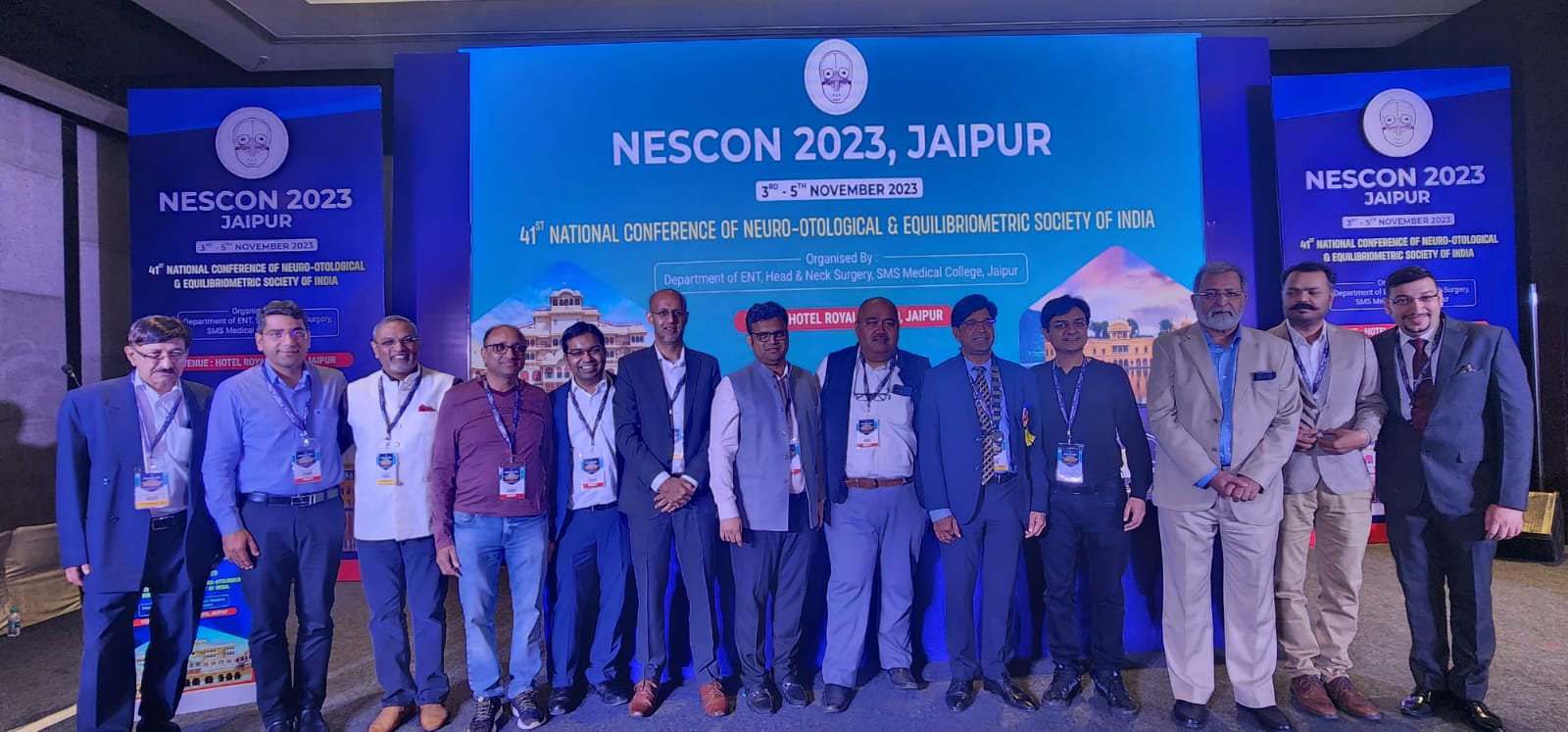
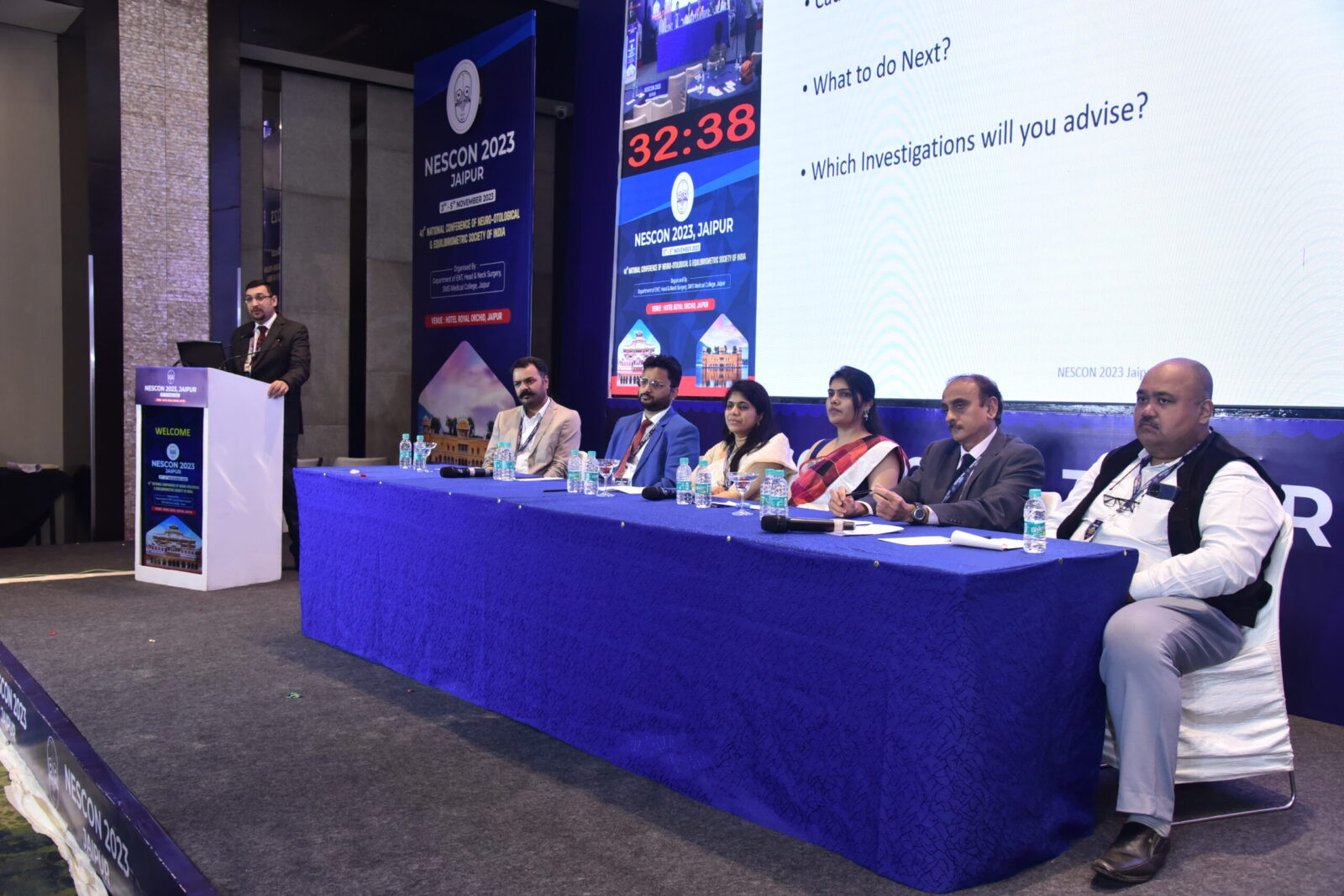
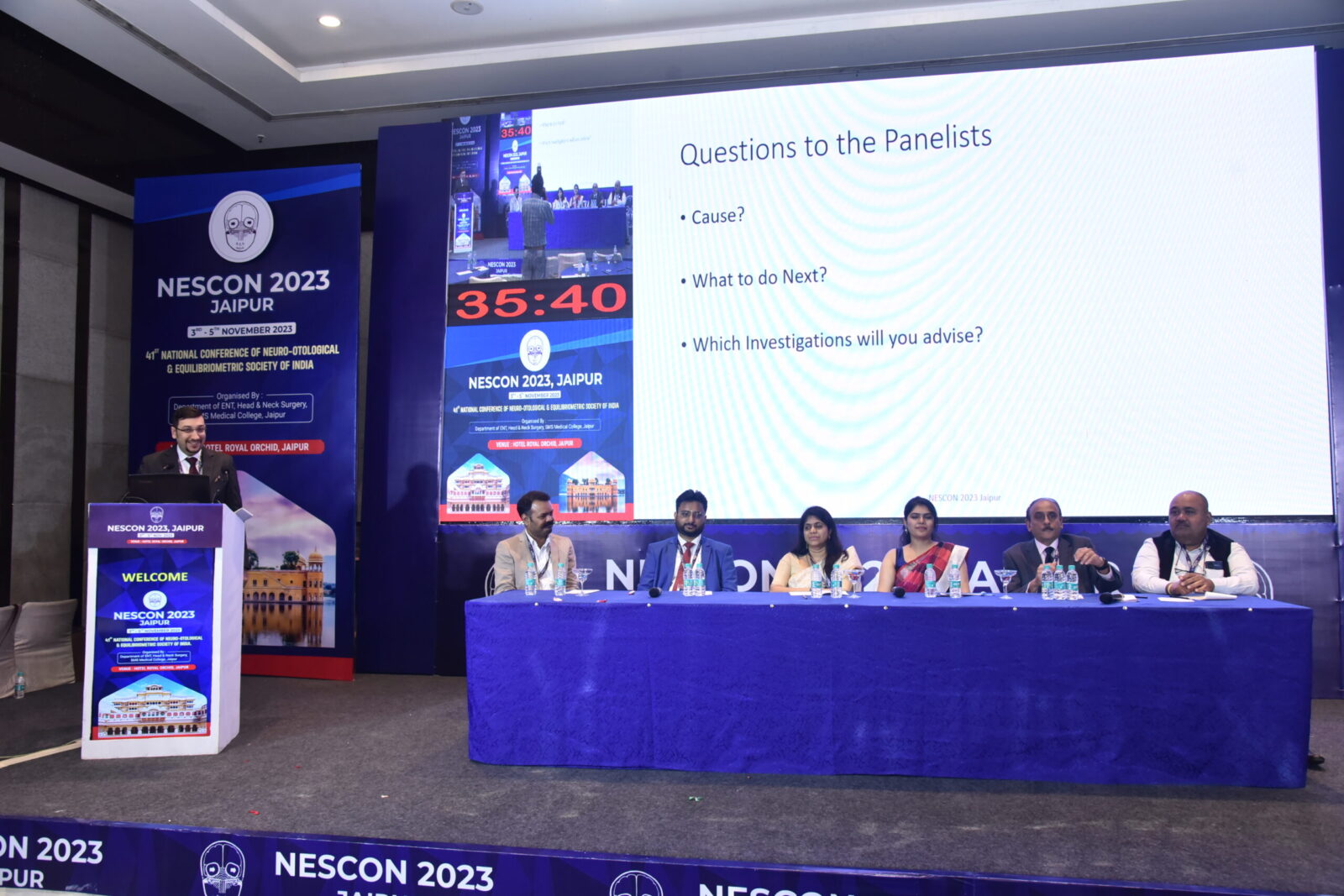
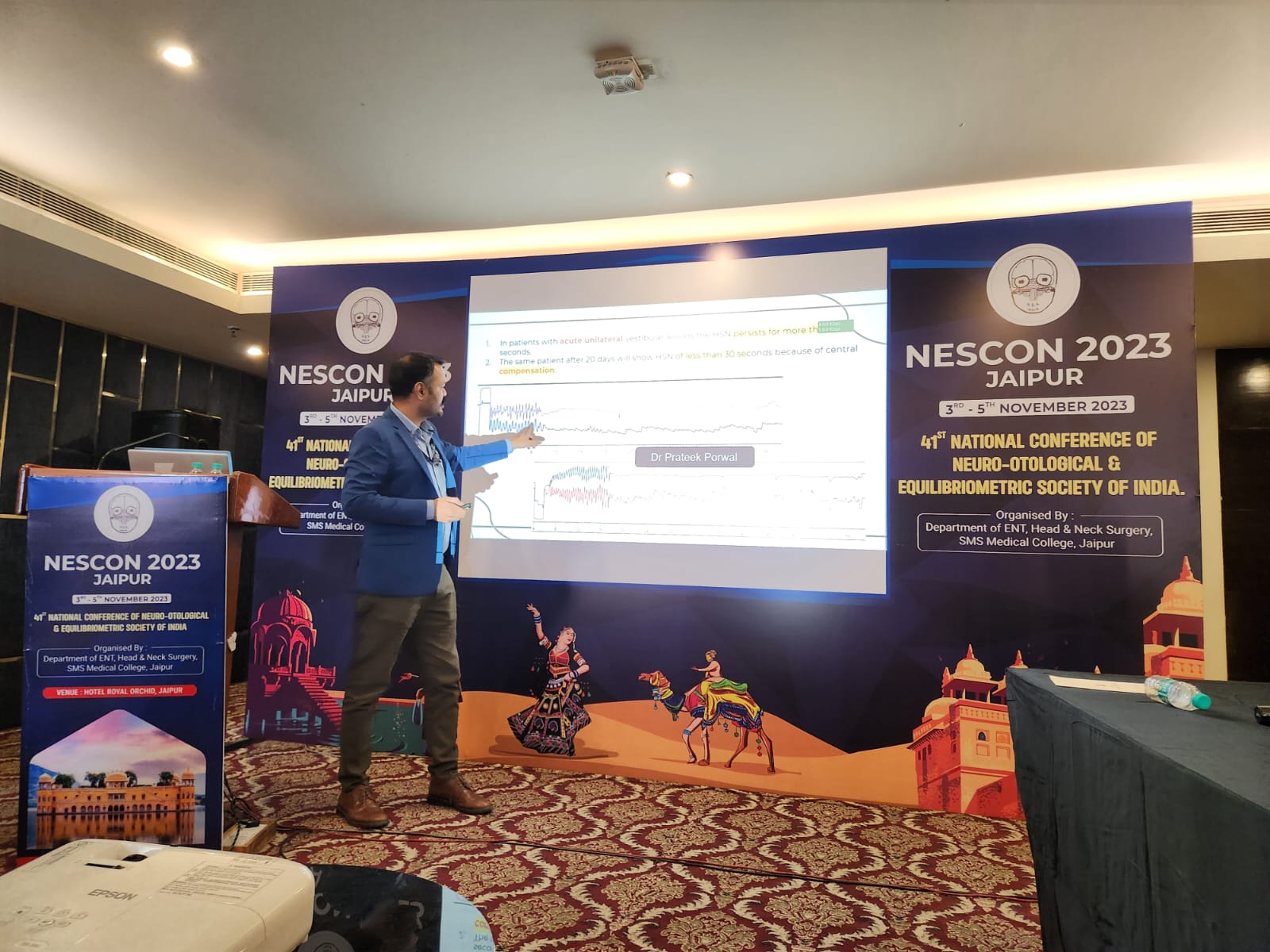

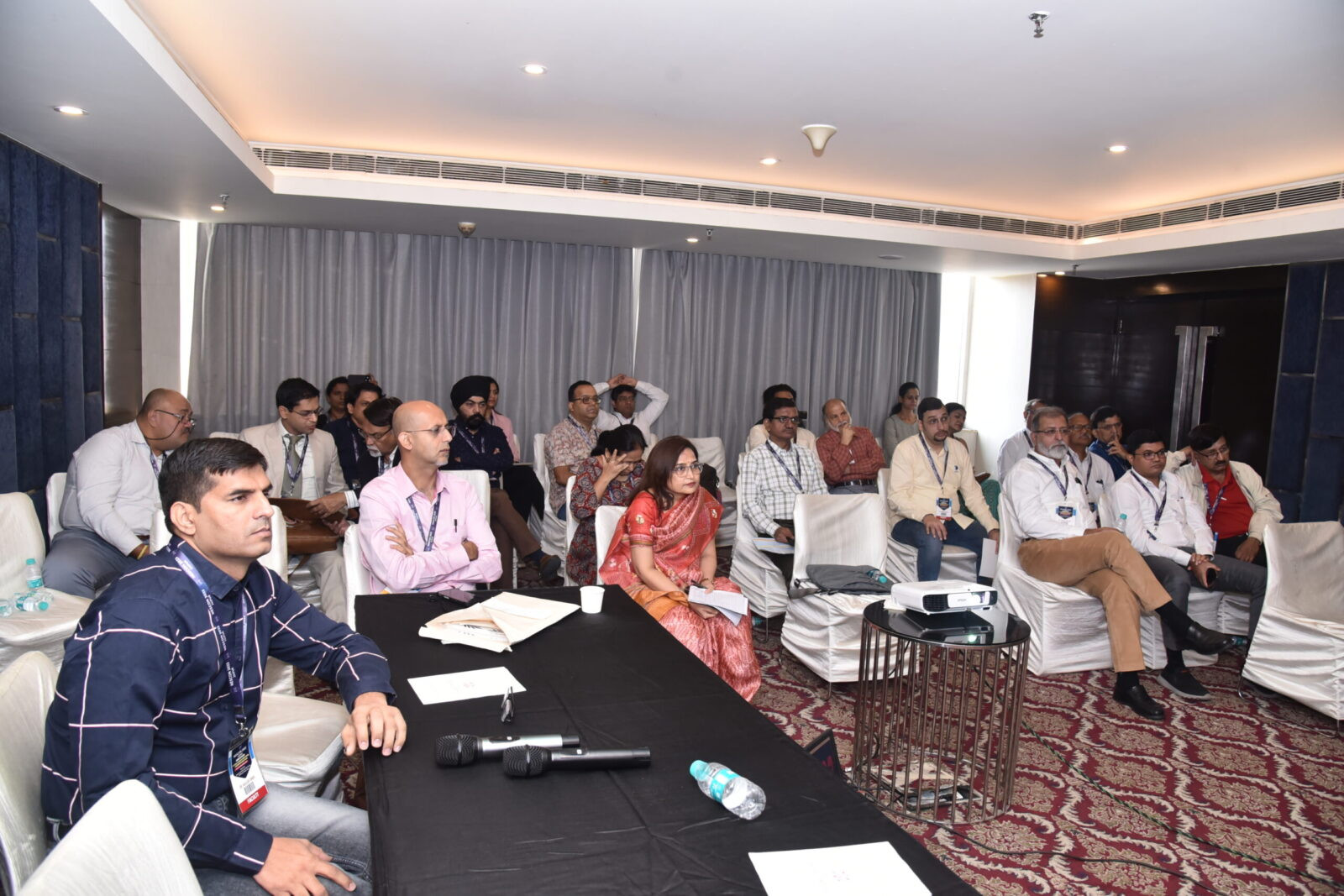 Dr Prateek Porwal vertigo Specialist Dr Prateek Porwal in NESCON 2023 Conference at Jaipur India
Related guides: vertigo diagnosis guide, VNG testing, ENT and vertigo treatments, and online consultation.