
Reviewed by Dr. Prateek Porwal, MBBS, DNB ENT, CAMVD. Dr. Porwal uses vestibular testing, positional examination, eye-movement assessment and audiology correlation for vertigo and dizziness patients at Prime ENT Center, Hardoi.
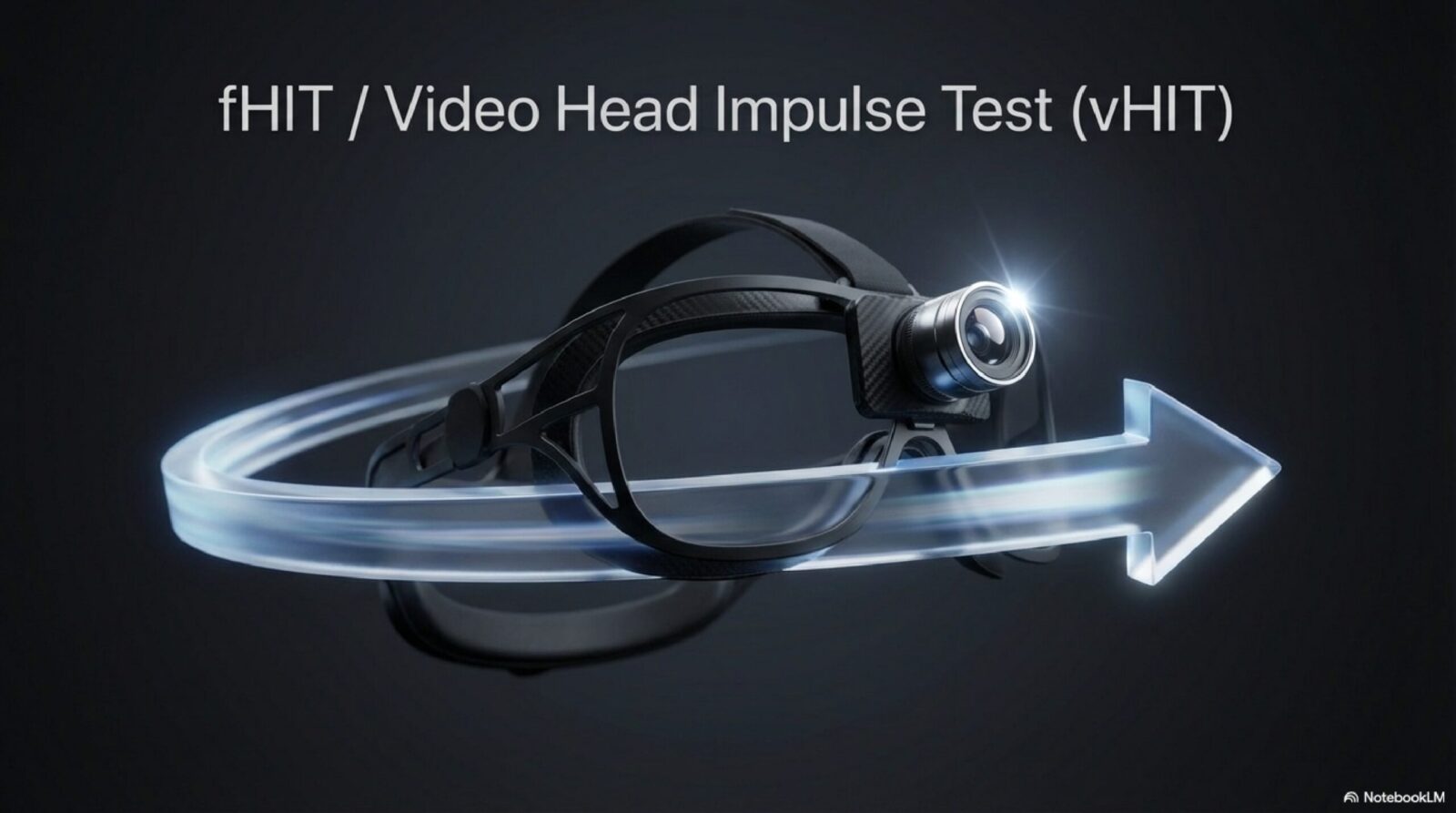
vHIT video head impulse test is one of the vestibular testing topics patients ask about after months of unexplained vertigo, imbalance or dizziness. The important point is that no vestibular test should be read alone. The story, examination, eye movements, hearing findings and red flags decide what the result means.
vHIT video head impulse test: quick answer
vHIT video head impulse test records eye and head movement during quick small head turns. It checks the vestibulo-ocular reflex, especially semicircular canal function, and can reveal catch-up saccades that the naked eye may miss.
What is vHIT video head impulse test?
The vestibulo-ocular reflex keeps vision steady when the head moves. In vHIT, light goggles track the eyes while the examiner gives brief unpredictable head impulses. The machine compares head velocity and eye velocity. A reduced VOR gain or corrective saccades can point toward vestibular weakness; the short glossary entry on video head impulse test explains the term separately.
When I consider this test
I consider vHIT when the story suggests vestibular neuritis, bilateral vestibulopathy, acute prolonged vertigo, gentamicin or ototoxic injury, or unexplained imbalance where canal function matters. It is also useful when bedside head impulse testing is unclear.
What happens during the test
The patient sits and looks at a fixed target. The head is moved quickly through small angles while goggles record eye movement. The test is short, but it needs good technique. Loose goggles, blinking, neck stiffness, poor fixation or predictable head turns can spoil the tracing.
How the result is interpreted
A normal vHIT does not rule out every vestibular disorder. Caloric testing may still show low-frequency weakness when vHIT is normal. Conversely, abnormal vHIT should be matched with symptoms, nystagmus, audiometry and neurological red flags.
Limitations and safety
vHIT is not a brain scan and not a standalone diagnosis. It is a high-frequency canal-function test. In acute vertigo, HINTS interpretation must be done by trained clinicians because a wrong conclusion can miss stroke.
How it fits into the vertigo workup
In practice, video head impulse test is usually one piece of the diagnostic map. I connect it with the vertigo hub, the vertigo diagnosis guide, VNG testing for vertigo, and red-flag screening before deciding treatment.
If the symptom is blackout or near-fainting rather than spinning, read syncope vs vertigo because a cardiac or blood-pressure pathway may be more relevant.
What to tell the doctor
Tell the doctor when symptoms started, whether there is hearing loss or tinnitus, whether symptoms are triggered by position, sound, pressure, walking, screens or standing, and whether there are neurological or fainting symptoms. Bring previous audiometry, MRI, VNG or medicine lists if available.
Common mistakes patients should avoid
The first mistake is choosing a test before the symptom pattern is clear. A person with BPPV needs positional testing. A person with blackout needs syncope evaluation. A person with unilateral hearing symptoms may need audiometry. A person with acute continuous vertigo and neurological signs may need emergency stroke assessment.
The second mistake is treating vHIT video head impulse test as a pass-or-fail answer. Vestibular testing often gives probabilities and patterns. A mildly abnormal result in the wrong clinical story may not explain the patient. A normal result can still be useful because it redirects the workup.
How I explain reports to patients
I usually explain vestibular reports in plain language: which part of the balance system was tested, whether right and left sides behaved differently, whether the result matches symptoms, and what the next step is. The patient should leave knowing whether the plan is maneuver treatment, medicine review, vestibular rehabilitation, hearing workup, neurological evaluation, cardiac evaluation, or observation.
This matters because many patients arrive with old test reports but no clear explanation. The report should not create fear. It should narrow the diagnosis and make the treatment plan more specific.
For vHIT video head impulse test, I also tell patients what the test cannot answer. That prevents over-treatment and prevents missed non-vestibular causes such as anemia, diabetes-related sugar swings, orthostatic hypotension, migraine, medication side effects, anxiety-amplified dizziness or cardiac syncope.
FAQ
Is video head impulse test painful?
Most vestibular tests are not painful, but they can briefly provoke dizziness, nausea or eye movement. Tell the testing team if you have neck pain, ear surgery history, severe anxiety, pregnancy, recent cardiac symptoms or severe hearing sensitivity.
Can video head impulse test diagnose every cause of vertigo?
No. It answers one part of the vestibular question. BPPV, Meniere disease, vestibular migraine, PPPD, syncope and stroke-risk patterns need different combinations of history, examination and tests.
When is vHIT different from VNG or caloric testing?
vHIT checks high-frequency canal function during quick head turns. VNG and caloric testing may answer different parts of the vestibular question, so the right test depends on the symptom pattern and examination.
References
Video head impulse test review – PubMed: PubMed review
Frontiers review of vHIT interpretation: Frontiers review
For non-emergency dizziness, vertigo, imbalance or VNG-related evaluation, call Prime ENT Center, Hardoi at 7393062200. Sudden weakness, double vision, chest pain, fainting, severe headache or inability to stand needs urgent care first.
Medical disclaimer: This article is for educational purpose and patient education. A vestibular test result should be interpreted with the history, examination, hearing findings and red-flag assessment, not in isolation.