Vs bppv is something I see regularly in my practice. Hello, I’m Dr. Prateek Porwal, DNB ENT specialist at Prime ENT Center in Hardoi. I want to talk about something that confuses patients, misleads doctors, and leads to completely wrong treatment more often than it should: the difference between cervicogenic dizziness and BPPV-benign paroxysmal positional Vertigo.
Table of Contents
- Cervicogenic Dizziness vs BPPV: detailed Side-by-Side Comparison Table
- Onset Patterns: When and How Did Your Dizziness Start?
- Trigger Movements: What CAUSES Your Dizziness to Occur?
- Duration: How Long Does an Episode of Dizziness Last?
- Type of Dizziness Sensation: What Does It Actually Feel Like?
- Associated Neck Pain: The Most Critical Clue
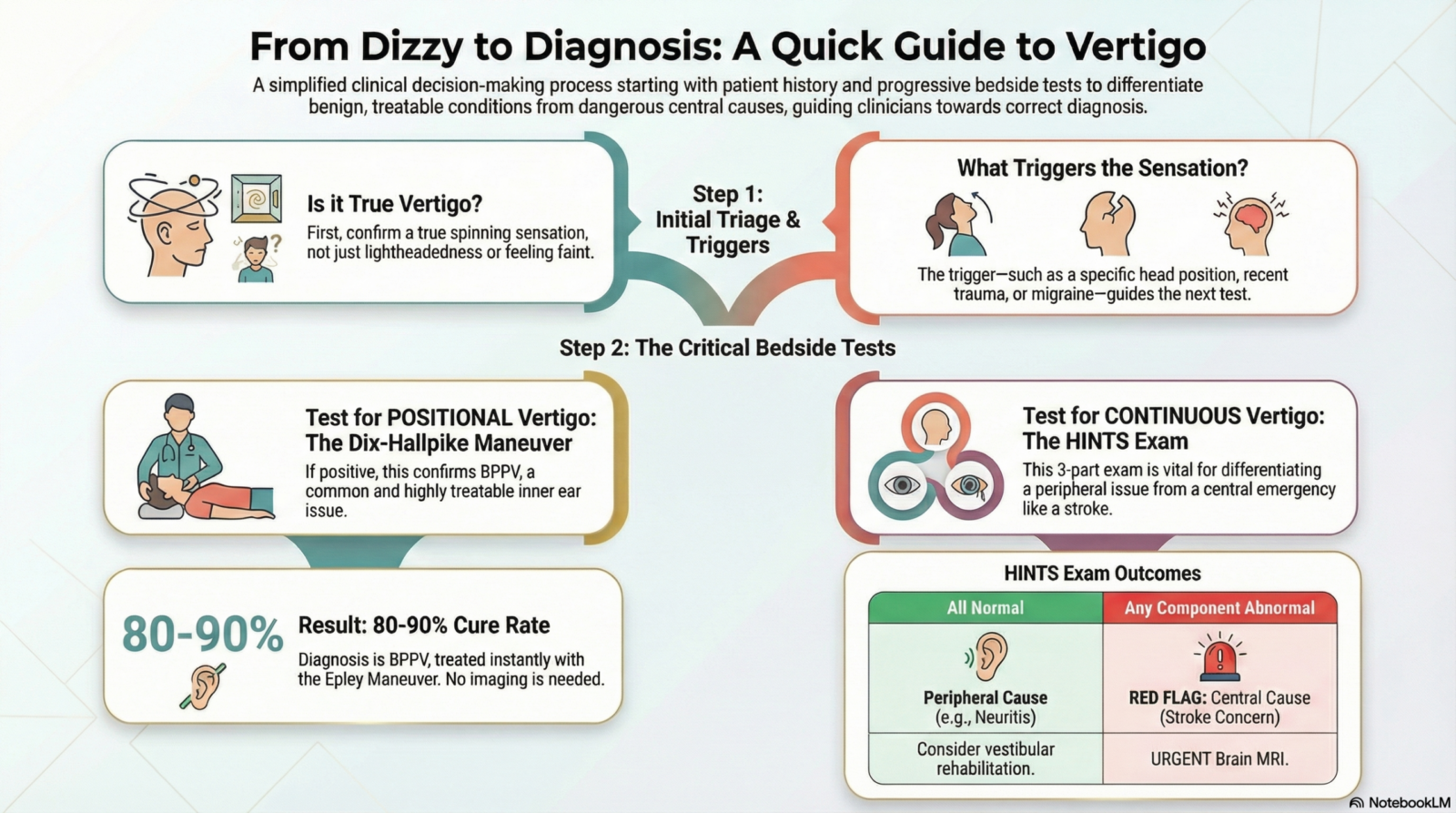
- The Dix-Hallpike Test: The Diagnostic Gold Standard for BPPV
- Nystagmus: Involuntary Eye Movements and What They Mean
- Treatment Response: Why Wrong Treatment Doesn’t Work and Wastes Time
- Why Misdiagnosis Between These Two Conditions Happens So Often in India
These are two completely different problems with completely different underlying causes, completely different presentations, completely different diagnostic approaches, and completely different treatments. Yet I see them confused constantly in my clinic. Patients with clear BPPV getting neck exercises that don’t help. Patients with cervicogenic dizziness getting Epley maneuvers that do nothing. Frustration all around because the treatment doesn’t match the problem.
This article is going to clarify this confusion completely and definitively. By the end, you’ll understand exactly what distinguishes these two conditions. You’ll know what questions to ask your doctor. You’ll know what tests should confirm the diagnosis. And most importantly, you’ll understand why getting this distinction right determines whether you actually improve or stay stuck in chronic dizziness.
Related Reading
- The Cervical Vertigo Misdiagnosis Trap: Why Neck X-Rays Mislead
- Semont Maneuver: BPPV Treatment (70-90% Success)
- BBQ Roll Maneuver: Treatment for Horizontal Canal BPPV
- What is BPPV? Types, Symptoms & Best Treatments
- Vitamin D Deficiency and BPPV, Can Supplements Prevent Recurrence?
Cervicogenic Dizziness vs BPPV: detailed Side-by-Side Comparison Table
Let me start with a clear, organized comparison. This will be the foundation for understanding everything else:
| Feature | Cervicogenic Dizziness | BPPV |
|---|---|---|
| Onset | Gradual over weeks/months | Sudden, immediate |
| Primary Trigger | Neck movement or position | Head position in space |
| Classic Triggers | Looking up, rotating head, sustained positions | Rolling over in bed, looking up, bending down |
| Duration of Dizziness | Constant or prolonged (minutes to hours) | Brief (seconds to minutes) |
| Type of Dizziness | Floating, unsteady, disconnected | True spinning vertigo |
| Neck Pain | Almost always present | No neck pain |
| Associated Symptoms | Neck stiffness, shoulder pain, sometimes arm symptoms | Eye movements (nystagmus), sometimes nausea |
| Nausea Level | Usually mild | Can be severe |
| Dix-Hallpike Test Result | Negative (no dizziness triggered) | Positive (triggers severe vertigo) |
| Nystagmus (Eye Movement) | No characteristic nystagmus | Yes, specific diagnostic pattern |
| First-Line Treatment | Physiotherapy, posture, exercises | Epley maneuver, other repositioning |
| Success Rate of Treatment | ~70% improvement in 4-6 weeks | ~80% resolution in 1 session |
| Underlying Problem | Proprioceptive dysfunction (neck sensors) | Vestibular (inner ear crystal displacement) |
| Typical Age | Younger to middle-aged (30-65) | Older adults (60+) |
Onset Patterns: When and How Did Your Dizziness Start?
Cervicogenic dizziness typically develops gradually over weeks or months. Your dizziness builds slowly over time. Maybe you notice you’re feeling a bit unsteady or “off” at first-subtle, easy to dismiss. Then over days and weeks, it becomes more pronounced. You start noticing you need to hold walls or furniture as you walk. The sensation builds progressively.
This gradual onset corresponds perfectly with the gradual development of neck problems-arthritis progressing, muscle tension building from repetitive strain, postural deterioration happening slowly. The dizziness and neck problem evolve together.
BPPV typically comes on suddenly with a bang. A patient will tell me: “Doctor, I woke up one morning and the room was spinning terribly.” Or “I rolled over in bed and suddenly everything started spinning so bad I couldn’t even open my eyes.” Or “I turned my head quickly and boom, severe vertigo hit me.” The onset is immediate, dramatic, and unmistakable.
Sometimes BPPV is triggered by head trauma-even minor trauma like a fall, a car accident, or a blow to the head. You might be fine for hours or even days after the trauma, then suddenly experience BPPV without warning. But the BPPV itself comes on suddenly, not gradually.
So ask yourself: Did your dizziness develop slowly over weeks and months, gradually building? Or did it come on suddenly? This single question helps distinguish these two conditions remarkably well.
Trigger Movements: What CAUSES Your Dizziness to Occur?
This is the most important distinguishing factor. The trigger is different, and understanding exactly what triggers your symptoms is diagnostic.
Cervicogenic Dizziness Triggers: Neck-Based
The trigger is neck movement or neck position. Specific movements or postures of the Cervical spine make the dizziness worse:
- Turning your head to one side (head rotation, especially one specific direction)
- Looking up (neck extension)
- Looking down for extended periods (neck flexion)
- Maintaining a certain position for a while (sustained neck position causes dizziness to build)
- Bending forward while simultaneously turning your head
- Repetitive neck movements like typing with poor posture
The key insight is: the dizziness is triggered by what the neck is doing, not by where the head is in absolute space. It’s about the motion or position of the cervical spine itself. The dizziness is linked directly to cervical spine movement and stress.
BPPV Triggers: Position-Based
The trigger is head position in space relative to gravity, not the neck movement per se. Specific absolute head positions trigger the vertigo:
- Rolling over in bed (head goes backward relative to the body)
- Looking up suddenly (head extension, but specifically the speed and position matter)
- Bending down to pick something up (head goes below heart level)
- Lying back in a chair or recliner
- Certain sleeping positions, especially lying on one side
- Getting up from lying down quickly
The key insight is: the dizziness is triggered by the absolute position of the head in space relative to gravity. When the head moves into certain positions, crystals in the inner ear (called otoconia) shift slightly, triggering intense vertigo. The neck movement itself is incidental; it’s the resulting head position that matters.
This distinction is absolutely fundamental to diagnosis. Ask yourself: What exactly triggers your dizziness? Is it a specific neck movement like rotating your head? Or is it a specific head position like rolling over in bed or looking straight up? Your answer is diagnostic.
Duration: How Long Does an Episode of Dizziness Last?
Cervicogenic dizziness can be fairly constant-always present at some level of low-grade dizziness-or it can be intermittent depending on what activities you do and what positions you maintain. If you sit at a desk with bad posture, your dizziness might build slowly over hours. But it persists. The episode doesn’t just stop suddenly; it continues and worsens until you change positions or take a break to rest your neck.
Someone with cervicogenic dizziness might describe their day: “My dizziness is mild in the morning. By afternoon after sitting at work, it’s worse. I have to lie down. By evening, it’s still there, though a bit better after rest.”
👉 Also read: Cervical Vertigo Misdiagnosis Bppv Neck Xray
BPPV is characteristically brief and episodic. When the trigger occurs-rolling over in bed, for example-the vertigo comes on very intensely but lasts seconds to maybe a minute or two. Then it stops. The room stops spinning. It settles completely. Later, when you put your head back into that same triggering position, the same brief intense vertigo occurs again.
Someone with BPPV might describe their experience: “When I roll over, I get maybe 30 seconds of awful spinning. It’s horrible but brief. Then it’s gone. If I roll over again later, it happens again, but if I’m careful to move slowly and avoid that position, I’m fine.”
This difference is huge for diagnosis. If your dizziness lasts for hours or persists all day constantly, BPPV is very unlikely. If your dizziness is intense but lasts only seconds to a minute or two before stopping, BPPV is much more likely.
Type of Dizziness Sensation: What Does It Actually Feel Like?
Cervicogenic dizziness is usually described as an unsteady, floating, disconnected feeling. Patients tell me: “The world isn’t spinning, but I feel off-balance.” Or “I feel disconnected from my body.” Or “Like I’m walking on a waterbed or a boat.” Or “Like the ground is unstable.” It’s a spatial disorientation, a proprioceptive confusion, not a true sense of the room moving around you.
BPPV is unmistakable true spinning vertigo. The room appears to move and spin. Objects in the room appear to move visibly. This is classic spinning vertigo, not just a floating feeling or unsteadiness. Patients often describe it very vividly: “The room was spinning so badly I couldn’t open my eyes without feeling sick.” “It was like the worst roller coaster or spinning ride at a fair.” “I couldn’t look at anything without feeling like I was going to be sick.”
The patient’s own description of what the dizziness sensation feels like is often diagnostic. True spinning vertigo-the room actually moving-suggests BPPV. Floating, unsteady, disconnected feeling suggests cervicogenic dizziness.
Associated Neck Pain: The Most Critical Clue
Cervicogenic dizziness almost always comes with neck pain, stiffness, or discomfort. By definition, if there’s cervicogenic dizziness, the cervical spine is the problem, and the cervical spine problem means there’s neck pain. The dizziness and neck pain are linked. They occur together. They improve together.
When I examine a patient with cervicogenic dizziness, I find neck stiffness, restricted neck movement, pain on certain movements, tenderness in the neck muscles. There’s a clear cervical dysfunction.
BPPV comes with no neck pain whatsoever. Zero. No neck discomfort. No stiffness. Your neck is completely fine and functional. The problem is in your inner ear, not your neck. If a patient comes in with BPPV and neck pain, the neck pain is from something else entirely-muscle tension from stress, or coincidental neck arthritis, but not related to the BPPV.
So ask directly: Do you have neck pain with your dizziness? If yes, cervicogenic dizziness is much more likely. If no neck pain at all, BPPV is much more likely.
The Dix-Hallpike Test: The Diagnostic Gold Standard for BPPV
This is one of the most useful diagnostic tests in all of medicine. It can definitively diagnose BPPV. It’s remarkably simple yet powerful.
How the Dix-Hallpike Test Works:
You sit on an examination table, and I have you turn your head about 45 degrees to one side. Then I support your head with my hands and quickly recline you backward so your head hangs off the edge of the table, tilted backward and turned to the side. This is the “Dix-Hallpike position.”
In a patient with BPPV, this position causes the loose crystals in the inner ear to shift suddenly, and within a few seconds, severe vertigo is triggered. I can observe characteristic involuntary eye movements (called nystagmus)-the eyes move involuntarily in a specific, diagnostic pattern. It’s pathognomonic-characteristic and diagnostic.
In a patient with cervicogenic dizziness, the Dix-Hallpike test is negative. No vertigo is triggered. The neck might feel a bit stiff, maybe mildly uncomfortable, but no dizziness occurs. This rules out BPPV.
Why This Test Is So Powerful and Important:
The Dix-Hallpike test is specific and diagnostic for BPPV. If it’s positive-if severe vertigo is triggered with characteristic nystagmus-you definitively have BPPV. If it’s negative-no vertigo triggered-BPPV is essentially ruled out. It’s that straightforward and reliable.
👉 Also read: Why Does BPPV Keep Coming Back? Understanding Recurrence
If your doctor hasn’t done a Dix-Hallpike test and you’re being treated for BPPV based on symptoms alone, that’s a significant diagnostic oversight. The test should be done if BPPV is suspected. It’s simple, safe, takes 30 seconds, and is diagnostic.
Nystagmus: Involuntary Eye Movements and What They Mean
BPPV typically causes nystagmus-characteristic involuntary eye movements. When the Dix-Hallpike maneuver is performed, the eyes move involuntarily in a specific, diagnostic pattern: upbeating nystagmus (eyes beat upward) and torsional nystagmus (eyes twist). This pattern is specific for BPPV. I can see it and definitively confirm BPPV.
The nystagmus usually has a latency-a brief delay before it starts, maybe 5-10 seconds. Then it builds, lasts 20-30 seconds, then fades. This pattern is so characteristic that it’s diagnostic.
Cervicogenic dizziness doesn’t cause characteristic nystagmus. The eyes move normally. There’s no involuntary eye movement pattern. The eyes track normally.
So if involuntary eye movement disorder is present during diagnostic testing, BPPV is more likely. If eyes are completely normal with no involuntary movements, cervicogenic dizziness is more likely.
Treatment Response: Why Wrong Treatment Doesn’t Work and Wastes Time
This is where diagnosis becomes critically important in practice. The treatments for these two conditions are completely different. Treating the wrong condition leads to no improvement, wasted time, and patient frustration.
BPPV Treatment: The Epley Maneuver (Canalith Repositioning Procedure)
BPPV is caused by displaced crystals (otoconia) in the inner ear. The treatment is physically repositioning these crystals back to where they belong, where they won’t cause problems. The Epley maneuver does this through a specific, choreographed sequence of head positions that guide the crystals back into the correct chamber (the utricle).
One properly performed session of the Epley maneuver resolves BPPV in about 80% of patients. Some patients need a second session. But the results are usually dramatic and immediate-a patient comes in with terrible spinning vertigo, can barely function, gets the Epley maneuver, and leaves significantly improved or cured. The transformation is remarkable.
Critical point: Neck physiotherapy does NOT help BPPV. Stretching your neck doesn’t move crystals in your inner ear. Strengthening your neck muscles doesn’t help BPPV. So if someone with BPPV is given neck exercises and physiotherapy, they won’t improve because the treatment doesn’t address the actual problem. The treatment and problem are mismatched.
Cervicogenic Dizziness Treatment: Physiotherapy and Postural Correction
Cervicogenic dizziness is caused by proprioceptive dysfunction resulting from neck problems-arthritis, muscle tension, restricted mobility, nerve irritation. The treatment is physiotherapy that addresses the underlying neck problem: improving neck mobility, strengthening neck muscles, improving posture, and retraining proprioceptive feedback.
Treatment takes 4-6 weeks usually. But success requires proper physiotherapy focused on the neck, consistent exercise at home, and postural correction.
Critical point: The Epley maneuver does NOT help cervicogenic dizziness. Repositioning crystals in the inner ear doesn’t help proprioceptive dysfunction in the neck. The inner ear is fine in cervicogenic dizziness. So if someone with cervicogenic dizziness is given an Epley maneuver, they won’t improve because the treatment doesn’t address the neck problem. Again, mismatched treatment and problem.
This Is Why Getting the Diagnosis Right Matters So Much in Practice:
I had a patient, Sunita, 52 years old, who had all the classic features of BPPV. She had sudden onset of severe spinning vertigo. When rolling over in bed, she got terrible spinning. It lasted maybe a minute, then stopped. She had no neck pain. I did a Dix-Hallpike test-positive, clear nystagmus, definite BPPV.
But before coming to me, she’d gone to a physiotherapist who examined her, felt her neck was a bit stiff (probably from splinting due to dizziness), and concluded she had cervicogenic dizziness. She got two months of neck stretches, neck exercises, neck massage, posture training, ergonomic adjustments.
Her dizziness didn’t improve at all despite two months of physiotherapy. She got frustrated. Her vertigo continued. She missed work. Finally, she came to me. I did one Epley maneuver-15-minute procedure. Her vertigo was 90% better within the session. Within three days, she was essentially cured. But she’d wasted two months on completely ineffective treatment.
👉 Also read: Posterior Canal BPPV, Complete Treatment Guide
Conversely, I had another patient, Harish, 45 years old, with clear cervicogenic dizziness. He had gradual onset, neck pain with it, dizziness triggered by neck movements, no spinning vertigo, and a negative Dix-Hallpike test. He had cervical spondylosis on X-ray.
But a doctor treated him with the Epley maneuver, thinking he had BPPV. He felt slightly better initially from the attention and care and the reassurance of receiving treatment, but his fundamental problem-neck arthritis causing proprioceptive dysfunction-wasn’t addressed. The Epley didn’t touch his actual problem. Eventually, he came to me, got proper physiotherapy for his cervical spine, and genuinely improved.
Both patients wasted time and money on wrong treatments because the initial diagnosis was wrong. This happens too often.
Why Misdiagnosis Between These Two Conditions Happens So Often in India
I want to be honest about why this misdiagnosis is so common in India:
1. Cervical Arthritis Is Extremely Common:
In India, cervical spondylosis is very common due to our lifestyle-farming, poor posture with desk work, heavy loads. X-rays and MRIs often show arthritis. Doctors see arthritis on imaging and anchor to that finding. They assume the arthritis is causing the dizziness without properly testing for vestibular disorders.
2. BPPV Is Also Extremely Common:
BPPV is one of the most common causes of dizziness in older adults, affecting millions of Indians. Yet many doctors-even some ENTs-don’t routinely perform the Dix-Hallpike test. So BPPV gets missed. Without proper testing, vestibular diagnosis is guesswork.
3. Availability and Accessibility of Providers:
In many smaller towns and rural areas in Uttar Pradesh and India, there are many physiotherapists but relatively few ENTs trained in vestibular diagnosis and treatment. So patients see physiotherapists first. If the physiotherapist assumes cervicogenic dizziness without proper vestibular testing, BPPV gets completely missed.
4. Imaging Creates Anchoring Bias:
When an X-ray or MRI shows cervical arthritis, both patient and doctor anchor to that finding. They develop tunnel vision. They assume the arthritis must be the cause of the dizziness. They ignore other possibilities. Anchoring bias is a powerful cognitive error in medicine.
5. Lack of Proper Vestibular Testing:
Many doctors don’t do vestibular testing. No Dix-Hallpike maneuver. No videonystagmography. No caloric testing. Without these tests, vestibular disorders are missed. The diagnosis becomes guesswork based on symptoms and imaging alone.
6. Cost and Time Pressure:
Proper vestibular testing takes time. The Dix-Hallpike maneuver takes 30 seconds, but the examination and patient assessment take longer. Some providers, under time pressure, skip proper testing and go with the most obvious diagnosis from imaging.
The Danger of Treating BPPV with Neck Exercises: A Critical Warning
I want to highlight this specific danger because I see it too often: treating BPPV with neck exercises is not just ineffective-it can be harmful to the patient’s outcomes.
How is it harmful? Because the patient is reassured they’re receiving treatment, so they don’t seek proper care. They wait. They waste weeks or months doing neck exercises that won’t help BPPV because the problem isn’t their neck-it’s their inner ear. In the meantime, they’re still dealing with terrible, incapacitating vertigo. Their quality of life is poor. They miss work. They miss family events. They avoid activities and become isolated.
If they’d had one proper Epley maneuver session with an ENT trained in vestibular disorders, their vertigo would likely be gone within minutes. The Epley works within one session for 80% of BPPV cases. Instead, they’re doing exercises that don’t address their actual problem.
This is why proper diagnosis is so critical. If If you have BPPV, don’t accept a “cervical” diagnosis without proper testing. Ask for a Dix-Hallpike test specifically. If your doctor can’t do it or says it’s not necessary, ask for a referral to an ENT who can perform proper vestibular testing.
Frequently Asked Questions: Cervicogenic Dizziness vs BPPV
FAQ 1: Can someone have both cervicogenic dizziness AND BPPV at the same time?
Yes, absolutely. Someone could have cervical arthritis causing proprioceptive dizziness AND have BPPV from completely separate causes. But each condition would be diagnosed separately and treated separately. BPPV would be treated with Epley maneuver. Cervicogenic dizziness would be treated with physiotherapy. The presence of both is less common than having just one, but it does happen. When it does, both need to be treated appropriately.
👉 Also read: Cervicogenic Dizziness Neck Vertigo
FAQ 2: If my Dix-Hallpike test is negative, does that definitely mean I don’t have BPPV?
Mostly, yes. A negative Dix-Hallpike makes BPPV unlikely. However, there are variants of BPPV (involving the anterior or horizontal semicircular canals rather than the posterior canal) where Dix-Hallpike might be negative but other maneuvers (like the supine roll test for horizontal canal BPPV) would be positive. Also, sometimes repeated testing can fatigue the response, making the test falsely negative. But generally, negative Dix-Hallpike makes posterior canal BPPV unlikely.
FAQ 3: Can I do Dix-Hallpike maneuver on myself at home to self-diagnose?
Not safely. The maneuver needs proper support, proper positioning, and someone trained observing for nystagmus and the characteristic response. If done incorrectly, you could injure your neck. The movement is quick and precise. Do the Dix-Hallpike test only in a doctor’s office with proper medical supervision. Self-diagnosis with this test is not safe.
FAQ 4: If Epley maneuver doesn’t work on the first try, does that mean I don’t have BPPV?
Not necessarily. Epley maneuver works about 80% of the time with BPPV, but some cases require multiple sessions. Some BPPV is persistent or recurrent. Also, proper technique is important for the Epley to work. An incorrectly performed Epley won’t work. If you had a proper Epley by someone trained and it didn’t work, then yes, BPPV is less likely and other causes should be explored. But one failed Epley doesn’t rule out BPPV.
FAQ 5: What tests can confirm cervicogenic dizziness?
There’s no single definitive test like Dix-Hallpike is for BPPV. Cervicogenic dizziness is diagnosed primarily clinically-based on your history of neck pain, dizziness triggered by specific neck movements, no spinning vertigo, and a negative Dix-Hallpike test. Sometimes cervical X-ray or MRI shows arthritis, supporting the diagnosis. But the clinical picture is more important than imaging. Good examination is key.
FAQ 6: Can physical therapy make BPPV worse?
Physical therapy itself doesn’t cause BPPV or make it worse. But certain movements done in physical therapy might trigger vertigo in someone with BPPV, which creates the impression that PT is making things worse. Actually, PT isn’t causing the BPPV; it’s just temporarily triggering symptoms that were already there. The BPPV is unchanged. But this can create confusion about whether PT is helpful or harmful.
FAQ 7: If I have cervicogenic dizziness, how long will physiotherapy take to work?
Usually 4-6 weeks of consistent physiotherapy is needed for cervicogenic dizziness. Some patients improve faster-within 2-3 weeks. Others need longer-8 weeks or more. But improvement should be noticed within 2-3 weeks if diagnosis is correct and treatment is appropriate. If you’re not seeing any improvement by week 4 despite consistent physiotherapy, ask about other diagnoses.
FAQ 8: Why is cervicogenic dizziness less common than BPPV?
Actually, prevalence depends on age. BPPV is extremely common in older adults-maybe 10% of people over 65 experience BPPV at some point. Cervicogenic dizziness is common in younger to middle-aged adults with cervical arthritis or poor posture. The idea that cervicogenic dizziness is less common might just reflect that we miss BPPV more often because we don’t properly test for it with Dix-Hallpike maneuver.
What to Do If You’re Not Sure Which You Have: The Action Plan
Here’s my recommendation if If you have dizziness and don’t know the cause:
- See an ENT doctor, not just a physiotherapist or general practitioner. ENTs are trained in vestibular disorders.
- Ask for a Dix-Hallpike test specifically. Don’t accept “I think you have cervicogenic dizziness” without this test being done.
- If Dix-Hallpike is positive: If you have BPPV. Get an Epley maneuver. One session often resolves it.
- If Dix-Hallpike is negative AND you have neck pain: Cervicogenic dizziness is more likely. Get physiotherapy.
- If you don’t improve with appropriate treatment in 2-3 weeks, ask about other diagnoses.
Don’t just accept a diagnosis without proper testing. Your quality of life and your ability to function are too important. Proper diagnosis and treatment matter tremendously.
Final Thoughts: Diagnosis Changes Everything
After 13+ years diagnosing and treating dizziness in my clinic, I can tell you with absolute confidence: getting the diagnosis right changes everything. BPPV and cervicogenic dizziness are completely different problems with completely different underlying causes. One responds dramatically to Epley maneuver. The other responds to physiotherapy. If you treat the wrong problem, you don’t get better, despite good efforts.
The good news: both are treatable. Both have excellent prognosis with appropriate treatment. Both can be resolved. But you need the right diagnosis and the right treatment for your specific condition.
Don’t let a “bad” X-ray showing neck arthritis convince you that you have cervicogenic dizziness if your clinical picture points to BPPV. Don’t accept a BPPV diagnosis without a positive Dix-Hallpike test. Demand proper diagnosis. Your recovery depends on it.
Contact and Support
Dr. Prateek Porwal
DNB ENT, MBBS
Prime ENT Center, Hardoi, Uttar Pradesh
Phone: 7393062200
Award: VAI Budapest 2025
If you’re unsure whether you have cervicogenic dizziness or BPPV-or if you’ve been treated for one but haven’t improved-come get properly evaluated at Prime ENT Center. I’ll do the Dix-Hallpike test. I’ll do proper vestibular testing. I’ll figure out what you actually have. And I’ll treat what you actually have, not what someone guessed you have. That’s the approach that works. That’s what gets you better.
Unsure If You Have Cervicogenic Dizziness or BPPV?
Contact Prime ENT Center for proper diagnostic testing including Dix-Hallpike maneuver. We’ll determine exactly what’s causing your dizziness through proper examination and testing. Then we’ll provide the specific treatment that works for your condition-whether that’s Epley maneuver for BPPV or physiotherapy for cervicogenic dizziness. Get the diagnosis right, get the right treatment, get better.
Call: 7393062200 | Located in Hardoi, Uttar Pradesh
Let’s get the diagnosis right and get you back to normal life.
Medical Disclaimer: This article is for educational purposes only and does not constitute medical advice, diagnosis or prescribing guidance. Consult Dr. Prateek Porwal at Prime ENT Center, Hardoi for personalised treatment.
References
- Bhattacharyya N, et al. Clinical Practice Guideline: Benign Paroxysmal Positional Vertigo (Update). Otolaryngology–Head and Neck Surgery. 2017;156(3_suppl):S1–S47.
- von Brevern M, et al. Epidemiology of benign paroxysmal positional vertigo: A population based study. Journal of Neurology, Neurosurgery, and Psychiatry. 2007;78(7):710–715.
- Epley JM. The canalith repositioning procedure: For treatment of benign paroxysmal positional vertigo. Otolaryngology–Head and Neck Surgery. 1992;107(3):399–404.
This article is for educational purposes. Please consult Dr. Prateek Porwal at Prime ENT Center, Hardoi for personal medical advice.
Dr. Prateek Porwal is an ENT & Vertigo Specialist with over 13 years of experience, holding MBBS (GSVM Medical College), DNB ENT (Tata Main Hospital), and CAMVD (Yenepoya University). He is the originator of the Bangalore Maneuver for Anterior Canal BPPV and has published research in Frontiers in Neurology and IJOHNS. Serving at Prime ENT Center, Hardoi.
Reference: Dizziness: A Diagnostic Approach — Post & Dickerson, 2010
