Vertigo treatment without medicine is possible for many patients — especially those with BPPV. Vertigo treatment is something I see regularly in my practice. I see patients almost every week who walk in convinced they need years of medication to manage their vertigo. A woman from Kanpur tells me, “Doctor, I’ve been on dizziness tablets for six months now. Do I have to take them forever?” A retired teacher from Lucknow says, “My general physician gave me three different medicines. Nothing’s working.” What I tell them usually surprises them: many cases of vertigo don’t need medicine at all.

After working with vertigo patients for nearly fifteen years now, I’ve learned that pills aren’t always the answer. In fact, for certain types of vertigo, particularly BPPV (Benign Paroxysmal Positional Vertigo), the right maneuver can fix you completely without touching a single tablet. The problem is that not everyone knows this. People end up on medication that may not even address the root cause.

In this article, I’m sharing what actually works for vertigo without medicine. These aren’t experimental techniques-they’re backed by solid research, and I use them every single day in my clinic.

Understanding Vertigo Treatment

What Is BPPV and Why Maneuvers Work Better Than Tablets?

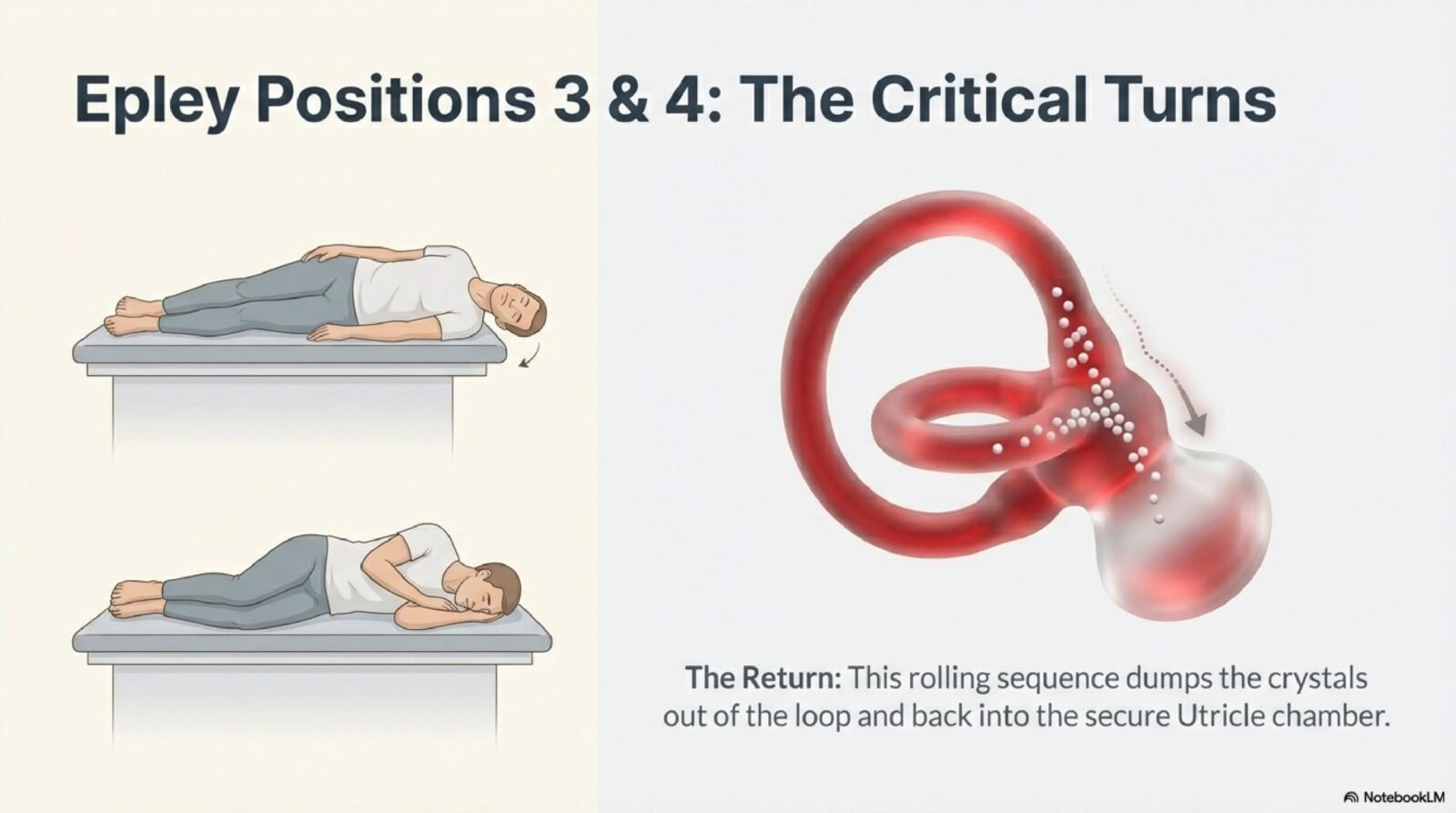
Let me explain something about how vertigo actually works. Your inner ear has three semicircular canals filled with fluid. These canals help your brain understand which way your head is moving. Sometimes, tiny calcium carbonate crystals-we call them otoliths-get loose inside these canals. When you move your head, these crystals shift around, sending false signals to your brain. Your brain thinks you’re spinning when you’re completely still. That’s BPPV.

Now, here’s the thing. When you give someone a tablet for BPPV, what’s it really doing? It’s calming down the dizziness sensation. It might reduce nausea. But it’s not fixing the actual problem-those loose crystals are still floating around in there. The moment the medicine wears off, the vertigo comes back.

A canalith repositioning maneuver-what I do-physically moves those crystals back to where they belong. It’s like straightening out the problem instead of just covering it up. Once those crystals are back in the right place, you’re done. No more medicine. No more symptoms.

I started recommending the Bangalore Maneuver in 2019, and honestly, the results have been quite remarkable. For anterior canal BPPV specifically, this technique has given us success rates that match anything you’ll see internationally. Patients come in dizzy, we do the maneuver, and they walk out stable.

The Bangalore Maneuver, My Approach for Anterior Canal BPPV

Most doctors are familiar with the Epley maneuver for posterior canal BPPV. It’s effective, and I use it regularly. But when If you have vertigo from the anterior canal-which is less common but definitely happens-the standard Epley doesn’t work as well. That’s where I developed the Bangalore Maneuver.

The technique involves specific head positioning sequences that use gravity to move the crystals toward the common crus. The positioning is different from standard procedures, and the timing of movements matters quite a bit. When I perform this, I watch the patient’s eye movements carefully. If I see the nystagmus (that involuntary eye movement) change in the expected way, I know it’s working.

A 52-year-old woman from Faizabad came to me with severe vertigo whenever she lay back. She’d been having episodes for three months. Her MRI was normal. Her blood tests were fine. But she couldn’t lie down to sleep. I did the Dix-Hallpike test and confirmed anterior canal BPPV. After one session with the Bangalore Maneuver, her vertigo was gone. Completely gone. That was three years ago. She hasn’t had a single episode since.

The maneuver takes about ten minutes. No medicines. No side effects. Just the right mechanical correction.

Other Canalith Repositioning Maneuvers That Work

Not every case of BPPV needs the Bangalore Maneuver specifically. I evaluate which canal is affected and choose accordingly. Here’s what I use depending on the diagnosis:

The Epley Maneuver: This is the gold standard for posterior canal BPPV. Patients sit on the edge of a bed, I turn their head to one side, then lie them back with their head hanging off the edge. The sequence of movements guides the crystals back where they belong. Success rate is about 80% after one session.

👉 Also read: Vertigo Specialist for Kolkata Patients — Dr. Prateek Porwal

The Semont Maneuver: For patients who can’t tolerate the Epley position-maybe they have neck problems or are very anxious-the Semont is a good alternative. It uses a different movement pattern but achieves the same goal.

The Half-Somersault Maneuver: Some patients find this easier to do even at home. You bend forward like you’re touching your toes, then tip your head to the affected side. It’s less dramatic than other maneuvers but can work for mild cases.

Vestibular Rehab Exercises You Can Start Today

Here’s something I recommend even after we’ve done a maneuver: vestibular rehabilitation exercises. These train your brain and your balance system to work better together. They’re especially useful if you’ve had vertigo for a while and your balance feels generally off.

Brand-Daroff Exercises: Sit on your bed. Lie down on one side, keeping your legs bent, for about thirty seconds. Then sit up again. Then lie down on the other side. Repeat five or six times. Do this twice a day for a week or two. It sounds simple because it is. But it’s remarkably effective at making your vestibular system less sensitive to movement.

Cawthorne-Cooksey Exercises: These are a bit more involved. You do eye movements in different directions while keeping your head still. Then you move your head while keeping your eyes fixed on a target. Then you do balancing exercises while your head moves. The progression goes from easy to progressively more challenging. Most patients do these for about three weeks.

Balance Training: Stand with feet shoulder-width apart. Do this first with eyes open, then with eyes closed. If that’s easy, stand on one leg. Progress to standing on a pillow. Walk in a straight line, heel to toe. These exercises retrain your proprioceptive system-your body’s ability to sense where it is in space.

Head-Eye Coordination Drills: Hold a object at arm’s length. Move your head slowly left and right while keeping your eyes on the object. Do this for two minutes. This type of exercise helps recalibrate the vestibulo-ocular reflex.

I had a patient, a 58-year-old woman from Lucknow, who did vestibular exercises religiously after her maneuver. She saw improvement week by week. By the fourth week, her balance felt completely normal. She told me later that the exercises gave her a sense of control, like she was actively fixing her own problem. And honestly, she was.

Diet and Lifestyle Changes That Help Vertigo

Not all vertigo is BPPV. If someone has Meniere’s disease, for example, what they eat matters quite a bit. In my clinic, I always ask about salt intake.

Sodium Reduction for Meniere’s: Meniere’s disease involves fluid buildup in the inner ear. Salt causes fluid retention. So reducing sodium intake can actually reduce symptoms. This means cutting back on processed foods, canned items, and adding salt at the table. It sounds simple, but most people don’t realize how much salt is in everyday foods. A patient of mine from Varanasi was having Meniere’s attacks every week until she cut her salt intake down. Within two weeks, the frequency dropped significantly.

Hydration: People with vertigo sometimes restrict water intake thinking it’ll help. It doesn’t. In fact, dehydration can make dizziness worse. Drink enough water throughout the day. This is especially important in Indian summers when you’re sweating.

Caffeine and Alcohol: Both of these can affect your inner ear. Caffeine is a stimulant and can increase dizziness sensations. Alcohol affects your balance center. If you have chronic vertigo, cutting back on these helps significantly.

👉 Also read: Vertigo Doctor Near Bareilly — Online &

Avoid Sudden Position Changes: This is a lifestyle thing, not diet. But it matters. Don’t jump out of bed first thing in the morning. Sit on the edge for a moment, then stand slowly. This prevents sudden blood pressure changes that can trigger vertigo.

Regular Movement and Exercise: Ironically, people with vertigo sometimes become sedentary because they’re afraid of triggering symptoms. But moderate exercise actually helps. Walking, swimming, gentle yoga-these keep your vestibular system active and healthy.

Stress Management: I’ve noticed that stress and vertigo feed into each other. When you’re stressed about your vertigo, it gets worse. When your vertigo gets worse, you become more stressed. Meditation, deep breathing, even listening to music-these help break that cycle. In India, with all the traffic stress and general hustle, this is something people rarely pay attention to but should.

When Does Vertigo Need Medicine?

I don’t want to sound anti-medication. There are definitely times when medicine is the right call. Let me be clear about when that is.

Acute Vestibular Neuritis: If you have a viral infection of your vestibular nerve, you’ll have severe vertigo for days. In this situation, anti-vertigo medication helps you manage the acute phase. We’re not trying to can help treat the condition with pills-we’re just making it bearable while your body recovers.

Ongoing Migraines with Vertigo: Vestibular migraine is a real thing. These patients benefit from migraine-preventive medications. In this case, the medicine is treating the underlying cause, not just the symptom.

Persistent Dizziness After Maneuvers: Some patients have BPPV that doesn’t fully resolve with maneuvers, or they have central causes of dizziness that need different management. In those cases, medication might be necessary while we figure out what’s really going on.

Anxiety-Related Dizziness: If someone’s dizziness is linked to anxiety, treating the anxiety with medication can help. But this should be managed by someone experienced with vestibular disorders, not just any general physician.

Severe Nausea: If the dizziness is accompanied by such severe nausea that someone can’t eat or stay hydrated, anti-nausea medication becomes a practical necessity, not just a symptom-masker.

The key is this: medicine should address the underlying problem or manage something serious. It shouldn’t be a band-aid for something that has a better fix.

Red Flags That Mean You Need to See a Doctor Immediately

Not all vertigo is benign. There are some warning signs that mean you need evaluation from a specialist, not just home remedies.

If your vertigo started suddenly with hearing loss in one ear, that could be a sign of inner ear inflammation. If it’s accompanied by weakness on one side of your body or difficulty speaking, that’s a neurological emergency. If you have severe headache with the vertigo, that needs investigation. Fever with vertigo? See a doctor. Double vision with vertigo? Don’t wait.

👉 Also read: Vertigo Specialist Near Lucknow, Dr. Prateek Porwal,

Most of the patients I see have benign causes. But ignoring red flags is how serious things get missed.

What Happens After a Successful Maneuver?

I always tell patients the same thing after a maneuver: you’re not immediately cured. The crystals have been repositioned, but you need to be careful for the next day or two. The loose fragments might shift again if you move your head in certain ways.

I give specific instructions: avoid sleeping on that side for at least two nights. Try not to tip your head back far. Don’t look up quickly. Don’t do sudden jerking movements. After that initial period, you can gradually return to normal activities.

Most patients are symptom-free within 24 hours. Some take up to a week. About 10-15% of patients need a repeat maneuver because the crystals shift again. But that’s still far better than being on long-term medication.

The Timeline You Can Expect

People want to know: how long will this take? Here’s what I usually see.

With canalith repositioning maneuvers: symptom relief is often immediate or within hours. Complete resolution usually happens within a week.

With vestibular rehabilitation exercises: you’ll notice improvement in balance after two to three weeks of consistent practice. Full benefit takes four to six weeks.

With diet modifications for Meniere’s: you might see improvement in frequency and severity within three to four weeks, with the best results coming at three months.

This timeline is so much better than being on medication indefinitely, which is why I push for these approaches first.

How to Know If These Approaches Are Working

Keep track of your symptoms. Note when you had vertigo episodes, what triggered them, how long they lasted, how severe they were. A simple log actually tells us a lot about whether treatment is working. A patient from Delhi sent me a spreadsheet after two weeks of exercises-the pattern was clear. Fewer episodes, shorter duration, less severe. That’s success.

Also pay attention to your confidence. When you stop being afraid to move your head, when you can lie back in your chair without panic, when you can turn around in bed without gripping onto something-those are signs that treatment is working.

Common Questions About Non-Medication Treatment

How long does a maneuver last as treatment?

Once the crystals are repositioned correctly, they typically stay there. Some people have recurrent BPPV-maybe years later they get it again-but that’s a new episode, not the same one coming back.

👉 Also read: Diagnosis of Vertigo

Can I do vestibular exercises if I’m scared of triggering vertigo?

Some discomfort during exercises is normal and actually therapeutic. But if you’re terrified, start with the gentler exercises and progress slowly. Work with a physical therapist if possible.

Will diet changes alone fix my vertigo?

If your vertigo is from Meniere’s disease, diet changes are often a key part of management. But they work best combined with other approaches. Don’t expect them to replace necessary medical treatment.

What if the maneuver doesn’t work the first time?

Repeat sessions help. Sometimes BPPV is more stubborn than expected. We can try different maneuver variants or investigate whether there’s something else going on.

Is it normal to feel dizzy during the maneuver?

Yes, absolutely. The whole point is to move those crystals, and that triggers the symptom. We expect some dizziness during the procedure. It usually subsides quickly afterward.

Can someone learn to do these maneuvers on themselves?

For some maneuvers, yes. The half-somersault can be done at home. But the Epley and Bangalore Maneuver really benefit from professional guidance the first time. You need someone watching to see if it’s working and to make adjustments.

How often do I need to do vestibular exercises?

Ideally twice a day for the first three to four weeks. Then once a day for maintenance. It’s like exercise for any other part of your body-consistency matters.

Can vertigo come back after treatment?

BPPV can recur in about 30% of patients over five years. Other causes of vertigo might resolve completely. That’s why ongoing lifestyle management-good hydration, stress reduction, regular movement-helps prevent recurrence.

Real Patient Stories

A 45-year-old accountant from Kanpur came to me after three months of vertigo. She’d been to several doctors, gotten multiple diagnoses, and was on four different medicines. When I evaluated her with specific balance tests, it was clearly BPPV. One Epley maneuver fixed it. She stopped taking unnecessary medication and got her life back.

A 67-year-old retired teacher from Lucknow had chronic balance issues after an episode of viral labyrinthitis. He was doing vestibular exercises consistently but worried he’d need medication forever. After two months of regular exercises and some lifestyle modifications, his balance normalized completely.

A 50-year-old woman from Agra had been diagnosed with Meniere’s disease. She modified her diet significantly, cut her salt intake, started a meditation practice for stress, and maintained proper hydration. Her episodes decreased from weekly to maybe once every three months.

The common theme in all these cases? When we addressed the root cause instead of just treating symptoms, people got better-without relying on medication.

Why This Approach Works

It works because we’re respecting how the body actually heals. We’re not fighting symptoms; we’re fixing problems. We’re not suppressing dizziness with medication; we’re correcting the mechanical issue causing it.

👉 Also read: Is Vertigo Curable Permanently? An ENT Doctor Answers Honestly

It also works because patients become engaged in their own treatment. When you’re doing exercises, you feel like you’re doing something. When you’re making dietary changes, you feel in control. This psychological component shouldn’t be underestimated. Feeling that you’re actively getting better is itself therapeutic.

Getting Started With Non-Medication Treatment

If you suspect If you have vertigo, here’s what I’d do: First, get a proper diagnosis. Don’t assume it’s BPPV without evaluation. Come see an ENT specialist who can do the right tests. Second, ask about non-medication options. Don’t just accept medication as the default. Third, if maneuvers are recommended, have them done by someone experienced. Finally, commit to any exercises or lifestyle changes. They only work if you actually do them.

The goal isn’t to avoid medicine out of principle. The goal is to get the right treatment that addresses your specific problem in the most effective way. For many people with vertigo, that treatment doesn’t involve pills at all. It involves simple, time-tested techniques that work with your body’s own healing mechanisms.

Book Your Consultation Today

If you’re struggling with vertigo and want to explore non-medication approaches, schedule a consultation with Dr. Prateek Porwal at Prime ENT Center, Lucknow.

Call/WhatsApp: 7393062200

Website: drprateekporwal.com

Bring details of your symptoms, any previous diagnoses, and a list of current medications if applicable. We’ll figure out what’s really going on and what actually works for your case.


Medical Disclaimer: This article is for informational purposes and should not be considered medical advice. The information provided is based on general medical knowledge and the author’s professional experience. Vertigo and dizziness can have multiple causes, some of which may require emergency medical attention. Please consult with a qualified healthcare professional before starting any treatment regimen, especially if you have severe symptoms, sudden onset of symptoms, or any concerning associated symptoms such as neurological deficits, loss of hearing, or severe headache. Individual results vary, and what works for one person may not work for another. Dr. Prateek Porwal and Prime ENT Center are not liable for any adverse effects or outcomes resulting from the use of information in this article.

Frequently Asked Questions

What vertigo treatments actually work without medication?

For BPPV specifically, the Epley Maneuver and similar canalith repositioning techniques work without any medication, they are mechanical treatments that reposition loose crystals in your inner ear. Vestibular rehabilitation therapy through specific exercises and balance training is purely physical without medication. These are the gold standard, evidence-based treatments that work reliably. I also recommend habituation exercises like Brandt-Daroff or general balance training to strengthen your vestibular system. For some types of dizziness, physical therapy addressing posture and neck tension helps significantly. In my experience treating hundreds of patients in Lucknow, the non-medication treatments for BPPV work so well that most patients do not need medication at all.

Will maneuver treatment work if my BPPV is severe?

Yes, in fact, severe BPPV often responds faster to maneuver treatment because the problem is pronounced and clearly identifiable. The more displaced the crystals, the more obvious the Dix-Hallpike test response, and the more effective the maneuver. A 64-year-old patient came to me with severe BPPV, she was literally unable to move her head without intense spinning. I performed the Epley Maneuver, and within minutes, she went from incapacitated to 80% improved. Severity does not indicate poor treatment response; it indicates clear pathology that mechanical treatment addresses elegantly. Severe BPPV is actually ideal for maneuver treatment.

What is vestibular rehabilitation therapy and does it really help?

Vestibular rehabilitation therapy is physical therapy specifically designed for balance and dizziness disorders. It includes controlled exercises that expose you to movements that trigger dizziness, allowing your vestibular system to adapt through habituation. It also includes balance training and proprioceptive exercises that strengthen your stability mechanisms. Research strongly supports its effectiveness, it reduces dizziness, improves balance, and increases confidence with movement. In my clinic, after treating BPPV with a maneuver, I often refer patients for vestibular rehabilitation to complete recovery and prevent recurrence. A 56-year-old patient did 6 weeks of vestibular rehabilitation after treatment and reported feeling more balanced and confident than before BPPV developed.

Can positioning maneuvers be done at home safely?

Some gentle habituation exercises like Brandt-Daroff can be done at home safely after you have learned them from a doctor. However, the formal repositioning maneuvers like Epley, Gufoni, or Bangalore Maneuvers should be done in a clinical setting under professional guidance. These require precise positioning, observation of your response, and clinical judgment about timing. Attempting them at home without training risks doing them incorrectly, which wastes time and energy. A clinic visit takes 30 minutes to an hour, so I always recommend coming in for proper diagnosis and maneuver treatment.

How long does vestibular rehabilitation take to work?

Most patients doing vestibular rehabilitation exercises notice improvement within 2 to 3 weeks of consistent daily practice. Significant improvement is usually evident by 4 to 6 weeks. Maximum benefit often comes by 8 to 12 weeks. The timeline depends on how frequently you do exercises and how severe your condition is. I typically recommend 4 to 8 sessions with a physical therapist who specializes in vestibular rehabilitation, combined with home exercises 5 to 6 days per week. Some patients continue exercises even after maximum improvement as preventive maintenance. A 54-year-old patient from Lucknow did vestibular rehabilitation diligently and reported life-changing improvement by 6 weeks.

What if I combine maneuver treatment with home exercises?

This is the ideal approach and gives the best outcomes. You come to my clinic for the Epley or appropriate maneuver, which resets the mechanical problem immediately. Then you go home and do Brandt-Daroff exercises or vestibular rehabilitation for the next 3 to 4 weeks, which reinforces recovery and prevents recurrence. Studies show that maneuver plus exercises give better long-term outcomes than either alone. The maneuver is the quick fix; the exercises are the insurance policy against recurrence and the way to build long-term vestibular strength. This combination approach is what I recommend to all patients.

Can balance training and gaze stabilization help dizziness?

Yes, absolutely. Gaze stabilization exercises train your eyes to stay focused on a target while your head moves, which reduces the sensation of dizziness during movement. Balance training exercises improve proprioception and stability, reducing fall risk and general unsteadiness. These are particularly helpful for people with vestibular problems or aging-related balance decline. Physical therapists incorporate these into detailed vestibular rehabilitation programs. For some patients with dizziness not primarily from BPPV, these exercises are primary treatment. Even for BPPV patients, adding balance and gaze exercises to standard treatment enhances overall recovery.

How can I get started with non-medication BPPV treatment?

The first step is proper diagnosis. Contact my clinic at 7393062200 or visit drprateekporwal.com to schedule a consultation. I will perform diagnostic tests to confirm BPPV and identify which canal is affected. Once diagnosed, I will perform the appropriate maneuver right in the clinic, you will likely feel better immediately. Then I will teach you home exercises and either refer you to a vestibular rehabilitation therapist or provide detailed instructions for home-based exercises. The entire process from diagnosis to treatment to starting home exercises takes one to two clinic visits. Most people see dramatic improvement without ever needing medication. Come in and let me help you recover.

References

  1. Karatas M. Central vertigo and dizziness: Epidemiology, differential diagnosis, and common causes. Neurologist. 2008;14(6):355–364.

‘, ‘protected’: False, ‘block_version’: 1}

**About the Author:**
Dr. Prateek Porwal is an ENT & Vertigo Specialist with over 13 years of experience, holding MBBS (GSVM Medical College), DNB ENT (Tata Main Hospital), and CAMVD (Yenepoya University). He is the originator of the Bangalore Maneuver for Anterior Canal BPPV and has published research in Frontiers in Neurology and IJOHNS. Serving at Prime ENT Center, Hardoi.

**Disclaimer:** This article is for educational purposes. Please consult Dr. Prateek Porwal for personalized medical advice.

This article is for educational purposes. Please consult Dr. Prateek Porwal at Prime ENT Center, Hardoi for personal medical advice.

Further Reading

Leave a Reply

Your email address will not be published. Required fields are marked *