
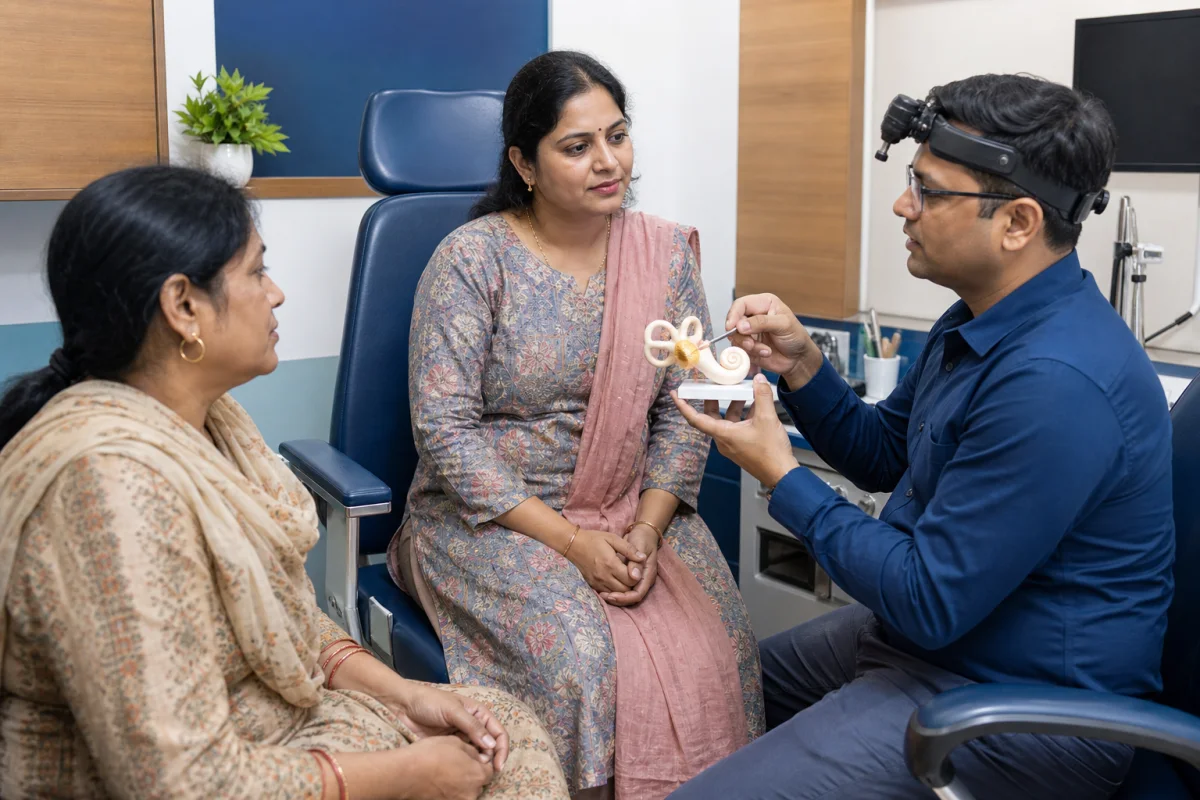
BPPV Doctor in Kannauj is a practical search when brief spinning is triggered by rolling in bed, lying back, looking up or bending. These symptoms can fit benign paroxysmal positional vertigo (BPPV), but an examination is needed because not every episode of “chakkar” comes from the inner ear.
For patients travelling from Kannauj
Prime ENT Center is in Hardoi; there is no DRP branch in Kannauj. Travel time varies with the starting point, route and traffic. Confirm the appointment and any test-specific preparation before leaving Kannauj.
BPPV doctor in Kannauj: when positional testing may help
BPPV becomes more likely when the spinning sensation is brief and consistently triggered by a head-position change. Common examples include turning to one side in bed, getting up after lying down, looking upward or bending to the floor. Nausea and temporary imbalance may accompany an attack.
Other patterns need a broader assessment. Continuous dizziness lasting hours or days, fainting, palpitations, new hearing loss, migraine symptoms, medicine effects, low blood pressure and neurological problems can require a different pathway. A clear timeline is therefore more useful than assuming that every dizzy spell is BPPV.
How BPPV is assessed
BPPV is usually diagnosed from the symptom pattern and the eye movements produced during a positional test. The clinician may use:
- the Dix–Hallpike test when posterior-canal BPPV is suspected;
- the supine roll test when lateral-canal BPPV is possible;
- an ear, eye-movement, balance and neurological examination; and
- hearing or vestibular tests when the history or examination suggests they may change management.
A positive test helps identify the affected side and likely canal pattern. The clinician can then select an appropriate canalith-repositioning procedure. The Epley maneuver is commonly used for posterior-canal BPPV, while other canal patterns may need a different maneuver.
Does every Kannauj patient need VNG?
No. Videonystagmography (VNG) records eye movements and can support assessment in selected cases, particularly when symptoms or observed nystagmus are difficult to characterize. It does not replace the clinical history, positional tests or neurological examination, and it does not independently identify every cause of dizziness.
Clinical guidance advises against routine vestibular testing when a patient clearly meets criteria for typical BPPV and has no additional atypical signs. Testing should be chosen because it is likely to clarify a question or change care—not simply because equipment is available.
Local facility note: As of August 2026, Prime ENT Center is the only clinic within a 150 km radius offering both VNG and stabilometry. This is a facility-availability fact, not a recommendation that every vertigo patient requires either test. Confirm current test availability when booking.
Can BPPV be treated in one visit?
Some people improve after one correctly selected maneuver, while others need a repeat maneuver, reassessment or treatment for a different condition. It is safer to plan for diagnosis and an initial treatment decision rather than promise a one-visit cure. Persistent symptoms may reflect unresolved BPPV, another canal, residual imbalance, recurrence or a non-BPPV cause.
Routine medicines do not reposition displaced otoconia. Medicines may still be appropriate for short-term nausea or for another diagnosed condition, so do not start or stop a medicine based only on an internet article. Bring an updated medicine list to the appointment.
When the cause may not be BPPV
A different diagnosis may be considered when the pattern does not match brief positional attacks. Examples include:
- vestibular neuritis, which usually causes a more sustained acute vestibular syndrome;
- Ménière disease, when vertigo occurs with fluctuating hearing or ear pressure;
- vestibular migraine, with migraine features or characteristic recurrent episodes;
- medical causes such as dehydration, blood-pressure change, anaemia, low glucose or a medicine effect; and
- central neurological causes that require urgent or specialist evaluation.
Warning signs: do not travel for a routine clinic visit
Use the nearest emergency service rather than travelling to a routine appointment if dizziness or vertigo is accompanied by:
- new facial droop, weakness, numbness, slurred speech or confusion;
- new double vision, severe inability to walk or loss of coordination;
- a sudden severe headache, seizure, collapse or loss of consciousness;
- chest pain, severe breathlessness or palpitations with fainting;
- repeated vomiting with inability to keep fluids down;
- sudden hearing loss; or
- a serious fall or head injury.
These signs do not prove a stroke or another emergency, but they should not be managed as ordinary BPPV without urgent assessment. See the vertigo red-flag guide for a patient-friendly overview.
Planning a Hardoi visit from Kannauj
Appointment availability, road conditions and travel time can change. Patients should call or WhatsApp before travelling and ask whether an in-person positional assessment or a particular test is expected. Do not stop regular medicines unless the clinic gives individualized instructions; preparation differs by medicine, test and medical history.
If severe positional symptoms make travel unsafe, ask a family member to accompany you and avoid driving yourself. An online consultation may help organize the history and decide the next step, but positional testing and repositioning maneuvers generally require an in-person examination.
What to bring
- a short timeline of when the problem began and how long each episode lasts;
- the exact movements that trigger symptoms;
- notes about hearing change, tinnitus, headache, vision, walking, fainting, vomiting or falls;
- a current medicine list;
- previous hearing tests, scans or vestibular reports; and
- a family member if attacks or imbalance make independent travel unsafe.
Frequently asked questions
Is there a DRP clinic in Kannauj?
No. Prime ENT Center is in Hardoi. This page is for people in Kannauj considering an assessment in Hardoi.
Is BPPV diagnosed by VNG?
Typical BPPV is primarily diagnosed through the history and positional testing with observed nystagmus. VNG can record eye movements and may be useful in selected or unclear cases, but it is not mandatory for every patient.
Will the Epley maneuver treat every type of BPPV?
No. The maneuver should match the affected canal and observed pattern. The Epley maneuver is commonly used for posterior-canal BPPV; other patterns may need a different approach.
How quickly will I improve?
Response varies. Some patients improve promptly, while others require repeat treatment or reassessment. A responsible clinic can explain the findings and plan but should not guarantee a fixed timeline or cure.
Can I book VNG before travelling?
You can ask about availability, but the clinician may first decide whether VNG is appropriate. If a test is planned, obtain individualized preparation instructions before changing any medicine.
Book an assessment
Prime ENT Center, Hardoi
Use the appointment page or call/WhatsApp 7393062200. Mention that you are travelling from Kannauj and describe the timing and triggers of the dizziness.
Related guides
References
- Clinical Practice Guideline: Benign Paroxysmal Positional Vertigo (Update)
- GRACE-3: Acute dizziness and vertigo in the emergency department
Medical disclaimer: This page is for education only and does not diagnose the cause of dizziness or replace an individual examination. Seek emergency care for new neurological symptoms, collapse, severe inability to walk, sudden severe headache, chest symptoms, serious injury or sudden hearing loss.
Read next — from Dr. Porwal's vertigo library