
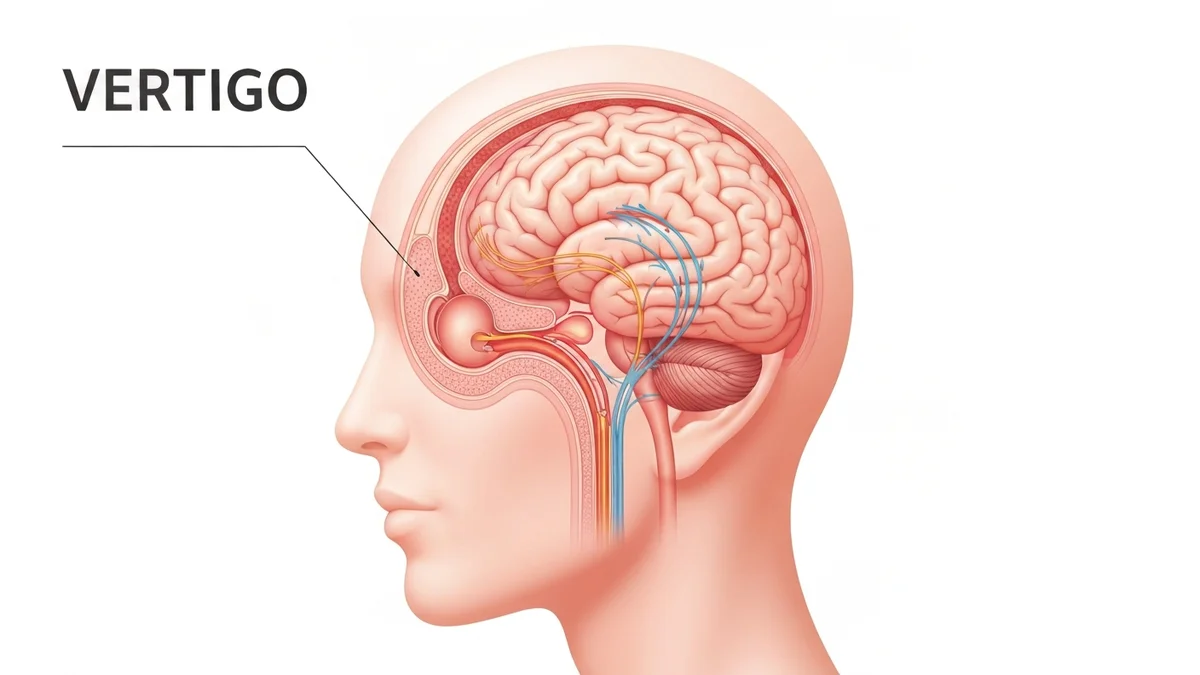
nystagmus types matters because patients searching for nystagmus types usually want to know what it means, what causes it, and when it needs medical review.
nystagmus types: what patients should know
I see a lot of Patients coming to my clinic in Hardoi who’ve been told they have “nystagmus” but they don’t really understand what their eyes are doing or why it matters. Some are worried it means they’re going blind. Others think it’s just a cosmetic problem. The truth is, nystagmus is neither simple nor trivial — it’s a window into what’s happening in your brain, your balance system, or your eyes.
Let me break down the major Types so you actually understand what’s going on.
What IS Nystagmus Anyway?: “Nystagmus” But
Nystagmus is involuntary eye movement. Repetitive, jerky movement that you can’t control. The word comes from the Greek “nystagmos” meaning drowsiness, but it has nothing to do with being sleepy.
Your eyes are supposed to move smoothly. They focus on objects, track movement, and look around your environment with precision. When nystagmus happens, your eyes oscillate — shake, jerk, or drift — in predictable patterns.
I’ve evaluated hundreds of cases with VNG (videonystagmography) testing at our clinic. The VNG camera captures eye movement in real time, and what we see often tells us exactly where the problem is.
Nystagmus affects your vision quality. The eyes moving involuntarily means the image on your retina keeps shifting. For some patients, this causes mild blurriness. For others, especially those with high-amplitude nystagmus, it can significantly impact their daily life.
The Big Picture: Peripheral vs Central
First, the broadest division: **Is the problem in the balance system (peripheral) or in the brain (central)?**
Peripheral Nystagmus
– Caused by inner ear / vestibular system problems
– Usually “beats” in one direction (horizontal or rotatory)
– Gets worse when looking toward the fast phase
– Reduces when you fixate (stare steadily)
– Vertigo is usually present
– Patient feels the room spinning
– Intensity decreases over days to weeks as central compensation happens
Central Nystagmus
– Caused by brainstem, cerebellum, or supranuclear pathways
– Can beat in any direction (vertical, diagonal, rotatory)
– Does NOT improve much with fixation
– May NOT have vertigo
– Often accompanied by other neurologic signs
– Red flag for serious pathology
– May persist for months or years depending on the underlying cause
The distinction matters because it guides my next diagnostic step. A peripheral cause like BPPV needs repositioning. A central cause needs imaging and neurology.
The Major Classification System
When I evaluate nystagmus, I classify it along three axes:
**1. Direction:** Horizontal, vertical, rotatory, or mixed
**2. Type of movement:** Jerk (fast-slow), pendular, or saccadic
**3. Trigger or context:** Spontaneous, gaze-evoked, positional, optokinetic, etc.
Let me walk you through the main categories:
Jerk Nystagmus (Most Common)
Jerk nystagmus has two phases:
– **Slow phase:** Eyes drift slowly in one direction
– **Fast phase:** Eyes snap back quickly in the opposite direction
The nystagmus is named by its *fast phase*. So if eyes drift left then snap right, it’s “rightbeating” or “right nystagmus.”
In my practice, I see jerk nystagmus in probably 70% of vestibular cases. It’s the most recognizable pattern.
Horizontal Jerk Nystagmus
This is what you see most often in peripheral vestibular problems. Classic example: BPPV (benign paroxysmal positional vertigo). When I do the Dix-Hallpike maneuver or Bangalore Maneuver in my practice, patients often develop rotatory and vertical nystagmus — the hallmark of canalithiasis.
Horizontal nystagmus alone can occur with horizontal canal BPPV, which is trickier to diagnose but responds well to the supine roll test.
Vertical Jerk Nystagmus
Vertical nystagmus is almost always *central*. It’s a red flag that changed how I practice.
**Downbeat nystagmus:** Eyes beat downward. Associated with Chiari malformation, cerebellar degeneration, or certain medications like phenytoin.
**Upbeat nystagmus:** Eyes beat upward. Often seen with brainstem lesions, MS, or Wernicke encephalopathy. I’ve also seen it in dorsal midbrain syndrome.
If a patient comes to me with vertical nystagmus, I’m already thinking about imaging and neurology referral. This is not something to dismiss.
Pendular Nystagmus
The eye movement is smooth, like a pendulum. No fast-slow phases. No jerk. Just oscillation.
Common in:
– Congenital cataracts or visual impairment (can’t fixate properly)
– Multiple sclerosis (MS-related pendular nystagmus is notorious)
– Spasmus nutans (infantile spasm with head nodding)
– Palatal tremor
Pendular nystagmus in an adult is unusual and warrants investigation.
Gaze-Evoked Nystagmus
This appears when the patient looks *toward* a target, not straight ahead.
Classic example: “Look to the right.” Patient looks right, and I see nystagmus beating to the right. Look left, nystagmus to the left. Look straight ahead, it stops.
Usually means:
– Cerebellar pathology (ataxia, degeneration)
– Drug intoxication (phenytoin, alcohol, benzodiazepines)
– Fatigue or anxiety
– Post-stroke recovery from brainstem lesion
Gaze-evoked nystagmus is one of the most reliable signs of cerebellar dysfunction I use clinically.
Spontaneous Nystagmus
The eyes move even when looking straight ahead. No external trigger.
Can be peripheral (acute vestibular neuritis) or central (brainstem stroke, MS).
The VNG helps me differentiate:
– **Peripheral:** Better with gaze toward the fast phase, worsens with eyes closed
– **Central:** Present with eyes closed, doesn’t change much with gaze direction
Spontaneous nystagmus from vestibular neuritis often appears suddenly. I’ve had patients report they woke up with the room spinning and couldn’t move their eyes smoothly.
Positional Nystagmus
Nystagmus appears only with head position changes. This is the hallmark of BPPV — the condition I specialize in.
In my clinic in Hardoi, I see patients with all three types of BPPV:
– **Posterior canal BPPV:** Rotatory and up-beating nystagmus with Dix-Hallpike. Most common, about 80-90% of cases.
– **Anterior canal BPPV:** Downbeat nystagmus. This is where the Bangalore Maneuver changed patient outcomes. I developed this maneuver specifically for anterior canal cases because other treatments weren’t effective.
– **Horizontal canal BPPV:** Horizontal nystagmus with lateral positioning test. Can present as apogeotropic or geotropic based on particle location.
The positional nature is diagnostic — if nystagmus only happens with specific head movements, it’s almost always BPPV, not a serious central condition.
Optokinetic Nystagmus (Normal Response)
When you look out a moving train window, your eyes reflexively track the field. That’s optokinetic nystagmus — a normal response. Your brain is trying to keep moving objects stable on your retina.
If it’s *abnormal* (asymmetrical, reduced, or absent), it suggests brainstem or supranuclear dysfunction.
I use asymmetrical optokinetic nystagmus as a clue to hemispheric stroke sometimes.
Nystagmus Caused by Vision Problems
If a patient has very poor vision from birth, they often develop nystagmus because they can’t fixate properly. The eyes keep searching for a clear image.
This is *sensory* nystagmus. It’s different from vestibular or cerebellar nystagmus. These patients often have high-amplitude, broad nystagmus that reduces with age.
The Nystagmus “Fast Phase Direction” Rule
I always tell patients: the fast phase direction tells us where the *intact* side is.
If your right eye beats toward the right (rightbeating nystagmus), your *left* vestibular system is damaged. Your intact right side is trying to compensate by moving your eyes back to center.
This is fundamental to understanding what went wrong. It’s called the “vestibular ocular reflex” or VOR, and it’s one of the most important things I explain to patients.
Red Flags: When Nystagmus Means IMMEDIATE DANGER
Not all nystagmus is benign. Some patterns scream “emergency”:
1. **Vertical nystagmus** (downbeat or upbeat) — MRI needed urgently
2. **Bilateral nystagmus** — suggests central pathology, not peripheral
3. **Nystagmus with diplopia (double vision)** — brainstem stroke possibility
4. **Acute onset vertical nystagmus + ataxia** — vertebrobasilar insufficiency, potential stroke
5. **Nystagmus with headache, altered mental status** — increased intracranial pressure
6. **Nystagmus with crossed signs** (weakness on one side, facial droop on other) — brainstem lesion
How I Diagnose the Type at My Clinic
Step 1: **History** — When did it start? Spinning or just blurred vision? Triggered by head movement or sudden?
Step 2: **Clinical exam** — Observation, Dix-Hallpike, supine roll test, gaze testing, head thrust test
Step 3: **Selective VNG testing** — VNG can record and quantify aspects of eye movement and vestibular response when the clinical question warrants it. Findings must be interpreted with the history and examination; VNG does not independently identify every peripheral or central cause.
Step 4: **MRI or other imaging** may be needed when the history or examination raises concern for central disease. The setting and urgency depend on the warning signs.
FAQ
**Q: If I have nystagmus, am I going blind?**
Not necessarily. Nystagmus itself doesn’t cause blindness. But if it’s from a serious central cause (like a brain tumor), that *underlying condition* could affect vision. Get it evaluated.
**Q: Can nystagmus go away?**
It depends on the cause. BPPV-related nystagmus disappears after successful repositioning maneuvers. Spontaneous nystagmus from vestibular neuritis improves as the nerve heals. But nystagmus from permanent conditions (like congenital cataracts) is chronic.
**Q: Does alcohol make nystagmus worse?**
Yes. Alcohol affects cerebellar and vestibular function, causing or worsening gaze-evoked nystagmus and spontaneous nystagmus. This is why I ask patients about alcohol use.
**Q: Should I be worried if my child has nystagmus?**
Get them examined. Congenital nystagmus is often benign (idiopathic), but it needs formal evaluation to rule out vision problems or neurologic pathology.
**Q: Is nystagmus different from a “tic” or eye twitch?**
Yes. An eye twitch is usually minor, involuntary, and localized. Nystagmus is rhythmic, bilateral (affects both eyes), and indicates a problem with the eye movement control system.
The Clinical Takeaway
Nystagmus is not a diagnosis — it’s a *sign*. It tells us something is wrong with eye movement control, either from the balance system, the brain, or the visual system.
The *type and pattern* of nystagmus point us toward the cause. Horizontal jerk nystagmus in BPPV. Downbeat nystagmus in Chiari. Upbeat nystagmus in brainstem lesions.
Treatment depends on the cause. Confirmed BPPV may respond to a canal-specific repositioning maneuver, while central nystagmus can require urgent neurological assessment and cause-directed management.
The key is proper classification followed by smart next steps.
If you have been told you have nystagmus, ask which pattern was observed, what causes are being considered and whether further testing would change management. VNG may support selected assessments but is not required for every patient.
References
1. Leigh RJ, Zee DS. The Neurology of Eye Movements. Oxford University Press, 2015.
2. Newman-Toker DE. Nystagmus and Related Ocular Oscillations. Continuum. 2021;27(3):680-697.
3. Kheradmand A, Zee DS. Cerebellum and Ocular Motor Control. Journal of Neurological Sciences. 2011;305(1-2):13-25.
This article is for educational purposes. Please consult Dr. Prateek Porwal at Prime ENT Center, Hardoi for personal medical advice.
Related Reading
- Nystagmus, Why Your Eyes Move Involuntarily: A Complete Guide for Indian Patients
- Nystagmus, Complete Guide to All Types and What They Mean
- Downbeat Nystagmus — Causes, Meaning and What Can Be Done
- Frenzel goggles — why vertigo doctors wear funny glasses
- HINTS Exam: The 3-Minute Bedside Test
Dr. Prateek Porwal is an ENT & Vertigo Specialist with over 13 years of experience, holding MBBS (GSVM Medical College), DNB ENT (Tata Main Hospital), and CAMVD (Yenepoya University). He is the originator of the Bangalore Maneuver for Anterior Canal BPPV and has published research in Frontiers in Neurology and IJOHNS. Serving at Prime ENT Center, Hardoi.
Reference: Vestibular Migraine Diagnostic Criteria — Lempert et al, 2022
Read next — from Dr. Porwal's vertigo library