
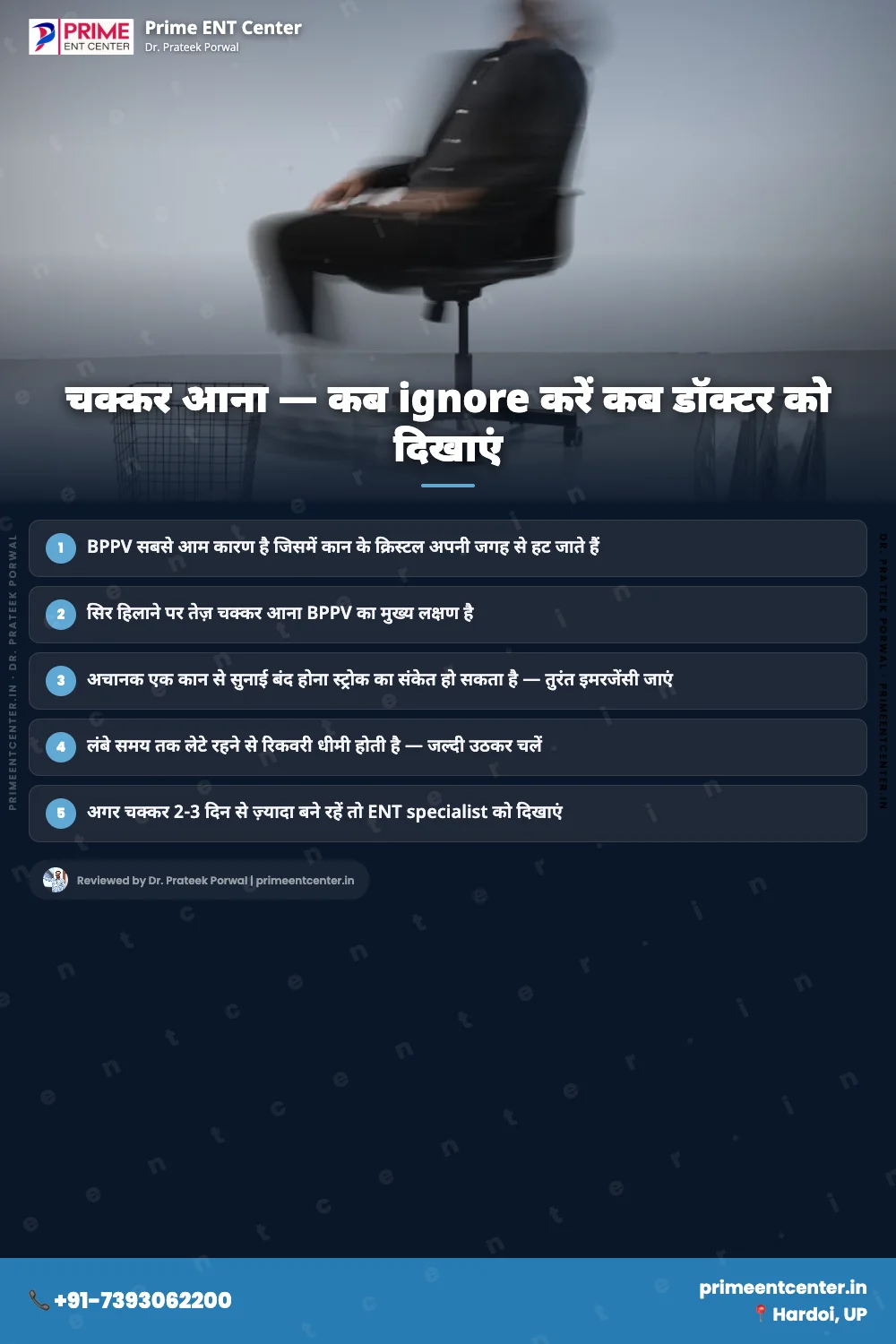
Dizziness that continues for weeks or keeps returning can affect almost every part of daily life.
It may affect your balance, concentration, confidence, sleep, work, travel and relationships. Some people feel spinning, while others feel unsteady, light-headed, floating, rocking or uncomfortable in busy surroundings.
Long-term dizziness is a symptom, not a final diagnosis. Understanding the cause is important because different conditions need different forms of care.
When should you seek emergency help?
Seek emergency medical help if dizziness starts with:
- weakness or numbness of the face, arm or leg;
- facial drooping;
- difficulty speaking or understanding speech;
- new double vision;
- sudden severe imbalance;
- inability to stand or walk;
- fainting or loss of awareness;
- chest pain;
- a sudden severe headache;
- new confusion;
- another new neurological symptom.
Do not wait for a routine clinic reply or appointment.
Call emergency services, such as 108 in India, or arrange urgent transport to the nearest emergency department.
Do not drive yourself.
A sudden loss of hearing in one ear also needs urgent same-day medical or ENT assessment.
What does long-term dizziness mean?
Long-term or chronic dizziness means that symptoms continue for a prolonged period or keep returning.
It does not describe one particular disease.
Possible causes may include:
- inner-ear or balance conditions;
- vestibular migraine;
- positional vertigo;
- persistent postural-perceptual dizziness;
- medicine side effects;
- changes in blood pressure or heart function;
- vision-related problems;
- neck-related problems;
- neurological conditions;
- other general health problems.
Sometimes more than one condition is present.
Even if you have already been assessed, arrange another review if your symptoms become:
- different from before;
- more severe;
- more frequent;
- less predictable;
- associated with new hearing, vision or neurological symptoms.
A previous diagnosis does not mean that every future episode has the same cause.
Make your surroundings safer
If you feel unsteady or are worried about falling, reduce avoidable risks in the places you use most.
Helpful changes may include:
- keeping walking areas clear;
- removing loose rugs or trailing wires;
- using good lighting;
- wearing stable, well-fitting footwear;
- using handrails where available;
- placing commonly used items within easy reach;
- using bathroom support when needed;
- asking for help with activities that feel unsafe.
Do not copy someone else’s walking aid or home-safety plan without advice. The wrong walking stick, frame or support can sometimes make movement less safe.
A clinician, vestibular therapist, physiotherapist or occupational therapist can help decide whether you need:
- a walking aid;
- home changes;
- balance training;
- help with specific daily activities.
Avoid high-risk activities when symptoms are active
Do not drive, climb ladders, work at height, operate machinery or perform another high-risk activity while you have:
- active dizziness or vertigo;
- poor balance;
- disturbed vision;
- faintness;
- confusion;
- unusual sleepiness;
- medicine side effects that affect alertness or reactions.
Returning to these activities depends on your symptoms, diagnosis, recovery and the type of activity involved.
Ask your clinician for individual advice when safety is uncertain.
Keep a simple symptom record
A short symptom record can help your clinician understand what is happening.
Record:
- when the dizziness occurred;
- how long it lasted;
- what it felt like;
- what you were doing when it began;
- whether movement or position affected it;
- whether you had headache, nausea or vomiting;
- whether your hearing changed;
- whether you had ringing or pressure in the ears;
- whether you had blurred or double vision;
- whether you fell or nearly fell;
- any recent medicine changes;
- what made the symptoms better or worse.
You do not need to record every small sensation throughout the day.
Focus on the information that shows the overall pattern and how the dizziness affects your activities.
Do not use a diary to delay urgent care when new warning signs are present.
Balance activity and rest
Long-lasting dizziness can make people afraid to move, exercise, work, travel or leave home.
Stopping all activity may feel safer at first, but long periods of avoidance can sometimes reduce confidence and make movement or busy surroundings feel even more difficult.
At the same time, forcing yourself through an unsafe or overwhelming activity can worsen symptoms or increase the risk of falling.
A balanced approach may include:
- breaking large tasks into smaller steps;
- taking short rest breaks;
- sitting down for activities when needed;
- gradually returning to safe activities;
- reducing unnecessary visual or movement overload;
- asking someone to accompany you;
- allowing extra time for travel or daily tasks;
- stopping an activity if you feel unsafe.
The right level of activity is different for every person.
The aim is not to remain completely still or to push through severe symptoms. The aim is to stay as active as you can safely manage while building confidence gradually.
Managing work or study
Dizziness can make concentration, screen use, standing, walking, commuting or working in busy surroundings more difficult.
Depending on your situation, practical adjustments may include:
- taking regular short breaks;
- having access to a chair;
- reducing unnecessary movement between areas;
- adjusting screen brightness or viewing time;
- using a quieter workspace;
- avoiding work at height;
- temporarily changing safety-sensitive duties;
- allowing more time for travel;
- working shorter periods during a severe flare;
- receiving help with tasks that feel unsafe.
These are options to discuss, not instructions that apply to everyone.
Speak with your clinician, employer, school or family about adjustments that fit your symptoms and responsibilities.
People who drive professionally, operate machinery, work at height or perform other safety-sensitive duties may need additional medical or occupational advice.
Sleep and daily routine
Poor sleep and an irregular routine can make dizziness harder to manage for some people.
Try to maintain a realistic pattern of:
- regular sleep;
- regular meals;
- enough fluids;
- suitable physical activity;
- rest breaks;
- reduced late-night screen use when it affects sleep.
Do not make many major lifestyle changes at once.
Choose one manageable change and see whether it helps. A plan that fits your work, family and health is more useful than a strict routine that is impossible to maintain.
Stress and emotional wellbeing
Long-lasting dizziness can be frightening and exhausting.
You may worry about:
- falling;
- having symptoms in public;
- travelling alone;
- returning to work;
- driving;
- exercising;
- being unable to care for your family;
- not knowing when the next episode will happen.
These concerns do not mean that the dizziness is imaginary.
Physical symptoms can affect mood, sleep and confidence. In the same way, stress and fear can make it harder to cope with ongoing symptoms.
Tell your clinician if:
- you are avoiding most daily activities;
- you are afraid to move;
- you feel persistently anxious or low;
- you have stopped leaving home;
- symptoms are affecting your relationships;
- you are struggling to work or care for yourself;
- you feel unable to cope.
Support from family, a trusted person, a counsellor or a mental-health professional may be helpful as part of your overall care.
Seek urgent local help if you feel that you may harm yourself or cannot keep yourself safe.
Can vestibular rehabilitation help?
Vestibular rehabilitation is a type of guided balance and movement therapy.
It may help some people who have:
- ongoing imbalance;
- sensitivity to head movement;
- discomfort in busy visual surroundings;
- difficulty walking;
- reduced confidence with movement;
- avoidance of daily activities.
A therapist may assess how you respond when you:
- move your head;
- move your eyes;
- stand or walk;
- turn;
- look at moving objects;
- use visual information for balance;
- perform everyday tasks.
Exercises should be selected according to your diagnosis, symptoms and abilities.
Do not begin a generic online exercise programme without knowing whether it is suitable for your condition.
The wrong exercise may be unhelpful, and some people need further assessment before starting rehabilitation.
What if exercises make the dizziness worse?
Some rehabilitation exercises may temporarily bring on mild symptoms because they are designed to help the balance system adapt.
However, severe or long-lasting worsening should not simply be ignored.
Tell the clinician or therapist if an exercise causes:
- intense dizziness;
- prolonged worsening;
- repeated vomiting;
- severe headache;
- new hearing symptoms;
- new visual symptoms;
- a fall or near-fall;
- a new neurological symptom.
Your exercise plan may need to be changed.
Progress is not always steady. Symptoms may vary with illness, stress, poor sleep, travel or changes in routine.
Medicines and supplements
Dizziness can sometimes be caused or worsened by medicines, combinations of medicines, alcohol or other substances.
Tell your clinician about:
- prescription medicines;
- non-prescription medicines;
- vitamins;
- herbal products;
- supplements;
- recent medicine changes;
- medicines that make you sleepy or unsteady.
Do not start, stop or change a prescribed medicine without discussing it with the clinician who prescribed it.
Do not assume that a medicine or supplement is safe or effective simply because it was recommended online or helped another person.
When should you arrange a routine clinical review?
Arrange a review if dizziness:
- continues or keeps returning;
- affects work, school or daily activities;
- causes falls or near-falls;
- limits walking or leaving home;
- begins after a medicine change;
- affects hearing or vision;
- does not fit the diagnosis you were previously given;
- becomes more frequent or severe;
- changes in character;
- is causing significant worry or loss of confidence.
Also arrange follow-up if your current treatment or rehabilitation plan is not helping or is making symptoms difficult to manage.
What information should you take to your appointment?
Bring:
- your symptom record;
- a list of medicines and supplements;
- previous hearing, balance or scan reports;
- details of falls or near-falls;
- information about new symptoms;
- details of how dizziness affects work, travel and daily life.
Useful questions include:
- What is the likely cause of my dizziness?
- Could more than one condition be present?
- Do I need any hearing, balance, heart or neurological tests?
- Could a medicine be contributing?
- Would vestibular rehabilitation suit me?
- Which activities are safe for me?
- How should I return to work or exercise?
- What changes should make me seek urgent help?
- When should I arrange follow-up?
Write down the answers so that you and your family understand the plan.
Focus on gradual, meaningful progress
Recovery does not always mean that every sensation disappears immediately.
Progress may mean:
- fewer falls or near-falls;
- walking with more confidence;
- returning to a valued activity;
- tolerating movement more comfortably;
- managing work or travel better;
- understanding what to do during a difficult episode;
- feeling less frightened by the symptoms.
Set small, realistic goals with your clinician or therapist.
Avoid comparing your recovery with another person’s experience. The cause, symptoms and treatment needs can be very different.
Important medical information
General information cannot diagnose the cause of dizziness or replace an individual consultation, examination or treatment plan.
Seek urgent medical help for new neurological symptoms, fainting, chest pain, a sudden severe headache, inability to walk or sudden hearing loss.
Consult an appropriate clinician for personalised assessment and treatment.