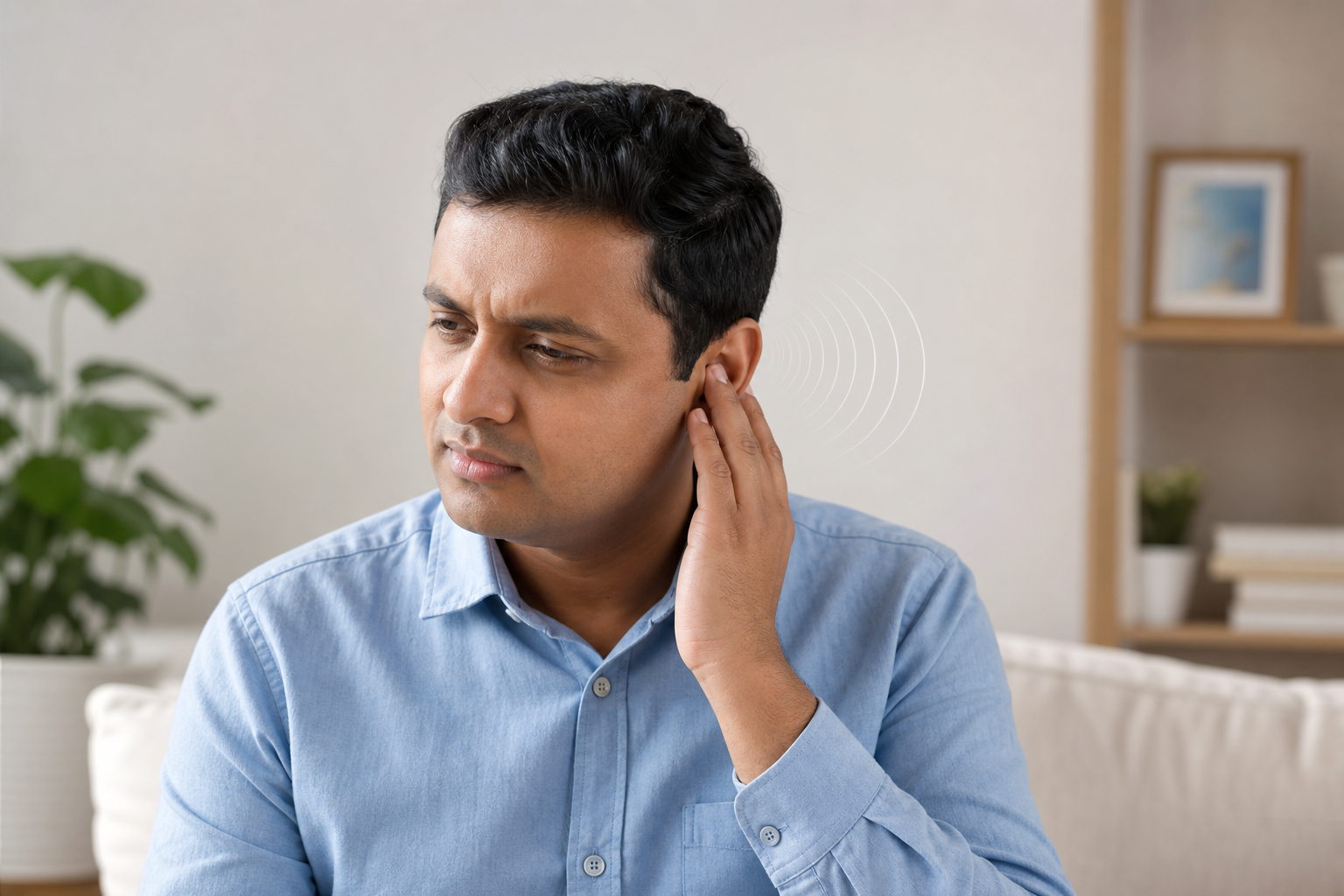
Tinnitus treatment in India is often misunderstood. Let me explain what actually works. Tinnitus causes is something I see regularly in my practice.
If you’ve ever heard a constant ringing, whistling, buzzing, or hissing sound in your ears (kaan mein seeti, hissing ya ringing)-even when everything is quiet around you-you’re not alone. In my fifteen years at Prime ENT Center in Hardoi, I’d estimate that 1 in 4 Patients who walk through my door mention some form of Tinnitus. Most are confused: “Doctor, kaan mein awaaz kyun aati hai? (Why is there sound in my ear?) I’m not hearing anything from outside, but inside my ear it won’t stop.”
Table of Contents
- Understanding Tinnitus: What’s Actually Happening in Your Ear
- The Five Categories of Tinnitus Causes
- Indian-Specific Tinnitus Causes You Should Know
- How to Diagnose What’s Causing YOUR Tinnitus
- Treatment Based on Cause
- 8 Frequently Asked Questions About Tinnitus
- When to See an ENT Immediately (Red Flags)
- Real Case from My Practice
- Prevention: Protecting Your Ears from Tinnitus
- What You Should Do Right Now
Tinnitus is one of the most frustrating conditions because it’s invisible-nobody else can hear it, but you hear it constantly. It’s like a ringing bell nobody switched off. In Uttar Pradesh, we see a LOT of tinnitus, partly because of our age demographics, partly because of noise pollution (Diwali firecrackers, factory noise, wedding bands), and partly because of treatable conditions people ignore.
Here’s the good news: most tinnitus is caused by treatable conditions. Once I understand why your ear is ringing, I can usually help. Let me walk you through the causes-from the simple to the serious-and show you what to look for.
Related Reading
- Tinnitus and Anxiety, The Vicious Cycle That Traps Patients
- Tinnitus at Night: Why Silence Makes It Worse & How to Sleep Better
- Pulsatile Tinnitus, When Your Ear Beats Like a Heart
- Unilateral Tinnitus: When One-Ear Ringing Needs an MRI
- Tinnitus at Night, Why It Gets Worse and How to Sleep Better
Understanding Tinnitus: What’s Actually Happening in Your Ear
Before diving into causes, let me explain what tinnitus IS. It’s not a disease-it’s a symptom. Tinnitus means you’re hearing sound that isn’t actually coming from outside your ear. Your brain is creating the sensation of sound.
This can happen in several ways:
- Damage to the inner ear makes it send false signals (tinnitus from hearing loss)
- Blood vessels pulsing abnormally in the ear (vascular tinnitus)
- Muscle spasms in the ear (rare)
- Referred pain from the jaw (TMJ tinnitus)
The sound someone hears is usually described as:
- Ringing (seeti)
- Buzzing (bhunbhunaahat)
- Hissing (shhh sound)
- Whooshing/pulsating (heartbeat sound)
- Roaring (gunjn)
Different sounds suggest different causes, and I’ll explain which are more or less concerning as we go.
The Five Categories of Tinnitus Causes
In my practice, I organize tinnitus causes into five main categories. This helps me pinpoint what’s happening in your ear.
CATEGORY A: Ear-Related Causes (Most Common, 80% of Cases)
1. Age-Related Hearing Loss (Presbycusis), The #1 Cause
If you’re over 60 (or sometimes over 50), the most likely cause of your tinnitus is simple age-related hearing loss. This isn’t scary-it’s normal aging, like gray hair. But it often comes with ringing.
What happens: tiny hair cells in your inner ear (cochlea) naturally weaken over decades of use. When these cells die, they send faulty signals to your brain, which interprets it as ringing or buzzing.
Key signs:
- Tinnitus in both ears (usually)
- High-pitched ringing or hissing (ऊँची suraksh seeti)
- Difficulty hearing high-pitched sounds (doorbells, phone ringing, children talking)
- Constant, stable tinnitus (doesn’t fluctuate)
How common? Very. I’d say 40-50% of my tinnitus patients over 65 have pure presbycusis. The good news: hearing aids often help reduce the tinnitus perception.
2. Noise-Induced Hearing Loss, The Second Most Common
This is huge in India. Diwali firecrackers, factory noise, construction, loud music, earphones at full volume-all of these cause tinnitus.
In Hardoi, I see a spike in tinnitus cases right after Diwali. Patients come in: “Doctor, patakhe kal chhode, aaj se kaan mein seeti ho gai” (I burst crackers yesterday, and today my ear is ringing). Sometimes it’s temporary. Sometimes it’s permanent.
Here’s what happens: loud noise damages the hair cells in the cochlea. If the damage is mild, the ringing goes away in days to weeks. If it’s severe or repeated, it becomes permanent.
Key signs of noise trauma:
- Tinnitus started suddenly after loud noise exposure
- Often accompanied by hearing loss at specific frequencies
- High-pitched ringing (seeti)
- May improve slightly over weeks if exposure was one-time
Professions at high risk:
- Factory workers (machinery noise)
- Construction workers (jackhammers, drills)
- Musicians and sound technicians
- Military personnel (gunfire)
- Textile mill workers (common in North India)
Young people are also at risk now from: earphones at high volume, loud movies, concert attendance.
Prevention: Wear earplugs at loud events. On Diwali, protect your ears. Avoid earphones above 60% volume. If you work in loud environments, use hearing protection.
3. Cerumen (Ear Wax) Buildup, The Easily Fixable Cause
This is my favorite tinnitus cause because it’s so simple to fix, yet I see it missed by other doctors repeatedly.
Ear wax is natural and protective. But sometimes it builds up, especially in:
- People who don’t clean ears properly
- People using hearing aids (blocks wax drainage)
- Elderly people (wax becomes drier, harder to move)
- People using cotton swabs incorrectly (pushes wax deeper)
When wax blocks the ear canal, it causes:
- Tinnitus (ringing or roaring sound)
- Hearing loss (sounds muffled, jaise kaan band ho)
- Ear fullness (pressure in ear)
- Ear pain (sometimes)
The magic part: remove the wax, tinnitus vanishes immediately. I’ve had patients whose tinnitus completely resolved after cerumen removal. One elderly man, Ravi Mathur, told me, “Doctor, 3 saal se kaan mein ringing tha. Aapne cleaning ke baad bilkul chali gayi” (I had ringing for 3 years, and it completely disappeared after cleaning).
👉 Also read: Tinnitus and Vertigo Together, What’s Causing Both?
How I remove it: Otoscope to visualize, then either:
- Cerumen softeners: drops that soften hard wax (takes 1-2 weeks)
- Gentle suction: vacuum out the wax in office (takes 5 minutes)
- Manual removal: with specialized instruments (gentle, painless)
What NOT to do: don’t use cotton swabs, bobby pins, or anything sharp. You’ll push wax deeper and risk perforating the eardrum.
4. Meniere’s Disease, The Triad (Tinnitus + Vertigo + Hearing Loss)
Meniere’s disease is less common but important to recognize because it needs specific treatment.
It happens when fluid builds up in the inner ear (endolymph accumulation). This causes:
- Tinnitus: Low-pitched roaring sound (alag sound)
- Vertigo: Severe spinning dizziness (chakkar bilkul alag)
- Hearing loss: Fluctuating hearing, especially low frequencies
- Aural fullness: Pressure or fullness in the affected ear
Key points:
- Usually ONE ear affected (unilateral), not both
- Symptoms come in episodes (days to weeks apart)
- Vertigo attacks are severe-patients can’t stand or walk during an attack
- More common in people aged 20-60
Treatment: Low-salt diet, diuretics, corticosteroids, vestibular rehabilitation, and in severe cases, injections or surgery.
If you have this triad (tinnitus + vertigo + hearing loss), especially if it’s in one ear and comes in episodes, tell your ENT immediately.
5. Eustachian Tube Dysfunction (ETD)
The Eustachian tube connects your middle ear to the back of your nose. When it’s blocked or not working right, it causes:
- Tinnitus (ringing or crackling sound, jaise pop ho raha ho)
- Hearing loss (sounds muffled)
- Ear fullness or pressure
- Ear pain
Causes of ETD:
- Nasal allergies (hay fever, dust)
- Cold or upper respiratory infection
- Sinus problems
- Smoking
- Flying (pressure changes)
Treatment: Nasal decongestants, antihistamines, nasal steroids, Otovent balloon (ear equalization device), or in severe cases, Eustachian tube dilation.
6. Otosclerosis, The Young Person’s Problem
Otosclerosis is abnormal bone growth in the middle ear that prevents sound vibrations from transmitting properly. It’s more common in:
- Young women (20-40 years old)
- Caucasians (less common in Indians, but I’ve seen it)
- Family history of hearing loss
- Pregnancy (hormones worsen it)
Symptoms:
- Progressive hearing loss (slowly getting worse over months to years)
- Tinnitus (usually low-pitched roaring)
- NO ear pain or drainage
Treatment: Hearing aids for mild cases, or stapedectomy surgery (replacing the affected bone) for advanced cases. Surgery success rate is very high (90%+).
CATEGORY B: Systemic (Whole-Body) Causes
1. High Blood Pressure (Hypertension), Pulsatile Tinnitus
If you hear a “thump-thump” sound in your ear that matches your heartbeat, that’s pulsatile tinnitus. It’s often from high blood pressure.
Why? High pressure in blood vessels makes them pulse harder. If a vessel runs close to the ear, you hear it as rhythmic pulsing (dum-dum-dum).
This is relatively common in Indians because hypertension is so prevalent. A 55-year-old businessman came to me complaining, “Doctor, mere kaan mein heartbeat sun aata hai” (I can hear my heartbeat in my ear). Blood pressure check: 180/110. We treated his hypertension, and the pulsatile tinnitus improved significantly.
Treatment: Control blood pressure with medication, exercise, diet (low salt). As BP normalizes, pulsatile tinnitus often improves.
2. Anemia (Low Hemoglobin)
When hemoglobin is very low, the heart has to beat faster to pump oxygen. This can cause pulsatile tinnitus (hearing your own heartbeat in your ear).
👉 Also read: Tinnitus At Night Sleep Tips
Common in Indians due to:
- Iron deficiency (vegetarian diet, heavy menstruation)
- B12 deficiency (especially vegetarians)
- Folate deficiency
Treatment: Iron supplements, B12 injections, folate supplements, dietary changes. As hemoglobin normalizes, tinnitus usually resolves.
3. Thyroid Disorders
Both hyperthyroidism (overactive) and hypothyroidism (underactive) can cause tinnitus. The mechanism isn’t entirely clear, but thyroid hormones affect inner ear function.
Treatment: Thyroid hormone replacement or suppression (depends on which disorder). As thyroid function normalizes, tinnitus often improves.
4. Diabetes (Madhumeh)
High blood sugar damages the tiny blood vessels in the inner ear, causing tinnitus, hearing loss, and dizziness. I see this frequently in UP where diabetes is epidemic.
Treatment: Optimize blood sugar control (HbA1c < 7%). Better diabetes control helps prevent further ear damage.
5. TMJ (Temporomandibular Joint) Disorders, Jaw Tinnitus
The jaw joint is very close to the ear. When your TMJ isn’t aligned properly or when jaw muscles are tight, it can cause:
- Tinnitus (clicking, popping sounds)
- Ear pain
- Jaw clicking or popping
- Headaches
Causes: Poor posture, teeth grinding (bruxism), stress, malocclusion (bad bite).
Treatment: Bite splint, jaw exercises, stress reduction, physical therapy. Sometimes dental correction helps.
CATEGORY C: Medication-Induced Tinnitus (Ototoxic Drugs)
Some medications can damage the inner ear and cause tinnitus. This is especially important in India where antibiotics are overused.
High-Risk Medications:
- Aminoglycoside antibiotics: Streptomycin (TB treatment), an ototoxic antibiotic, tobramycin. VERY common cause in India due to TB treatment. I tell patients: “Agar TB ki dawai le rahe ho, regular hearing checkup karao” (If you’re on TB meds, get regular hearing tests).
- Aspirin (high doses): People taking high-dose aspirin for pain or heart health can develop tinnitus.
- NSAIDs: Ibuprofen, naproxen (high doses).
- Quinine: For malaria or leg cramps.
- Chemotherapy drugs: Cisplatin, carboplatin (cancer treatment).
Important: If you develop tinnitus while on any medication, tell your doctor immediately. Often, switching to an alternative drug resolves the problem. Don’t stop the medication on your own-work with your prescribing doctor.
CATEGORY D: Neurological Causes (Less Common But Important)
Acoustic Neuroma (Vestibular Schwannoma), RED FLAG
This is a benign tumor on the hearing nerve. It’s not common, but it’s important to recognize because:
Red flag signs:
- UNILATERAL tinnitus (one ear only), this is the biggest red flag. Most tinnitus is bilateral (both ears).
- Progressive hearing loss in one ear
- Hearing loss at low frequencies (unusual pattern)
- Balance problems or vertigo
- Ear fullness
What I do: If I suspect acoustic neuroma, I order an MRI of the brain with contrast. Early detection is important because treatment (observation, radiation, or surgery) depends on size and growth.
The good news: Acoustic neuromas are usually benign and slow-growing. Many people live normal lives with them without needing treatment.
Multiple Sclerosis (Rare)
MS can affect the hearing nerve, causing tinnitus and hearing loss. It’s rare but possible. Usually accompanied by other MS symptoms (vision changes, numbness, weakness).
CATEGORY E: Psychological / Stress-Related Tinnitus
Here’s an important truth: tinnitus is real, but stress and anxiety make it MUCH worse. The actual sound in your ear might be mild, but if you’re anxious about it, your brain amplifies it.
How it works:
- You notice a ringing sound (maybe always there, just never noticed before)
- You become anxious: “Why is this happening? Is it serious?”
- Anxiety causes muscle tension, poor sleep, increased stress hormones
- All of this makes the tinnitus SOUND LOUDER and more bothersome
- Cycle repeats: anxiety → louder tinnitus → more anxiety
This is why CBT (cognitive behavioral therapy) and counseling help. The actual tinnitus doesn’t change, but your brain’s perception of it improves.
👉 Also read: Tinnitus and Anxiety, The Vicious Cycle That Traps Patients
Management: Stress reduction, meditation, adequate sleep, counseling, sometimes anti-anxiety medication. Tinnitus retraining therapy (TRT) is specifically designed for this.
Indian-Specific Tinnitus Causes You Should Know
Some causes are particularly relevant in India. I want to highlight these because awareness can prevent problems:
1. Firecracker Noise (Diwali & Other Festivals)
This is HUGE in India. Every Diwali, I get a surge of tinnitus patients. Children are especially vulnerable because they’re closer to firecrackers and don’t understand danger.
A firecracker near your ear can cause permanent noise-induced hearing loss AND tinnitus in seconds.
Prevention: Wear earplugs during Diwali, keep children away from firecrackers, or better yet, reduce firecracker use entirely.
2. Streptomycin for TB Treatment
TB is still common in India. Streptomycin, a key TB drug, is ototoxic (damages ears). I counsel all my TB patients: “Aapko tinnitus ya suni problem hote hain toh foran bataiye” (If you experience tinnitus or hearing problems, tell me immediately).
Management: Regular audiometry during TB treatment, watch for early signs of hearing loss, consider alternative TB regimens if possible.
3. Traditional Ear Drops and Home Remedies
I’ve seen patients use:
- Garlic oil (lahsun ka tel) in ears, can cause chemical irritation and wax impaction
- Neem oil, can irritate delicate ear skin
- Honey in ears, rarely, can cause infection
- Random herbal drops without proper diagnosis, can damage eardrum if there’s a perforation
My advice: Before putting anything in your ear, get it checked by an ENT. What works for one person’s ear problem might worsen another’s.
4. Factory & Industrial Noise (Textile Mills, etc.)
North India has many textile mills and factories. Workers exposed to loud machinery without proper hearing protection develop tinnitus and hearing loss.
Prevention: Employers should provide hearing protection, and workers should use it religiously.
5. Earphone Use Among Youth
More and more young people in India are using earphones at dangerously high volumes. Gaming, streaming music, online classes-all with headphones cranked up.
Safe volume rule: Can you hear someone speaking normally next to you while wearing earphones? If not, it’s too loud. Keep volume at 60% or less.
How to Diagnose What’s Causing YOUR Tinnitus
When you come to my clinic with tinnitus, here’s what I do:
1. Detailed History
- When did it start? Sudden or gradual?
- What does it sound like? (ringing, buzzing, roaring, pulsing?)
- One ear or both?
- Constant or comes and goes?
- Anything triggering it? (loud noise, position change, stress?)
- Any hearing loss, vertigo, ear pain?
- Medical history? (diabetes, hypertension, TB treatment?)
- Medications?
- Occupational noise exposure?
2. Physical Exam
- Otoscopy: Look inside the ear with an otoscope. Check for wax, infection, eardrum abnormalities.
- Weber & Rinne tests: Simple hearing tests using a tuning fork. Tells me if hearing loss is conductive or sensorineural.
- Neck exam: Check for abnormal blood vessel bruits (sounds) that might indicate vascular cause.
3. Audiometry (Formal Hearing Test)
This is THE key test. Sit in a soundproof booth, listen to tones at different frequencies, indicate when you hear them. Results show:
- If If you have hearing loss (and at which frequencies)
- Pattern of loss (age-related, noise-induced, medication-related, etc.)
- Type of loss (conductive vs. sensorineural)
4. Tympanometry (Middle Ear Function Test)
Measures middle ear pressure and eardrum movement. Helps diagnose Eustachian tube dysfunction or middle ear fluid.
👉 Also read: Tinnitus Retraining Therapy
5. Blood Pressure Check
If pulsatile tinnitus, I check for hypertension.
6. Lab Work (If Indicated)
- Blood glucose (diabetes)
- Complete blood count (anemia)
- Thyroid function tests
7. Imaging (If Red Flags)
- MRI brain: If unilateral tinnitus to rule out acoustic neuroma
- CT temporal bone: If considering surgery (otosclerosis)
- Vascular imaging: If pulsatile tinnitus and vascular problem suspected
Treatment Based on Cause
Once I know what’s causing the tinnitus, treatment is straightforward:
Cerumen Impaction:
Remove wax. Tinnitus resolves 90% of the time.
Age-Related Hearing Loss / Noise-Induced Loss:
- Hearing aids: amplify sound, help brain focus on external sounds instead of tinnitus
- White noise machines: mask the tinnitus sound
- Tinnitus retraining therapy
- Counseling and stress management
Meniere’s Disease:
- Low-salt diet (critical)
- Diuretics (water pills)
- Vestibular rehabilitation exercises
- For acute attacks: a vestibular suppressant or an anti-nausea medication for vertigo
- Steroid injections into ear (in severe cases)
Eustachian Tube Dysfunction:
- Nasal steroids (fluticasone, mometasone)
- Oral decongestants
- Antihistamines (for allergies)
- Otovent balloon exercises
- Nasal saline irrigation
High Blood Pressure (Pulsatile):
- Antihypertensive medications
- Diet (low salt)
- Exercise
- Stress reduction
Anemia:
- Iron supplementation
- B12 injections
- Dietary iron (spinach, beans, meat)
Medication-Induced Tinnitus:
- Switch to alternative medication if possible (discuss with prescribing doctor)
- Reduce dose if appropriate
- Support therapy (hearing aids, counseling)
Acoustic Neuroma:
- Observation: Most grow slowly; regular MRI monitoring
- Surgery: If growing or causing symptoms
- Radiation therapy: Alternative to surgery
TMJ-Related:
- Bite splint (night guard)
- Jaw exercises
- Physical therapy
- Stress reduction
- Sometimes dental/orthodontic correction
8 Frequently Asked Questions About Tinnitus
Q1: Is tinnitus a sign of serious illness?
Usually not. 80% of tinnitus comes from treatable ear problems. But unilateral tinnitus (one ear only) can be a red flag for acoustic neuroma, so it needs investigation. Pulsatile tinnitus (heartbeat sound) needs blood pressure and vascular evaluation.
Q2: Can tinnitus go away on its own?
Sometimes yes, sometimes no. If it’s from temporary noise exposure, it might resolve in days. If it’s from permanent hearing loss, it’s usually permanent (though perception can improve with treatment). About 25% of people get used to it and stop noticing it.
Q3: Do hearing aids really help tinnitus?
Often yes. Hearing aids amplify external sounds, which helps your brain focus on real-world sounds instead of the ringing. Studies show 50-60% of hearing aid users experience improvement in tinnitus perception.
Q4: Is there a medicine that helps managethe condition?
No magic pill. But treatment of underlying causes (controlling blood pressure, treating anemia, removing wax) can helps managethe condition caused by those conditions. For tinnitus from hearing loss, management (hearing aids, therapy) helps, but doesn’t eliminate the underlying nerve damage.
Q5: Should I avoid silence when I have tinnitus?
Yes, paradoxically. Silence makes tinnitus LOUDER. Background noise (fan, music, white noise) masks tinnitus. Many patients sleep with a fan or white noise app.
Q6: Can stress make tinnitus worse?
Absolutely. Stress and anxiety dramatically amplify tinnitus perception. The tinnitus itself doesn’t get louder, but you notice it more and it bothers you more. Stress management is part of every treatment plan.
Q7: Is there surgery for tinnitus?
Not directly for tinnitus. But surgery for underlying causes can help (removing wax, fixing eardrum perforation, stapedectomy for otosclerosis). Acoustic neuroma surgery might improve tinnitus if the neuroma was the cause.
Q8: Can I have hearing aids without visiting an audiologist?
Not recommended. You need proper fitting, adjustment, and counseling. Over-the-counter hearing aids aren’t as customizable. See an audiologist for proper fitting.
When to See an ENT Immediately (Red Flags)
Most tinnitus isn’t emergency, but these situations warrant urgent evaluation:
- Sudden onset tinnitus in one ear (could be sudden sensorineural hearing loss, needs treatment within 2-4 weeks)
- Unilateral tinnitus with hearing loss (acoustic neuroma possibility)
- Pulsatile tinnitus (could indicate vascular problem or high blood pressure)
- Tinnitus + vertigo + hearing loss (Meniere’s disease)
- Tinnitus + ear pain + discharge (ear infection)
- Tinnitus after head injury
- Tinnitus that’s suddenly worse (could indicate new problem)
Real Case from My Practice
Raj, a 28-year-old, came to me with ringing in both ears that started after Diwali. He’d burst crackers near his ears. He was panicked: “Doctor, kya permanent hai?” (Is it permanent?).
I examined him, did an audiogram (hearing test), and found mild high-frequency hearing loss-classic noise trauma. I explained: “Aapke ears ko thoda nuksaan hua firecracker se, but not severe. There’s a good chance it will improve over 2-3 months.”
I prescribed: hearing protection (earplugs), white noise at night, stress management, and regular follow-ups.
Three months later, his tinnitus had improved by 70%. Six months later, it was barely noticeable. He’s been much more careful with firecrackers since.
Prevention: Protecting Your Ears from Tinnitus
- Hearing protection: Earplugs at loud events (concerts, Diwali, construction)
- Earphone safety: 60/60 rule, 60% volume, 60 minutes max per day
- Regular hearing checks: Baseline at age 50, then every 3-5 years
- Chronic disease management: Control blood pressure, diabetes, thyroid
- Medication review: Ask about ototoxicity of any new drugs
- Stress management: Meditation, exercise, adequate sleep
- Cerumen management: Regular gentle ear cleaning (not with cotton swabs)
What You Should Do Right Now
If you’re experiencing tinnitus:
- Note when it started, what it sounds like, which ear(s), and what makes it better or worse.
- Get your blood pressure checked (rule out hypertension).
- See an ENT for physical exam and audiometry to determine the cause.
- Get appropriate blood tests if systemic disease is suspected.
- Start stress management techniques (they help regardless of cause).
- Use background noise (fan, music, white noise app) to mask tinnitus while sleeping.
- Follow treatment recommendations for your specific cause.
Final Thought
Tinnitus is frustrating and sometimes maddening-I hear this from patients every day. But here’s what I want you to know: most tinnitus is treatable, and even when it’s not completely curable, its impact on your quality of life can be significantly improved.
The key is early diagnosis. Don’t suffer in silence (ironic, I know). Come get evaluated. Let’s find out why your ear is ringing and what we can do about it.
Dealing with Ear Ringing? Get Professional ENT Evaluation
Dr. Prateek Porwal, MBBS, DNB ENT, CAMVD | ENT & Vertigo SpecialistMBBS
Prime ENT Center, Hardoi, Uttar Pradesh
Call: 7393062200
Award: VAI Budapest 2025 | Expert in Tinnitus Diagnosis & Treatment
We perform detailed hearing tests (audiometry), identify the cause of your tinnitus (kaan mein seeti), and develop a personalized treatment plan. Don’t let ringing ears affect your quality of life.
Related Articles on Dr. Prateek Porwal’s Website
Medical Disclaimer: This article is for educational purposes only. It does not constitute medical advice or prescribing guidance. All medications mentioned should only be taken under the direct supervision of a qualified physician. Specific doses, durations, and drug choices depend on your individual clinical condition and must be determined by your treating doctor. If you experience severe symptoms, please seek immediate medical attention.
References
- Tunkel DE, et al. Clinical Practice Guideline: Tinnitus. Otolaryngology–Head and Neck Surgery. 2014;151(2_suppl):S1–S40.
This article is for educational purposes. Please consult Dr. Prateek Porwal at Prime ENT Center, Hardoi for personal medical advice.
Dr. Prateek Porwal is an ENT & Vertigo Specialist with over 13 years of experience, holding MBBS (GSVM Medical College), DNB ENT (Tata Main Hospital), and CAMVD (Yenepoya University). He is the originator of the Bangalore Maneuver for Anterior Canal BPPV and has published research in Frontiers in Neurology and IJOHNS. Serving at Prime ENT Center, Hardoi.
Reference: Persistent Postural-Perceptual Dizziness — Staab et al, 2017