
After head injury is something I see regularly in my practice. I was in the Emergency Department at the hospital when they brought in a 45-year-old motorcycle rider from Hardoi. Two-wheeler accident on the main road-he’d hit a pothole, lost control, skidded, and smashed his head on the road. He was conscious, talking, no obvious major injuries, but his head had taken real impact. CT scan was normal. We cleared him medically and sent him home with instructions to watch for worsening headache or confusion.
Table of Contents
- The Mechanism: How Head Trauma Dislodges Ear Crystals
- Post-Traumatic BPPV: How Common Is It?
- The Two-Wheeler Problem in UP
- When Does BPPV Develop After Head Trauma?
- Is Post-Traumatic BPPV Different from Other BPPV?
- Other Injuries to Rule Out After Head Trauma and Vertigo
- Imaging After Head Trauma with Vertigo
- Treatment of Post-Traumatic BPPV: Similarities and Differences
- Physiotherapy and Rehabilitation After Trauma BPPV
- Prognosis: How Long Until BPPV Resolves?
📋 Table of Contents
- The Mechanism: How Head Trauma Dislodges Ear Crystals
- Post-Traumatic BPPV: How Common Is It?
- The Two-Wheeler Problem in UP
- When Does BPPV Develop After Head Trauma?
- Is Post-Traumatic BPPV Different from Other BPPV?
- Other Injuries to Rule Out After Head Trauma and Vertigo
- Imaging After Head Trauma with Vertigo
- Treatment of Post-Traumatic BPPV: Similarities and Differences
- Physiotherapy and Rehabilitation After Trauma BPPV
- Prognosis: How Long Until BPPV Resolves?
- Return to Activities After Trauma BPPV
- Psychological Impact and Recovery
- The VAI Budapest 2025 Perspective on Trauma-Related Vestibular Disorders
- Prevention: How to Reduce BPPV Risk from Head Injury
- FAQ Section
- 1. I had a head injury months ago, and now I’m developing BPPV. Is the timing too late for it to be from the injury?
- 2. My CT scan was normal after the head injury. Can I still have BPPV from the trauma?
- 3. Will post-traumatic BPPV cause permanent balance problems?
- 4. Can I have BPPV and also have a more serious brain injury?
- 5. My BPPV after a head injury isn’t responding to maneuvers. What does that mean?
- 6. Should I sue the person responsible for the accident if I got BPPV?
- 7. What if BPPV keeps recurring after the same head injury?
- 8. Can head trauma cause other types of dizziness besides BPPV?
- What to Do If You Have Post-Traumatic BPPV
- Book Your Appointment, Prime ENT Center Hardoi
- References
Three days later, he came to Prime ENT Center with his wife. The moment he rolled over in bed that morning, the world started spinning violently. He was terrified. Had the accident caused brain damage? Was this related to the head injury? Bppv after head injury is actually common.
No brain damage. His CT was normal. His neurological exam was fine. But his inner ear had paid the price. The impact had dislodged the tiny calcium carbonate crystals (otoconia) in his semicircular canals. He had textbook BPPV triggered by head trauma-what we call post-traumatic BPPV.
This happens more often than people realize, especially in India where motorcycle accidents are common. Let me explain the mechanism, help you understand if your BPPV is trauma-related, and show you how we treat it differently than BPPV from other causes.
The Mechanism: How Head Trauma Dislodges Ear Crystals
First, a quick review of the anatomy. Inside your inner ear are three semicircular canals arranged in three planes-anterior, posterior, and horizontal. These canals are filled with fluid and lined with hair cells. Attached to some of these hair cells are tiny crystals made of calcium carbonate and protein, called otoconia or “ear stones.”
These crystals normally sit attached in a gel-like material in a region called the utricle. They’re meant to stay there, detecting gravity and acceleration. But the crystal layer is delicate. It’s not glued down permanently-it’s held in place by that gelatinous matrix.
When your head suddenly impacts something-the road, a steering wheel, a cricket ball if you’re playing sports-the acceleration forces are tremendous. Your brain is protected inside the skull by cerebrospinal fluid, which cushions it. But your inner ear? It’s a delicate fluid-filled chamber. The sudden acceleration causes the fluid and contents to move violently.
The crystals, which are denser than fluid, don’t move smoothly with the fluid. They lag behind momentarily, which creates shear forces. If the trauma is forceful enough, these shear forces rip the crystals loose from their attachment points. Now they’re free-floating in the semicircular canal fluid-exactly the condition that causes BPPV.
You don’t necessarily need a severe head injury with loss of consciousness. A moderate impact can do it. I’ve seen BPPV develop after fairly minor collisions simply because the angular acceleration of the head during the impact was extreme.
Post-Traumatic BPPV: How Common Is It?
Research shows that about 0.5-2% of people who sustain head injuries develop BPPV afterward. That might sound low, but consider the number of head injuries happening every day in India-motorcycle accidents, falls from heights, sports injuries, domestic accidents. The number of post-traumatic BPPV cases is substantial.
At Prime ENT Center in Hardoi, I see at least 2-3 post-traumatic BPPV cases per month. This is probably higher than the national average because Hardoi is on a main highway with considerable traffic. We get people from accident sites in surrounding areas.
The probability is higher with:
– Motorcycle accidents (no helmet protection, higher acceleration forces)
– Falls from height (especially head first)
– Motor vehicle collisions (especially side impacts where the head whips)
– Sports injuries in contact sports (cricket balls, falls during cricket, hockey collisions)
👉 Also read: Recurrent BPPV: Why It Keeps Coming Back
– Assault (head trauma from blunt objects)
Helmet-wearing significantly reduces the risk. Not by eliminating trauma forces entirely, but by dissipating them over a larger surface area and reducing peak acceleration. This is yet another reason helmet use matters-beyond preventing brain damage, helmets reduce BPPV risk too.
The Two-Wheeler Problem in UP
I have to mention this because it’s directly relevant to my patient population. In Uttar Pradesh, motorcycle and two-wheeler accidents are the leading cause of head trauma I see. People often ride without helmets, ride at speeds, and roads in rural areas have potholes and uneven surfaces.
One patient, a 28-year-old from a village near Hardoi, was riding his two-wheeler home from work when his wheel caught a large pothole on a rural road. The jolt threw him forward and his head hit the handlebar and front wheel. He didn’t lose consciousness-he was mostly dazed. No CT scan was done because he went to a small clinic that didn’t have imaging.
Within 24 hours, BPPV hit him hard. Every head movement caused vertigo. He came to me about a week later, only because his wife insisted. By then he’d lost a week of work and was convinced he had brain damage. Once I explained BPPV and did a successful Epley maneuver, he was relieved. Still-a week of unnecessary suffering.
This is exactly why I’m writing this article. Post-traumatic BPPV is real, it’s treatable, and recognizing it early prevents unnecessary panic and loss of function.
When Does BPPV Develop After Head Trauma?
This varies. Most commonly, BPPV develops within the first week after injury. But I’ve seen cases where it appeared up to 3-4 weeks after trauma. One patient told me the accident was 6 weeks ago, he’d recovered from all other symptoms, and then suddenly BPPV started. That’s unusual but possible-perhaps the injury had swelling that resolved gradually, and as it did, crystals finally detached.
The most common timeline is 24-72 hours after injury. The person feels okay initially, then suddenly develops positional vertigo that matches all the criteria for BPPV-triggered by head movement, comes on in seconds, lasts 30 seconds to 2 minutes, resolves completely, and returns if you repeat the provoking movement.
I always ask trauma patients at follow-up about dizziness. Many don’t mention it spontaneously because they assume the head injury caused some swelling that will resolve, or they think dizziness is expected after head trauma. I make sure they know: if dizziness is specifically positional (worse with certain head movements), sudden in onset, and episodic, that’s BPPV, not normal post-trauma recovery.
Is Post-Traumatic BPPV Different from Other BPPV?
Good question. Mechanically, no-once the crystals are loose, BPPV is BPPV, whether the cause was a head injury or idiopathic. The nystagmus is the same. The Dix-Hallpike test shows the same finding. The maneuvers work the same way.
But there are some clinical differences worth noting:
More severe initially: Post-traumatic BPPV often starts more severe than gradual-onset BPPV. The trauma might dislodge more crystals or dislodge them in a way that creates intense vertigo right away. Patients describe it as “the worst spinning of my life.”
More anxiety: Because it’s linked to head trauma, patients are naturally anxious. They worry about underlying brain damage. This anxiety can actually worsen the dizziness sensation-the brain amplifies the vestibular signal when anxious. Once I explain the mechanism and do successful maneuvers, much of the anxiety resolves and patients feel better.
More likely to be multiple canal involvement: Severe trauma can dislodge crystals into multiple canals. Instead of just posterior canal BPPV (the most common form), you might have anterior or horizontal canal involvement too. This makes testing more complex and sometimes requires more maneuvers.
Prognosis might be slightly different: Most BPPV, regardless of cause, resolves within 2-4 weeks. But post-traumatic BPPV occasionally lasts longer or recurs more frequently. I don’t know if this is a true biological difference or just that post-traumatic patients get followed more closely so we detect recurrences we’d miss in other patients. Either way, even if it takes 6-8 weeks instead of 4, it still resolves.
👉 Also read: Lermoyez Syndrome and Tumarkin’s Crisis: Unusual Meniere’s
Other Injuries to Rule Out After Head Trauma and Vertigo
When someone develops vertigo after head trauma, I have to think beyond BPPV. Other injuries can also cause post-trauma vertigo:
Labyrinthine concussion: The inner ear can be bruised without crystals being dislodged. This causes sudden hearing loss and vertigo but looks different on testing. It often improves over weeks with corticosteroids.
Perilymphatic fistula: This is a hole in the membrane between the inner and middle ear, typically at the oval window or round window. Trauma can cause this. It presents with vertigo, hearing loss, and sometimes discharge from the ear if there’s a perforation too. This needs imaging (CT temporal bone) and sometimes surgical repair.
Temporal bone fracture: If the trauma is severe, a fracture of the temporal bone (which houses the inner ear) can occur. This can cause severe vertigo, hearing loss, facial weakness, or all three. This is seen on CT and needs specialist management.
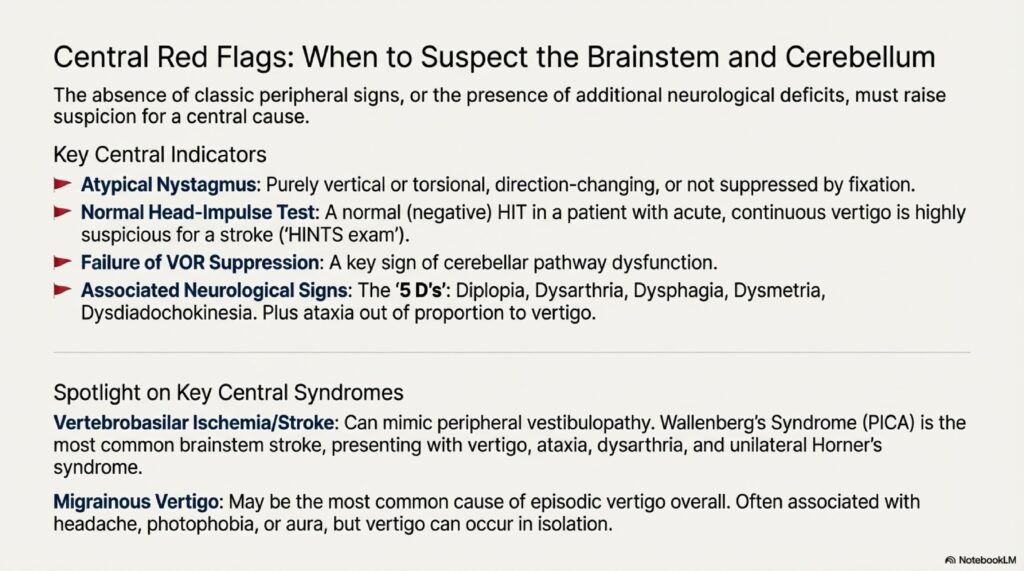
Subdural haematoma: This is bleeding between the brain and the skull. It can cause vertigo as one symptom, but usually there’s headache, altered mental status, or progressive symptoms. Any concern for this needs urgent CT and neurology evaluation.
Concussion/traumatic brain injury: Even without structural injury, the impact on the brain can cause dizziness, balance problems, and vertigo-like symptoms. These usually improve over weeks as the brain heals.
The way I distinguish post-traumatic BPPV from these other conditions: BPPV is positional (gets worse with specific head movements), episodic (comes and goes), and doesn’t get progressively worse. If the vertigo is constant, gets worse over days, is associated with hearing loss, or has progressive neurological symptoms, we need imaging and more thorough investigation.
Imaging After Head Trauma with Vertigo
Here’s my approach: if someone had head trauma and now has vertigo that looks like BPPV (positional, episodic, normal neurological exam), do they need imaging?
For straightforward suspected BPPV after trauma: No imaging needed initially. We treat the BPPV. If it responds to maneuvers, we’re reassured. If it doesn’t respond or if there are other concerning features, then we image.
For vertigo with other concerning signs: Yes, get imaging. This includes: hearing loss, facial weakness, balance problems beyond just dizziness, progressive symptoms, altered mental status, or severe ongoing headache.
For significant head trauma (loss of consciousness, severe impact): These patients often get CT scan in the emergency department anyway. If BPPV develops later, we don’t need to repeat imaging unless new concerning features emerge.
In Hardoi, CT of the temporal bone costs about and MRI brain is Not cheap, but reasonable if genuine concern exists. We don’t do imaging just to be cautious with post-traumatic BPPV; we use clinical judgment.
Treatment of Post-Traumatic BPPV: Similarities and Differences
The positional maneuvers-Epley and Foster-work just as well for post-traumatic BPPV as for other BPPV. There’s no reason to treat it differently. I perform Epley maneuvers in my clinic at Prime ENT Center for post-trauma patients with the same technique and success rate as others.
However, I’m more cautious about the timing of maneuvers if the trauma was very recent. If someone has a head injury and CT is being done to rule out serious injury, I hold off on aggressive maneuvers until CT is clear. Once we’ve ruled out fracture, bleeding, or other structural injury, maneuvers are safe.
For most cases where it’s been a few days since the accident, CT was normal, and BPPV has now appeared, we proceed with maneuvers immediately. Delaying treatment means days of unnecessary suffering.
👉 Also read: BPPV Diet Guide, Foods That Help and Foods to Avoid
Success rate: About 80% of post-traumatic BPPV patients get significant relief after the first Epley maneuver, and most are completely resolved within 1-2 weeks of treatment. Some need additional maneuvers or home-based exercises, but the trajectory is the same as non-traumatic BPPV.
Recurrence risk: There’s a somewhat higher chance of BPPV recurring after head trauma compared to idiopathic BPPV. Maybe 10-15% of post-traumatic BPPV recurs compared to 5% of idiopathic. But even if it recurs, we treat it the same way and it responds the same way.
Physiotherapy and Rehabilitation After Trauma BPPV
Beyond positional maneuvers, vestibular rehabilitation therapy (VRT) can help post-trauma patients return to full function. VRT is especially useful if there are other balance problems beyond just BPPV-like persistent unsteadiness, difficulty with visual tracking, or generalized vestibular hypersensitivity from the trauma.
A trained physiotherapist designs exercises that desensitize the vestibular system and retrain balance. For someone who’s had a motorcycle accident and developed BPPV, they’re often anxious about riding again. Vestibular rehabilitation builds confidence by improving balance and demonstrating that the inner ear is healing.
Cost in UP is about Most post-trauma patients benefit from 4-8 sessions. At Prime ENT Center, we work with physiotherapists in Hardoi and refer patients who need additional support beyond maneuvers.
Prognosis: How Long Until BPPV Resolves?
The natural history of BPPV, including post-traumatic BPPV, is that it usually resolves on its own within 1-3 months even without treatment. The floating crystals eventually get reabsorbed by the body, or they settle in a position that stops bothering you.
With treatment (maneuvers), resolution happens faster-often within 1-2 weeks. Most of my patients see dramatic improvement after 2-3 Epley maneuvers, done either in my clinic or at home.
Long-term prognosis is very good. BPPV doesn’t cause lasting damage to the inner ear. It doesn’t lead to chronic balance problems. Once resolved, most people are fine. If it recurs (which happens in a minority), it responds to the same treatment again.
Return to Activities After Trauma BPPV
Patients often ask: when can I drive again? Play sports again? Ride my motorcycle again?
It depends on the activity and the severity of BPPV:
Driving: If BPPV is resolved or mostly resolved, driving is safe. If BPPV is active and causing frequent spinning, you shouldn’t drive. Vertigo while driving is a safety hazard to yourself and others. Once maneuvers have been done and you feel stable, usually within a few days to a week, driving can resume safely.
Work: Most jobs are fine to return to once BPPV is improving. If someone’s job involves heights (construction, window cleaning) or equipment operation, I’d wait until BPPV is completely better.
Sports: Contact sports and head-impact sports (cricket where you might get hit by a ball, hockey, etc.) should be avoided until BPPV is resolved and you’ve had medical clearance. Even then, if you had post-traumatic BPPV from sports once, take extra precautions-wear protective gear (helmet, mouthguard) to reduce risk of re-trauma.
Motorcycles: This is a tough one because many of my Hardoi patients ride motorcycles and want to know when they can ride again. Once BPPV is resolved, riding is safe from a medical standpoint. But I always counsel: wear a helmet. Every time. The fact that you had post-traumatic BPPV should motivate you to prevent the next head injury-and a helmet is how you do that.
I had a 32-year-old motorcycle rider who came in with post-traumatic BPPV after an accident he had without a helmet. We treated his BPPV successfully. I asked if he’d start wearing a helmet. He said no. I told him bluntly: “When you have the next accident-because statistically riders without helmets have accidents-you might not be so lucky. BPPV is annoying. Brain damage is permanent.” He wore a helmet from then on.
👉 Also read: Horizontal Canal BPPV, Geotropic vs Apogeotropic Types
Psychological Impact and Recovery
Head trauma, even if minor, affects people psychologically. Add BPPV to that-sudden, intense spinning-and some patients develop anxiety or mild PTSD around the incident. I’ve had patients become very cautious, afraid to move, and this actually prolongs recovery because fear and immobility worsen balance problems.
Part of my role is reassuring patients: your brain is fine, your inner ear is repairing, and treatment works. Once maneuvers succeed and BPPV resolves, most people feel tremendously relieved. The physical recovery often comes with psychological recovery.
For patients with significant anxiety, I sometimes refer to a counselor or therapist. Post-traumatic stress is real and can affect rehabilitation. But most of my post-trauma BPPV patients do very well psychologically once they understand the diagnosis and see rapid improvement with treatment.
The VAI Budapest 2025 Perspective on Trauma-Related Vestibular Disorders
At the VAI Budapest 2025 conference, there was important discussion about post-traumatic vertigo as an under-recognized condition in emergency medicine. Many emergency doctors see patients with head injury and don’t ask specifically about positional dizziness, so post-traumatic BPPV goes undiagnosed initially. Patients suffer for weeks before being evaluated by an ENT or vestibular specialist.
The recommendation was that emergency departments should screen for BPPV in head injury patients before discharge. A simple question-“Do If you have dizziness that gets worse when you move your head in certain directions?”-can identify BPPV early and get patients to appropriate treatment.
I’ve tried to implement this at the hospital in Hardoi, educating emergency staff on BPPV screening. Not fully successful yet, but awareness is growing.
Prevention: How to Reduce BPPV Risk from Head Injury
While you can’t prevent all accidents, you can reduce the risk or severity of head injury:
Helmet use: Non-negotiable for motorcycle riders. It reduces impact forces and prevents BPPV risk among other benefits.
Seat belt use in cars: Reduces head trauma in collisions.
Fall prevention: Especially in elderly people, simple changes like removing tripping hazards, improving lighting, and using handrails reduce fall risk.
Sports safety gear: Helmets for cycling, headgear for contact sports, protective eyewear where relevant.
Avoid heights and ladders if balance is compromised: Once you’ve had one head injury, you’re more vulnerable to another.
I had a patient who’d had a bad fall and developed BPPV. Once he recovered from BPPV, I counseled him on fall prevention. He made modifications to his home-removed a rug that had tripped him, improved bathroom safety with a handrail-and lived several more years without another fall. Simple prevention matters.
FAQ Section
1. I had a head injury months ago, and now I’m developing BPPV. Is the timing too late for it to be from the injury?
Unlikely but possible. Most post-traumatic BPPV develops within weeks of the injury. If BPPV is starting months later, it’s more likely idiopathic (no known cause) than trauma-related. That said, if you distinctly remember the timing, the mechanism of injury was severe, and there’s no other obvious cause, it could be related. Clinical judgment matters here.
2. My CT scan was normal after the head injury. Can I still have BPPV from the trauma?
Absolutely yes. BPPV from crystal dislodgement doesn’t show on CT or even MRI. CT is meant to detect fractures, bleeding, and structural damage-not crystal repositioning. A normal CT doesn’t rule out BPPV at all.
👉 Also read: Stop Calling Everything ‘Chakkar’: BPPV vs Vestibular
3. Will post-traumatic BPPV cause permanent balance problems?
No. Once BPPV resolves, balance returns to normal. BPPV doesn’t cause chronic balance dysfunction. If someone has persistent balance problems after head injury, it’s likely from other causes (brain injury, inner ear trauma beyond just crystal dislodgement) rather than BPPV alone.
4. Can I have BPPV and also have a more serious brain injury?
Yes, you could have both. BPPV can coexist with concussion or other brain injury. This is why we do thorough neurological evaluation. If If you have BPPV plus headache, altered consciousness, memory problems, or other neurological signs, full evaluation including imaging is needed.
5. My BPPV after a head injury isn’t responding to maneuvers. What does that mean?
Most post-traumatic BPPV responds well to maneuvers, but a minority doesn’t respond quickly. This could mean: the crystals are in a different canal than we thought (anterior or horizontal instead of posterior), there are multiple canals involved (requiring different maneuvers), you’re doing the maneuvers incorrectly, or there’s a complicating factor. We’d usually do more testing (vHIT, caloric test) and possibly try different maneuvers or refer to a specialist.
6. Should I sue the person responsible for the accident if I got BPPV?
That’s a legal question beyond my expertise. But from a medical standpoint, post-traumatic BPPV is a real injury with real cost (treatment, time off work, suffering). If the accident was caused by someone’s negligence, you may have a valid claim. Consult with a lawyer about your specific situation.
7. What if BPPV keeps recurring after the same head injury?
Recurrent BPPV from the same injury is unusual. If BPPV recurs, it’s usually completely separate episodes (maybe from new crystal dislodgement or natural BPPV developing). Treat each episode as its own thing. If truly recurring from the same injury site, we’d investigate further for other abnormalities.
8. Can head trauma cause other types of dizziness besides BPPV?
Yes. Head trauma can cause concussion (which includes dizziness), post-concussion syndrome, persistent mild traumatic brain injury-related dizziness, labyrinthitis, perilymphatic fistula, and other conditions. BPPV is the most common vestibular cause, but not the only one. This is why proper evaluation is important.
What to Do If You Have Post-Traumatic BPPV
If you’ve had a recent head injury and now have positional vertigo, here’s my advice:
1. Make sure the head injury was evaluated medically and serious injury was ruled out.
2. Contact an ENT specialist or balance expert. Call Prime ENT Center at 7393062200 if you’re in Hardoi or UP.
3. Be clear about your symptoms: when did the vertigo start, what movements trigger it, how long attacks last, if you have any hearing loss or other neurological symptoms.
4. Expect a thorough evaluation including possibly the Dix-Hallpike test to confirm BPPV.
5. If BPPV is diagnosed, treatment is straightforward and effective. Most people do well.
6. Don’t assume post-traumatic symptoms are permanent. BPPV resolves. You will recover.
Book Your Appointment, Prime ENT Center Hardoi
If head trauma has left you with vertigo, don’t live with it. Post-traumatic BPPV is common, recognizable, and very treatable. Dr. Prateek Porwal has extensive experience managing BPPV in all its forms, including trauma-related cases. We use proven maneuvers that work, we explain what happened to your inner ear, and we get you back to your normal life quickly.
Prime ENT Center Hardoi | Phone: 7393062200 | Website: drprateekporwal.com
Book your appointment. Your recovery starts here.
Medical Disclaimer: This article is for educational purposes only and does not constitute medical advice, diagnosis or prescribing guidance. Consult Dr. Prateek Porwal at Prime ENT Center, Hardoi for personalised treatment.
References
- Bhattacharyya N, et al. Clinical Practice Guideline: Benign Paroxysmal Positional Vertigo (Update). Otolaryngology–Head and Neck Surgery. 2017;156(3_suppl):S1–S47.
- von Brevern M, et al. Epidemiology of benign paroxysmal positional vertigo: A population based study. Journal of Neurology, Neurosurgery, and Psychiatry. 2007;78(7):710–715.
- Epley JM. The canalith repositioning procedure: For treatment of benign paroxysmal positional vertigo. Otolaryngology–Head and Neck Surgery. 1992;107(3):399–404.
Reference: Persistent Postural-Perceptual Dizziness — Staab et al, 2017