
Namaste! I’m Dr. Prateek Porwal, and after years of treating patients at Prime ENT Center in Hardoi, UP, I’ve realized that most people-even those experiencing hearing loss-don’t fully understand the difference between conductive and sensorineural hearing loss. Let me break this down for you in simple terms, because understanding what’s happening in your ears is the first step toward getting better.
Table of Contents
- Understanding Sensorineural Hearing Loss
- The Two Types: A Quick Overview
- Conductive Hearing Loss: The Blockage Problem
- Sensorineural Hearing Loss: The Nerve Problem
- The Audiogram: How We Tell Them Apart
- The Weber and Rinne Tests: Simple Bedside Checks
- Treatment Differences: What This Means for You
- Indian Context: Special Considerations
- The Comparison Table
- Mixed Hearing Loss: The Complex Picture
Here’s the truth: your ear is like a relay system. Sound comes in, gets passed along, and reaches your brain. When that relay breaks down, hearing loss happens. But where the breakdown occurs changes everything about how we treat it. In my practice across Hardoi and nearby regions of UP, I see both types regularly, and the difference between them determines whether a patient might walk away hearing normally again, or whether they’ll need hearing aids as a long-term solution.
Understanding Sensorineural Hearing Loss
The Two Types: A Quick Overview
Think of your ear as having two main “checkpoints” for sound:
- The outer and middle ear, This is where sound vibrations travel through the ear canal, hit your eardrum, and vibrate three tiny bones (the ossicles: malleus, incus, and stapes). When something blocks this path, we call it conductive hearing loss. It’s like a traffic jam preventing cars from reaching their destination.
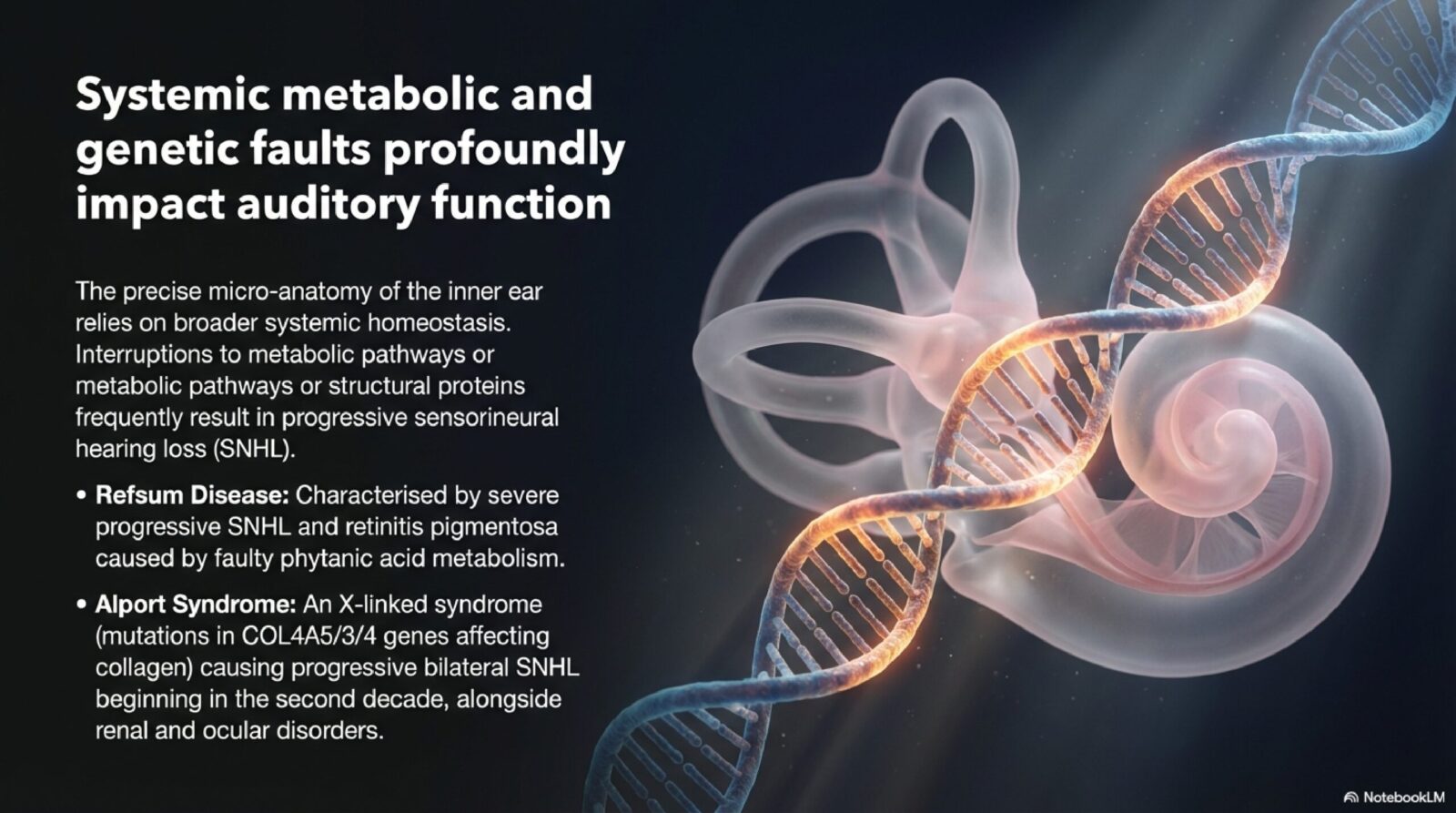
- The inner ear and hearing nerve, This is where vibrations turn into electrical signals your brain understands through the cochlea and auditory nerve. When this part gets damaged, we call it sensorineural hearing loss (SNHL). It’s like the destination is broken, so even if the signal arrives, it can’t be properly processed.
The difference? Conductive loss is often fixable through medical or surgical intervention. Sensorineural loss is usually permanent, but very treatable with modern hearing aids, cochlear implants, or other assistive devices that amplify what hearing remains.
Conductive Hearing Loss: The Blockage Problem
What Happens in Conductive Loss?
Conductive hearing loss happens when sound waves can’t reach the inner ear because something is blocking their path through the outer or middle ear. It’s like turning down the volume on a speaker-the signal is still there, but it’s quieter. The good news? In many cases, we can restore normal hearing by fixing or removing the blockage.
The severity of conductive loss is measured in decibels (dB). Mild conductive loss might be 20-40dB, mode Most conductive hearing loss doesn’t exceed 60dB because the bone conduction pathway still works-sound vibrations through the bone bypass the blockage partially.
Common Causes in India
I see these causes almost daily in my practice:
- Otitis Media with Effusion (OME), The most common cause I see, especially in children aged 3-8. Fluid (we call it “behri” in the local context) builds up in the middle ear after an infection or due to Eustachian tube dysfunction. This is particularly huge in India during monsoon season when humidity soars and water exposure increases. I’ve treated hundreds of children in Hardoi and surrounding areas whose hearing improved dramatically after we drained the fluid. Parents often report their child suddenly understanding teachers at school again.
- Cerumen Impaction, Earwax buildup is deceptively common and often overlooked. Some people’s ears produce excessive cerumen, especially as we age. It’s easily treated-simple removal takes 10 minutes-but many patients don’t realize that hardened wax is causing their hearing loss.
- Otosclerosis, A hereditary condition where abnormal bone grows around the stapes (one of the three tiny bones in your middle ear). This gradually stiffens the bone, preventing normal vibration. It typically appears in people aged 20-50, more common in women, and has strong genetic patterns. If your family has hearing loss before age 40, otosclerosis might be in your genes.
- Perforated Eardrum (Tympanic Membrane Perforation), A hole in the eardrum from infection, pressure changes, or direct trauma. This is surprisingly common after ear infections in children. A perforation might heal on its own, but if it doesn’t, it can cause persistent conductive loss.
- Acute and Chronic Otitis Media, Middle ear infection. Acute infection is usually temporary, but chronic infections can cause permanent damage to the ossicles and require surgery.
- Congenital Ear Abnormalities, Rarely, children are born with underdeveloped middle ear structures or missing ossicles. These require specialized surgical reconstruction.
The Good News About Conductive Loss
Many conductive problems are surgically fixable, and this is where I see the most gratifying patient outcomes. I’ve had patients go from 40dB hearing loss to perfect hearing after a simple procedure. The success rates are impressive:
- Myringotomy with tube insertion, For fluid in the middle ear. Success rate 85-90%. Children typically regain normal hearing within days of tube placement.
- Tympanoplasty (eardrum repair), For perforations. Success rate 80-95% depending on perforation size and cause. Costs in India range from
- Stapes surgery (stapedectomy or stapedotomy), For otosclerosis. Success rate 90% in experienced hands. This is a delicate microsurgical procedure. Costs range from at tertiary centers. In my center, we refer complex cases to specialized hospitals, but I manage pre and post-operative care.
- Ossicular chain reconstruction, When the tiny bones are damaged or eroded. Success rates vary 60-80% depending on the damage pattern. Costs
Sensorineural Hearing Loss: The Nerve Problem
What Happens in SNHL?
Sensorineural hearing loss occurs when the hair cells in the cochlea (the spiral-shaped inner ear) or the auditory nerve itself gets damaged. This is like breaking the speaker itself-you can’t just turn up the volume to fix it. The damage is usually permanent because those hair cells don’t regenerate in humans (though there’s fascinating research happening now with gene therapy).
👉 Also read: Hearing Loss India Statistics Overview
SNHL can range from mild (20-40dB) to profound (90dB and beyond, essentially no useful hearing). Because it involves nerve damage, it often affects the clarity of hearing, not just the loudness. Patients frequently say “I can hear, but I can’t understand”-this is the classic complaint of poor speech discrimination in SNHL.
Common Causes in India
This is what I see most in adults, and the patterns in UP are distinct:
- Presbycusis (Age-Related Hearing Loss), The most common cause after age 60. It affects approximately 1 in 3 people over age 65 in India, maybe higher because we’re not catching it early. You gradually lose high-frequency sounds first-this is why many elderly relatives say “I can hear you, but I can’t understand” or struggle with female voices and children’s speech. The underlying cause is deterioration of hair cells in the cochlea over decades of life.
- Noise-Induced Hearing Loss (NIHL), Factory workers, construction workers without protection, musicians. In UP, we see a lot of NIHL from firecrackers during Diwali and wedding season (which feels year-round here). A single exposure to 140dB+ can cause permanent damage. Chronic exposure to 85dB+ (like factory noise) over years causes cumulative damage.
- Sudden Sensorineural Hearing Loss (SSHL), Happens suddenly, often within 72 hours, with no clear cause. This is an ENT emergency. Treatment within 2-4 weeks gives best results. I’ve treated patients who woke up deaf in one ear-terrifying experience. Possible causes include viral infection, vascular issues, or immune problems. About 30% recover spontaneously, 30% improve with treatment, 40% have permanent loss.
- Viral Infections, Mumps, measles, meningitis can destroy cochlear hair cells. Less common now due to vaccination, but still happens. COVID-19 has surprisingly caused SNHL in some patients, though rare.
- Ototoxic Medications, Aminoglycosides (antibiotics like an ototoxic antibiotic, tobramycin), some cancer chemotherapy drugs (cisplatin), high-dose aspirin, loop diuretics. This is critical in TB-endemic areas like UP where aminoglycosides are still used, sometimes for extended periods. I counsel my TB patients to get baseline audiometry before treatment and follow-up testing during treatment.
- Head Trauma, Can damage the cochlea or nerve directly. Fracture of the temporal bone is particularly damaging.
- Genetic/Hereditary Conditions, Some hereditary forms present at birth (congenital) or early childhood. If you have family history of young-age hearing loss, genetic testing might be worthwhile.
- Acoustic Neuromas, Benign tumors on the auditory nerve cause unilateral SNHL. Any sudden unilateral hearing loss requires MRI to rule this out.
The Audiogram: How We Tell Them Apart
This is the technical part, but it’s important for understanding your diagnosis. An audiogram is a graph that shows your hearing threshold at different frequencies (pitches) measured in decibels. Getting a proper audiogram is essential-it’s the only objective way to measure hearing and determine the type of loss.
A standard audiometric test takes 20-30 minutes and costs at my center, less at government hospitals. The test is done in a soundproof room using calibrated equipment. You’ll hear different tones at different volumes and indicate when you can barely hear each tone. It’s completely painless and non-invasive.
Conductive Loss Audiogram Pattern:
- Bone conduction is normal, We test this by placing a vibrating device directly on the bone behind your ear (mastoid process). Sound vibrations travel directly through bone, bypassing the blocked outer/middle ear. If you hear normally through bone, the inner ear is fine.
- Air conduction is worse, This is tested through earphones. Sound must travel through the air, through the blocked outer/middle ear. So it’s muffled and you need higher volumes to hear it.
- The gap between them, This is called the “air-bone gap,” and it’s the hallmark of conductive loss. A gap of 10dB is significant; 20dB or more is definitely conductive. The size of the gap correlates with the severity of the blockage. Typically, conductive losses show a pattern that looks like the air-conduction curve is pushed down while bone-conduction stays normal.
Sensorineural Loss Audiogram Pattern:
- Both air and bone conduction are equally poor, No air-bone gap. The problem is in the nerve itself, so all sound pathways are affected equally. The bone-conduction curve looks just as bad as the air-conduction curve.
- Often worse at high frequencies, This is why you might struggle to hear consonants like s, f, th, ch, and sh. These sounds are in the higher frequencies (above 2000Hz). You might hear low-frequency vowels like “ah” and “oh” fine but miss consonants that modify them.
- Progressive pattern in age-related loss, Presbycusis shows a characteristic “downsloping” pattern, worse in high frequencies, that progresses over years and decades.
- Notches in noise-induced loss, NIHL typically shows a characteristic dip at 3000-6000Hz, sometimes called a “notch.” This pattern is so distinctive we can often diagnose noise exposure just from the audiogram shape.
Mixed Hearing Loss:
Some patients have both problems-a conductive component plus nerve damage. The audiogram shows both an air-bone gap (conductive element) AND both curves being depressed (sensorineural element). This is actually more common than you’d think, especially in older patients with longstanding conductive issues who’ve developed age-related hearing loss, or in patients exposed to both noise and conductive problems.
The Weber and Rinne Tests: Simple Bedside Checks
I use these tests in my clinic every day to quickly figure out what type of hearing loss you have. They take less than two minutes and give important information before formal audiometry.
👉 Also read: Sudden Sensorineural Hearing Loss
Weber Test:
I place a vibrating tuning fork (usually 512Hz) on the middle of your forehead. You’ll hear it in both ears equally if your hearing is normal. But if you have conductive loss in one ear, you’ll hear it louder in the affected ear (because the bone conducts sound directly to the inner ear, bypassing the blockage-so the “quieter” ear through air conduction actually receives the vibration well through bone). If you have SNHL in one ear, you hear it better in the normal ear (the nerve damage makes that ear less sensitive even to bone-conducted sound).
Rinne Test:
I place the vibrating tuning fork first on the bone behind your ear (mastoid), then in front of it (air conduction).
- Normal: You hear it louder in front of the ear (air conduction better than bone conduction)
- Conductive loss: You hear it louder behind the ear (bone conduction better-this is called “bone better than air,” which is backward and indicates blockage)
- Sensorineural loss: Both are equally poor, but air is still slightly louder than bone (normal relationship, but both are quiet)
These simple tests help me decide who needs urgent imaging, who needs surgery, and who needs hearing aids.
Treatment Differences: What This Means for You
Conductive Loss Treatment:
Goal: Fix or bypass the blockage.
- Medical Management, Antibiotics for active infection, nasal decongestants for Eustachian tube dysfunction, nasal steroids to reduce inflammation. Sometimes we observe for a few weeks to see if the problem resolves on its own, especially in children with acute OME.
- Surgical Intervention, The main definitive treatment for chronic conductive loss. Success We typically recommend surgery if conductive loss persists beyond 3 months in children (because it affects speech development) or causes significant functional impairment in adults. Otoplasty and other reconstructive surgeries are done under general anesthesia and usually require 1-2 days recovery, sometimes longer.
- Bone-Conduction Devices (BAHA), If surgery isn’t possible or hasn’t worked, bone-anchored hearing aids bypass the outer/middle ear entirely by vibrating the bone directly. There are non-surgical models (headband-based) costing and surgical models (implanted) costing The advantage is they preserve air conduction in the other ear.
Sensorineural Loss Treatment:
Goal: Amplify what hearing you still have and maximize clarity.
👉 Also read: Noise-Induced Hearing Loss, Protecting Your Ears in India
- Hearing Aids, The most common treatment for SNHL, even for severe loss. Modern hearing aids are smart, programmable digital devices that can connect to your phone, TV, and other devices. They use directional microphones to focus on speech while reducing background noise. Costs in India range dramatically: basic digital hearing aids start around mid-range premium aids are and top-end AI-enabled hearing aids reach Most patients get good results in the range. The ADIP scheme provides subsidy up to for eligible individuals.
- Hearing Aid Fitting and Adjustment, Getting a hearing aid is not a “buy and forget” device. After fitting, you need follow-up adjustments at 1 week, 1 month, and 3 months. The audiologist programs the aid based on your audiogram and your feedback. Many patients need 2-3 adjustments to get the settings right. Budget time for this process.
- Cochlear Implants (CI), For severe-to-profound hearing loss, when hearing aids don’t provide enough benefit. The device directly stimulates the auditory nerve electrically. CI surgery costs at tertiary centers in India. Outcomes are excellent-most profoundly deaf patients can understand speech with training. In my practice in Hardoi, I refer appropriate candidates to specialized centers in Delhi or Lucknow, then manage ongoing care locally.
- Auditory Brainstem Implants, For patients who can’t benefit from CIs (bilateral deaf nerve damage, neurofibromatosis type 2). Much less common, more expensive.
- Prevention of Progression, For age-related loss, we can’t stop it, but we can slow it: hearing protection in noisy environments, managing cardiovascular risk factors (diabetes, hypertension, high cholesterol), eating a hearing-healthy diet (omega-3 fatty acids, magnesium, vitamins A, C, E). Smoking accelerates hearing loss, so quitting helps.
- Hearing Rehabilitation and Auditory Training, Maximizing whatever hearing remains through speech therapy, listening exercises, and counseling. This is especially important after cochlear implant surgery.
Indian Context: Special Considerations
Why India Has Unique Hearing Loss Patterns:
In my 13+ years of practice in Hardoi and UP, I’ve noticed patterns specific to our country that differ from Western populations:
- High Conductive Loss in Children, OME is rampant due to monsoon humidity, water exposure during bathing in rivers, ponds, and tanks (common in rural UP), and delayed access to ENT care in rural and semi-urban areas. Many children in villages come to us with 40-50dB hearing loss from fluid that’s been in their ears for months.
- Massive Noise-Induced Loss Epidemic, Firecrackers during Diwali, wedding loudspeakers at 120+ dB (basically every season here), factory noise without hearing protection. I’ve seen teenagers with profound NIHL from a single Diwali exposure. Construction workers lose 20-30dB in 5-10 years.
- Ototoxicity from TB Treatment, Tuberculosis is still endemic in UP. Aminoglycosides (streptomycin, an ototoxic antibiotic) are first-line for TB in many regions and in government programs. These medications cause ototoxicity in 3-10% of patients, especially with prolonged use or high doses. I often see post-TB patients with SNHL that could have been monitored and prevented.
- Late Diagnosis and Stigma, Many rural patients present only when loss is severe, often missing the window for surgical correction in conductive cases. There’s also social stigma-families hide hearing loss in women and don’t pursue treatment.
- Affordability Crisis, High-end hearing aids cost lakhs, which is 2-3 years salary for many Indians. We need to push for ADIP (Assistance to Disabled for Integrated Scheme) benefits, explore government options, and discuss affordable private sector options. Some NGOs also provide subsidized aids.
- Limited Tertiary ENT Services, Stapes surgery, cochlear implant surgery, complex ossicular reconstruction are available only at specialized centers in major cities. Rural patients face travel and cost burdens.
The Comparison Table
Here’s a side-by-side comparison to make this crystal clear:
| Feature | Conductive Loss | Sensorineural Loss |
|---|---|---|
| Location of Problem | Outer/Middle ear (blockage) | Inner ear/Nerve (hair cell or nerve damage) |
| Sound Reaches Inner Ear? | No, blocked before reaching | Yes, but nerve can’t properly process |
| Cause of Hearing Loss | Mechanical blockage of sound vibrations | Hair cell death or auditory nerve damage |
| Reversible? | Often yes (80-90% surgically fixable) | Rarely (usually permanent, ~5-10% spontaneous recovery in SSHL) |
| Audiogram Pattern | Air-bone gap present (bone normal, air depressed) | No air-bone gap (both equally depressed) |
| Rinne Test Result | Bone better than air (abnormal) | Air better than bone (normal pattern, but both poor) |
| Weber Test Result | Sound louder in affected ear (lateralizes to bad side) | Sound louder in normal ear (lateralizes to good side) |
| Primary Treatment | Surgery or BAHA device | Hearing aids or cochlear implant |
| Sudden Onset? | Can be sudden (perforation, trauma, wax) | Sudden onset is ENT EMERGENCY (SSHL requires urgent treatment) |
| Examples | Otitis media, otosclerosis, earwax, perforation | Age-related, noise damage, sudden SNHL, ototoxicity |
| Cost of Treatment (India) | Surgery depending on procedure; BAHA | Hearing aids ; Cochlear implant |
Mixed Hearing Loss: The Complex Picture
Some patients have both conductive and sensorineural components. This is common in:
👉 Also read: Unilateral Hearing Loss, One Ear Not Working
- Older adults with long-standing conductive loss (e.g., from chronic ear infections) who have developed presbycusis on top of it
- Patients with otosclerosis who also had noise exposure in their work
- Post-meningitis patients (meningitis causes SNHL from infection, but sometimes leaves some fluid)
- Workers exposed to both noise and moisture (suggesting conductive component)
In mixed loss, we typically address the conductive part first (surgery if feasible), then manage the remaining SNHL component with hearing aids if needed. Sometimes treating the conductive part alone is enough; sometimes both components need treatment.
Diagnosis Beyond Audiometry
While audiometry is the foundation, other tests help us understand the cause:
- Impedance Audiometry (Tympanometry), Shows the status of the eardrum and middle ear. Measures how easily the eardrum vibrates. Confirms if there’s fluid in the middle ear.
- Otoacoustic Emissions (OAE), Tests if the hair cells in the cochlea are functioning. Used especially in newborn screening.
- CT Scan, For conductive loss, if surgery is being considered. Shows bone abnormalities, fluid patterns, ossicular damage clearly.
- MRI, For sudden SNHL, to rule out acoustic neuroma or other nerve problems. Also useful for retrocochlear causes.
- Blood Tests, If we suspect infection (syphilis, Lyme disease) or autoimmune causes.
FAQs: Your Common Questions Answered
1. Can conductive hearing loss come back after surgery?
In 5-10% of cases, yes, depending on the condition. Otosclerosis can develop on the other ear (bilateral otosclerosis happens in 25-30% of cases). Eardrum perforation can reheal abnormally. Ossicular problems might recur in rare cases. But most surgical corrections are permanent if done correctly. I counsel my patients that surgery has 85-90% success rates for common conditions like OME or primary otosclerosis, and if it fails, usually a revision procedure works well.
2. Will sensorineural hearing loss get worse?
It depends on the cause. Age-related loss progresses slowly over decades-on average about 1dB per year after age 60. Noise-induced loss depends entirely on future exposure-if you protect your ears now, it won’t get worse. Once hair cells are dead, they don’t regenerate (though exciting research with gene therapy and hair cell regeneration is happening). Sudden SNHL has unpredictable progression-sometimes stabilizes immediately, sometimes progresses over weeks, which is why urgent treatment within 2 weeks makes a difference.
3. How much does a hearing aid cost in India?
Hearing aids have a huge price range. Basic digital hearing aids cost decent mid-range models cost (this is where most patients find good value), and premium AI-enabled hearing aids cost +. The ADIP scheme provides a subsidy of up to for individuals with 40% hearing loss disability and income below certain thresholds. Many patients do well with aids that have adequate features for speech understanding and noise reduction.
4. Is it normal to hear myself chewing when I wear a hearing aid?
Yes! This is called “occlusion effect,” extremely common with new hearing aid users and very annoying. The earmold blocks your ear canal, so internal vibrations from chewing, speaking, and swallowing seem louder because they resonate in the closed space. Modern hearing aids have algorithms to reduce this, and it absolutely improves as you adjust over 4-6 weeks of use. If it persists, your audiologist can reprogram settings to reduce low-frequency amplification which worsens this effect.
👉 Also read: Hearing Aids in India, Complete Patient Guide 2025
5. Can If you have hearing loss in only one ear?
Absolutely. Unilateral hearing loss (one ear only) can be conductive (middle ear infection, perforation in one ear only) or sensorineural (sudden SNHL, acoustic tumor, viral infection affecting one nerve). Unilateral SNHL is concerning-any sudden unilateral hearing loss requires MRI imaging to rule out acoustic neuroma or other structural problems. Don’t ignore one-sided sudden deafness; it’s an ENT emergency.
6. Why do I have trouble understanding speech even with hearing aids?
This usually means your sensorineural nerve damage is affecting not just volume, but clarity and frequency discrimination (called “poor speech discrimination”). Hearing aids amplify all sounds-both speech and noise-equally. Modern digital hearing aids with speech-clarity programs and noise reduction help somewhat, but if discrimination is very poor (below 50-60%), a cochlear implant might eventually be considered as you lose more hearing. Until then, visual cues (lip reading), good lighting, and one-on-one conversations help tremendously.
7. Is it bad to insert earbuds or earphones when I have conductive loss?
If you have a perforated eardrum or confirmed fluid in your middle ear, I recommend avoiding earbuds to prevent infection from water or bacteria entering the middle ear. For other conductive causes (like otosclerosis), earbuds are usually safe-just be cautious with volume. If you have SNHL, normal earbuds at reasonable volumes are fine, but if you’re using them constantly at high volume to overcome hearing loss, that accelerates further damage. Consider hearing aids instead as they’re specifically designed and programmed for your hearing loss pattern.
8. Can I prevent sensorineural hearing loss?
For age-related loss-not really, but you can slow the progression. For noise-induced-absolutely yes. Wear hearing protection (earplugs, earmuffs) in loud environments exceeding 85dB (factories, firecrackers, loud music venues, heavy machinery). Avoid ototoxic medications if possible, or monitor hearing if they’re necessary. Manage diabetes and blood pressure aggressively (both damage the cochlear blood vessels). And emerging evidence supports a hearing-healthy diet rich in omega-3s, magnesium, vitamin A, and antioxidants. Don’t smoke-smoking accelerates hearing loss by 70%.
Tips for Patients with Hearing Loss
- Get a baseline audiogram now, even if hearing seems fine. Having a baseline makes future comparison easier.
- If you suspect sudden hearing loss, see an ENT doctor within 48-72 hours. Don’t wait. Early treatment dramatically improves outcomes in sudden SNHL.
- For conductive loss, ask your doctor about specific surgery success rates for your condition, not just general percentages.
- When choosing hearing aids, take time adjusting. Give yourself 6-8 weeks before deciding they’re not working.
- Use hearing protection religiously in loud environments. Earplugs cost hearing loss costs you quality of life for 30+ years.
- Bring a family member to your audiogram appointment. They need to understand your hearing loss too.
- Keep your ears dry if you have a perforated eardrum or tubes in place. Cotton with petroleum jelly helps during bathing.
- Monitor ototoxic medication side effects. Don’t assume ringing ears (tinnitus) after starting certain antibiotics is unrelated.
What Should You Do Now?
If you suspect hearing loss:
- Get tested, A proper audiogram takes 30 minutes and costs It’s the only way to definitively know what type you have, because conductive and SNHL feel identical but require totally different treatments.
- Know your type, This determines everything about your treatment path. A simple test today can save you in unnecessary interventions or missed surgical opportunities.
- Act early, Conductive loss delays cost you surgical opportunities-the longer you wait, the more ossicular damage might occur. Sudden SNHL is an emergency (treat within 2 weeks ideally for best outcomes). Age-related loss is progressive but slow-you have time, but earlier intervention helps you adapt better.
- Explore options, Surgery? Hearing aids? Both? BAHA? Your choice depends on the type, severity, lifestyle, budget, age, and other medical conditions. Discuss all options with your ENT specialist.
The Bottom Line
Conductive and sensorineural hearing loss feel the same to you-the world gets quieter, speech becomes unclear, and life becomes socially isolating. But they’re fundamentally different problems with different solutions. Understanding which type you have is the key to getting the right treatment.
Conductive loss is often fixable through surgery with excellent success rates. Sensorineural loss is usually permanent but very manageable with modern hearing aids, cochlear implants, and auditory rehabilitation. Mixed loss? We treat both components-surgery for conductive part, hearing aids or implants for the nerve damage.
The most important thing? Don’t ignore hearing loss. In India, we have a cultural pattern that says “grandpa just can’t hear anymore, that’s normal,” but that’s not true. Your hearing can often be restored or significantly improved-if you take the first step to understand what’s happening in your ears. I’ve won the VAI Budapest 2025 award for my work in hearing loss diagnosis and management, and I’m passionate about bringing these modern approaches to Hardoi and UP.
If you’re in Hardoi, UP, or nearby regions, I’d love to see you at Prime ENT Center. Bring a family member-hearing loss is a family issue, and they need to understand it too. Your grandmother, your uncle, your colleague-don’t let them suffer in silence.
Ready to understand YOUR hearing?
Schedule a detailed audiological evaluation with Dr. Prateek Porwal at Prime ENT Center, Hardoi, UP.
Phone: 7393062200
We’ll perform detailed air and bone conduction testing, Weber-Rinne tests, tympanometry, and give you a clear diagnosis with evidence-based treatment options personalised to your situation.
Award: VAI Budapest 2025
Medical Disclaimer: This article is for educational purposes only and does not constitute medical advice, diagnosis or prescribing guidance. Consult Dr. Prateek Porwal at Prime ENT Center, Hardoi for personalised treatment.
References
- Wilson BS, Tucci DL, Merson MH, O’Donoghue GM. Global hearing health care: New findings and perspectives. Lancet. 2017;390(10098):2503–2515.
- Gelfand SA. Essentials of Audiology. 4th ed. Thieme Medical Publishe.
Reference: Meniere Disease — Sajjadi & Paparella, 2008